Crystals
Jun 25, 2026
·
11 min read
·
Updated Jul 20, 2026
Amethyst: The Complete Guide to the Stone of Spiritual Growth
🕯 9 min read · June 25, 2026
Haveyou ever lain awake at night, mind racing with worries, and wondered if a simple stone held on your nightstand could help you settle into sleep? Many people turn to amethyst for its quiet violet hue and the sense of calm it seems to invite. This article explores the stone’s history, its place in various spiritual traditions, and practical, grounded ways to work with it tonight—without promising miracles or medical cures.
Historical and Cultural Significance
Ancient Beliefs
Amethyst has been admired for thousands of years. The ancient Greeks associated the stone with Bacchus, the god of wine, believing it could prevent intoxication. The name itself comes from the Greek *amethystos*, meaning “not drunk.” Roman soldiers wore amethyst amulets, thinking the stone would keep them clear‑headed in battle. In ancient Egypt, amethyst was carved into scarabs and beads for burial goods, reflecting a belief in its protective qualities for the afterlife.
Medieval and Religious Uses
During the Middle Ages, amethyst found a place in Christian clergy. Bishops often wore rings set with the stone, symbolizing piety and spiritual wisdom. The stone’s deep purple was linked to the liturgical seasons of Lent and Advent, representing penance and anticipation. In European folklore, amethyst was placed under pillows to ward off nightmares, a practice that echoes in modern bedtime rituals.
Modern Metaphysical Context
Today, amethyst is frequently described in crystal literature as a stone of spiritual protection and intuition. These descriptions draw from a blend of historical lore and contemporary metaphysical thought. While no scientific evidence confirms that amethyst emits protective energy, many practitioners value it as a focal point for intention‑setting, meditation, and mindfulness exercises.
Scientific Perspective and Limitations
What Research Says
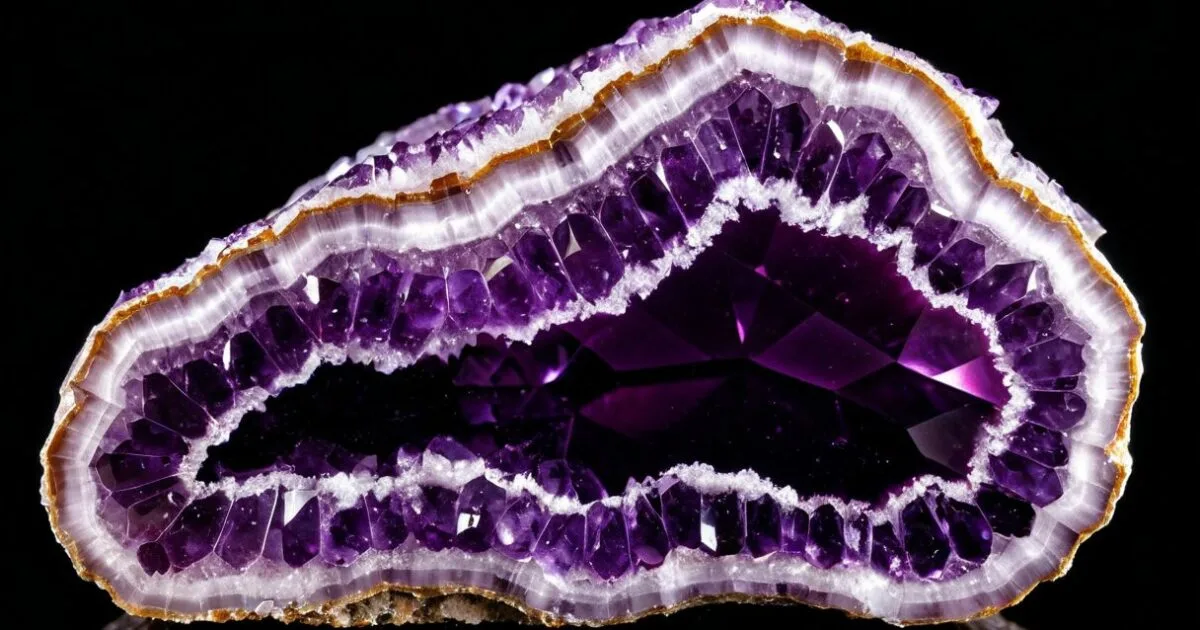
Mineralogically, amethyst is a variety of quartz whose color comes from trace iron and natural irradiation. Studies on quartz’s piezoelectric properties show it can generate a small electric charge under pressure, but this effect is far too subtle to influence human physiology in any measurable way. Peer‑reviewed research on crystal healing does not support claims that amethyst can treat anxiety, insomnia, or any medical condition.
Placebo and Psychological Effects
The perceived benefits of working with amethyst often stem from psychological mechanisms. Holding a familiar object can serve as an anchor for attention, reducing mental chatter—a principle utilized in mindfulness‑based stress reduction (MBSR). The stone’s color may also evoke calming associations, similar to how blue environments are linked to lowered heart rate. Recognizing these effects helps us use amethyst responsibly, as a complement to, not a replacement for, evidence‑based care.
Working with Amethyst: Grounded Practices
Cleansing and Charging (based on traditions)
Before using amethyst in a personal ritual, many traditions recommend cleansing it to remove any residual energy. A simple, historically grounded method is to rinse the stone under lukewarm running water for a few seconds, then pat it dry with a soft cloth. Avoid prolonged exposure to direct sunlight, as UV light can fade the violet hue over time. Some practitioners prefer to leave the stone overnight in a bowl of dry sea salt, then brush off the salt—a practice rooted in European folk customs. After cleansing, you may hold the stone in your hands, close your eyes, and set a clear of any specific outcome, simply noting the sensation of its weight and temperature.
Meditation with Amethyst (drawing from MBSR and Jungian active imagination)
- **Prepare your space** – Choose a quiet corner where you will not be disturbed. Sit on a cushion or chair with your spine upright, as taught in Iyengar yoga’s seated poses.
- **Hold the stone** – Place the amethyst in your left hand (traditionally the receptive hand) or rest it on your lap.
- **Focus on breath** – Begin with three deep inhales through the nose, exhales through the mouth. Then let your breathing return to its natural rhythm, a core step in MBSR.
- **Open awareness** – Gently bring your attention to the stone’s texture, temperature, and color. If thoughts arise, acknowledge them and return focus to the stone, mirroring the “open monitoring” technique used in mindfulness.
- **Active imagination (Jung)** – After five minutes, you may invite an image or feeling to emerge in your mind’s eye, using the amethyst as a symbolic prompt. Jung described active imagination as a dialogue between consciousness and the unconscious; the stone can serve as a neutral symbol to facilitate that dialogue. Do not attempt to interpret the image as a prophecy; simply note it and let it pass.
- **Close** – After ten to fifteen minutes, place the stone aside, stretch gently, and note any shift in your mood or bodily sensation.
Using Amethyst in Sleep Hygiene (Iyengar yoga posture suggestion, placing under pillow)
If you wish to explore amethyst’s traditional role in calming nighttime thoughts, try this gentle routine before bed:
- Perform a short Iyengar‑inspired sequence: lie on your back, bend your knees, feet flat on the floor, and allow your lower back to relax (a supported Supta Baddha Konasana variation). Stay for two minutes, focusing on the breath.
- Rise slowly, then place a small, cleansed amethyst under your pillow or on your nightstand near your head.
- As you lie down, bring awareness to the sensation of the pillow and the faint presence of the stone. Let your mind settle without expecting any specific dream or insight.
- In the morning, remove the stone, cleanse it briefly if desired, and resume your day.
Amethyst in Tarot and Rune Work (RWS tarot, Elder Futhark Elder Futhark runes and Rider‑Smith tarot decks incorporate amethyst as a clarifying tool.
- **Tarot**: Some readers lay a small amethyst crystal on the tarot cloth before a spread, believing it helps quiet mental noise. The stone is often associated with the High Priestess card, which symbolizes intuition and the unconscious. When using the stone, simply place it near the deck, shuffle as usual, and proceed with the reading. Remember that tarot reflects personal reflection, not fixed fate.
- **Runes**: In runic practice, a piece of amethyst may be placed on the rune cloth or held in the palm while drawing runes from the Elder Futhark set. The stone’s traditional link to protection can serve
Amethyst and the Chakras: A Traditional Alignment
In various esoteric traditions, amethyst is associated with specific energy centers in the body known as chakras. While the concept of chakras originates from ancient Indian texts, particularly the Vedas, and is a foundational element in practices like Kundalini yoga, modern interpretations often link crystals to these subtle energy points. It’s important to approach this not as a medical claim, but as a symbolic framework for self-reflection and energetic focus.
The Crown Chakra (Sahasrara)
Amethyst is most commonly linked to the Crown Chakra, located at the very top of the head. This chakra is traditionally seen as the center of spiritual connection, enlightenment, and universal consciousness. When working with amethyst for the Crown Chakra, the aim is often to facilitate a sense of peace, clarity, and a deeper understanding of one’s place in the cosmos. Practitioners might place a small amethyst on the crown of their head during meditation or simply visualize a violet light emanating from the stone into this area.
The Third Eye Chakra (Ajna)
Less frequently, but still significantly, amethyst is also associated with the Third Eye Chakra, situated between the eyebrows. This chakra is considered the seat of intuition, insight, and inner wisdom. Its connection to amethyst stems from the stone’s perceived ability to enhance psychic abilities and deepen meditative states. To engage with amethyst for the Third Eye, one might gently place a smooth, tumbled stone on the forehead during a quiet moment, focusing on the sensation and inviting intuitive insights without attachment.
Practical Chakra Work with Amethyst
- Intention Setting: Before beginning, take a moment to set a clear, positive intention. For example, “I intend to open my mind to spiritual wisdom” for the Crown Chakra, or “I intend to listen more deeply to my inner guidance” for the Third Eye.
- Body Scan: Lie down comfortably. Begin with a brief body scan, noticing any areas of tension or relaxation, similar to the initial stages of a yoga nidra practice.
- Placement: Gently place a cleansed amethyst directly on your Crown (top of the head) or Third Eye (between the eyebrows). Ensure it is comfortable and stable.
- Focused Breath: Close your eyes and bring your attention to your breath. Imagine your breath flowing in and out of the chakra point where the amethyst rests.
- Visualization: Visualize a soft, violet light emanating from the amethyst, expanding and purifying the chakra area. If thoughts arise, acknowledge them and gently return your focus to the light and your breath.
- Duration: Remain in this state for 10-20 minutes. When ready, slowly remove the stone and take a few moments to re-orient yourself before standing.
Common Misconceptions and Ethical Considerations
As with any popular spiritual tool, amethyst can be subject to various misunderstandings. Addressing these helps maintain a grounded and responsible approach to its use.
Misconception 1: Amethyst is a “Cure-All”
Despite its historical reputation for protection and calming, it’s crucial to reiterate that amethyst is not a medical device and cannot cure diseases, mental health conditions, or physical ailments. While it can be a supportive tool for mindfulness and intention-setting, it should never replace professional medical or psychological treatment. This aligns with the principles of responsible spiritual practice, emphasizing self-care and seeking expert help when needed.
Misconception 2: All Amethyst is Ethically Sourced
The global demand for crystals has raised concerns about mining practices. Not all amethyst is ethically sourced. Issues like exploitative labor, unsafe working conditions, and environmental damage can be associated with crystal mining. When purchasing amethyst, consider asking vendors about their sourcing practices. While it can be challenging to trace every stone, supporting businesses that are transparent about their supply chain contributes to more ethical consumption. This ethical awareness is part of a holistic spiritual journey, recognizing our interconnectedness with the earth and its inhabitants.
Misconception 3: Amethyst Works Automatically
Some believe simply owning an amethyst will automatically confer benefits. However, as noted by figures like Joseph Campbell, the power of a symbol often lies in the meaning we ascribe to it and the intention we bring to our interaction. Amethyst, like a prayer bead or a meditation cushion, serves as a focal point. Its effectiveness in personal practice is largely amplified by conscious engagement, clear intention, and consistent effort. Without active participation—be it through meditation, reflection, or ritual—the stone remains just a beautiful mineral.
Amethyst in Dream Work: Integrating Symbolism
The ancient practice of placing amethyst under a pillow to ward off nightmares or induce prophetic dreams finds resonance in contemporary dream work, particularly within Jungian psychology, which views dreams as messages from the unconscious. Amethyst, with its connection to intuition and spiritual insight, can serve as a potent symbol to anchor these explorations.
Preparing for Dream Work with Amethyst
- Cleanse and Program: As before, cleanse your amethyst. Then, hold it, and with clear intention, “program” it for dream recall or insight. For example, “I intend for this amethyst to help me remember my dreams more clearly” or “I invite insight into my subconscious through my dreams.”
- Journal Ready: Keep a dream journal and a pen next to your bed. The act of writing down dreams immediately upon waking is crucial for recall, as emphasized by Jungian analysts.
- Placement: Place the amethyst under your pillow or on your nightstand within easy reach.
- Pre-Sleep Reflection: Before falling asleep, spend a few minutes reflecting on any questions or issues you might be seeking insight on. This primes the unconscious, a technique explored in various depth psychology approaches.
Post-Dream Integration
Upon waking, before moving or speaking, immediately reach for your journal and record any dream fragments, feelings, or images. Do not censor or try to interpret yet; simply record. Later, you can sit with your amethyst, reread your dream notes, and engage in a form of active imagination or reflection. Ask yourself: “What feelings did this dream evoke?” “Are there any symbols that resonate with my waking life?” The amethyst can serve as a tangible link between your conscious intention and the often elusive world of dreams, facilitating a deeper dialogue with your inner self.
This page describes what the Crystals tradition teaches and how people practise it. It is not a prediction and not medical, psychiatric or crisis advice. How we research and write · report an error