🌿
Breath · Body · Spirit
Yoga & Breathwork
Yoga is not about touching your toes. It is about what you learn on the way down. Explore pranayama (breath control), chakra balancing, and the ancient poses that connect body, breath, and consciousness.
The 7 Energy Centers
The Chakras
Click any chakra for its meaning, signs of imbalance, yoga poses, and mantra
Sacred Postures
Essential Asanas
Each asana is both a physical posture and a symbol. They speak the language of energy to the body — opening specific meridians, activating certain glands, and cultivating specific qualities of consciousness.
🙏
Sukhasana
Easy Pose
The seated foundation — opens hips, lengthens spine, grounds the energy for meditation. Despite its name, it is not always easy — it requires the hip flexibility developed by consistent practice.
Grounding, Concentration
Chakra: Root, Sacral
⛰️
Tadasana
Mountain Pose
The mother of all standing poses. Appears simple — stand still — but done consciously, Tadasana builds structural awareness, inner stillness, and the capacity to be fully present.
Stability, Alignment
Chakra: Root
🦁
Virabhadrasana
Warrior I, II, III
Named after a fierce avatar of Shiva. Warrior poses build strength, courage, and focused intention. They are standing meditations in the fierce grace of embodied power.
Strength, Courage
Chakra: Solar Plexus, Heart
🐍
Bhujangasana
Cobra Pose
Lying face-down, the spine arches upward like a cobra raising its hood. Opens the heart center, strengthens the back, and activates the Kundalini energy at the base of the spine.
Heart Opening, Energy
Chakra: Heart, Throat
🧘
Balasana
Child's Pose
The great surrender — kneeling forward, forehead to earth, arms by sides. It is the posture of trust, of letting go, of returning to the womb-like safety of earth. A profound rest.
Surrender, Release
Chakra: Root, Third Eye
🌙
Savasana
Corpse Pose
The most important pose in yoga. Lying completely still, integrating the practice. Many students find this the most difficult — true stillness of body and mind is rarer than it seems.
Integration, Release
Chakra: All Chakras
🔥
Navasana
Boat Pose
The fire in the belly — this pose activates the solar plexus chakra dramatically, building willpower, core strength, and the capacity to sustain effort through discomfort.
Willpower, Focus
Chakra: Solar Plexus
🦢
Ustrasana
Camel Pose
A deep backbend on the knees, reaching for the heels. Dramatically opens the heart and throat. One of the most emotionally activating poses — unexpected feelings often surface.
Vulnerability, Heart
Chakra: Heart, Throat, Crown
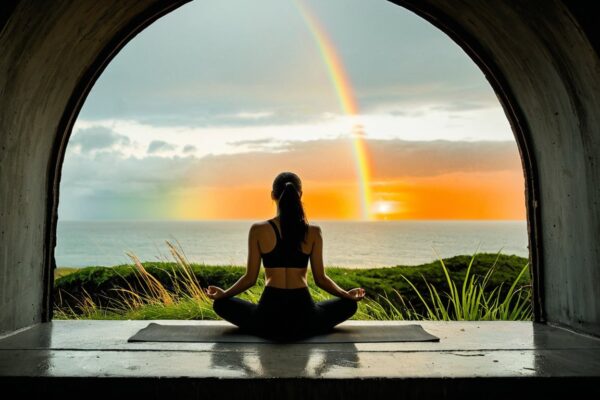

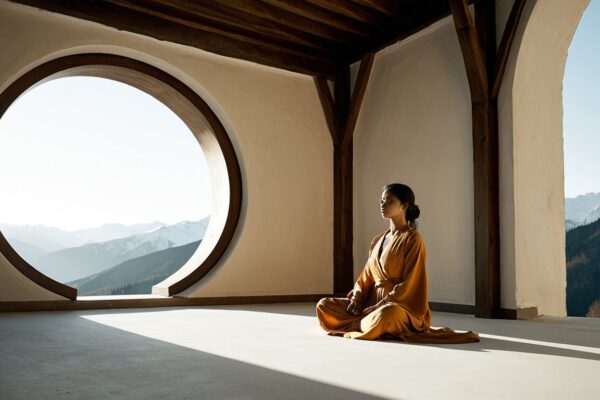
Morning Hatha Flow (20 minutes)
This sequence balances strength and surrender. Modify any pose that causes pain; yoga is ahimsa (non-harming) first.
-
1
Center (2 min): sit in Easy Pose, three Ujjayi breaths, set one intention for the day.
-
2
Warm-up (5 min): Cat-Cow × 8, Downward Dog hold 5 breaths, Sun Salutation A × 3.
-
3
Standing (8 min): Warrior I → II → Reverse Warrior each side; Tree Pose 30 sec per side.
-
4
Floor (3 min): Pigeon Pose each side, Supine twist, Savasana with body scan.
-
5
Close: hands at heart — whisper your intention once more before rising.
✦
Editorial Standards
Practices on AfterDarkIntuition are researched from depth psychology (Jung), established spiritual traditions, and contemporary therapeutic frameworks. They are for self-reflection and personal growth — not medical, psychiatric, or crisis care. If you are in crisis, please contact a licensed professional or emergency services. About our editorial approach →
Deep Practice
Expanded Wisdom
In the mix of spiritual exploration, Yoga and Breathwork stand out as ancient, yet profoundly relevant, pathways to inner harmony and expanded consciousness. These practices, rooted in millennia of wisdom, offer more than just physical exercise or relaxation techniques; they are comprehensive systems designed to unite the disparate aspects of our being—mind, body, and spirit. At AfterDarkIntuition.com, we believe in empowering you with tools that foster genuine self-discovery and profound peace, and the synergistic power of yoga and breathwork is a cornerstone of this journey.
Engaging with yoga and breathwork invites a gentle yet powerful transformation. Through mindful movement and conscious breathing, we begin to unravel the knots of tension, quiet the incessant chatter of the mind, and cultivate a deeper connection to our innate intuition. This section is dedicated to exploring the rich traditions behind these practices, offering actionable guidance, and inspiring you to integrate their profound benefits into your daily life. Prepare to take the first steps inward, where every breath becomes a step towards greater clarity and every posture a gateway to presence.
Ancient Wisdom
Unveiling the Sacred Union of Movement and Breath
The term 'Yoga' itself, derived from the Sanskrit root 'yuj', means to yoke or unite, signifying the integration of mind, body, and spirit. Far from being a mere physical exercise, traditional yoga, as codified by Patanjali in the Yoga Sutras, is an eight-limbed path (Ashtanga Yoga) leading to self-realization. These limbs include ethical precepts (Yamas and Niyamas), physical postures (Asana), breath control (Pranayama), sense withdrawal (Pratyahara), concentration (Dharana), meditation (Dhyana), and ultimately, a state of profound absorption or bliss (Samadhi). Hatha Yoga, perhaps the most widely recognized form today, initially emerged as a preparatory practice, using asana and pranayama to purify the body and mind, making them fit for higher meditative states. It was never solely about flexibility or physical prowess, but about creating a stable vessel for spiritual awakening, a harmonious balance of solar (Ha) and lunar (Tha) energies within.
Pranayama, the fourth limb of Patanjali's Yoga, is the conscious control of 'Prana,' the universal life force energy. It's more than just breathing; it's about directing and expanding this vital energy throughout the subtle body, clearing energetic blockages, and calming the nervous system. Ancient yogis understood that the breath is a direct link between our conscious and unconscious minds, a bridge between our physical and energetic selves. By regulating the breath, we gain agency over our internal states, influencing our emotions, thoughts, and even our physiological responses. Techniques like Nadi Shodhana (Alternate Nostril Breathing) balance the left and right hemispheres of the brain, fostering mental clarity and emotional equilibrium, while Ujjayi (Victorious Breath) cultivates inner heat and focus, preparing the mind for deep meditation. These practices are not just theoretical; they are experiential tools for profound inner alchemy.
The profound synergy between Yoga and Breathwork lies in their combined ability to cultivate present moment awareness and inner stillness. Asana grounds us in the physical body, inviting us to observe sensations without judgment, while Pranayama refines our sensitivity to the subtle currents of life force. Together, they dismantle the mental constructs that often keep us tethered to past regrets or future anxieties, guiding us into the eternal now. This sustained presence is the fertile ground from which intuition blossoms, allowing us to connect with our deeper wisdom and navigate life with greater clarity and grace. It's a journey of remembrance, reconnecting us to the inherent peace and boundless potential that resides within, moving beyond the superficial and into the profound depths of our being.
Step-by-Step
Guided Practices
SOURCES & TRADITION
Traditional Hatha sequences (Surya Namaskar as documented in Light on Yoga by B.K.S. Iyengar); pranayama ratios from classical texts (Yoga Sutras of Patanjali commentary).
TYPICAL DURATION · 20–40 minutes
Gentle Flow for Centering
This brief sequence helps to gently awaken the body, calm the mind, and connect you to your breath, perfect for starting or ending your day with intention.
-
1
Begin in a comfortable seated position, cross-legged or on your heels. Close your eyes and take 3 deep, cleansing breaths, exhaling fully.
-
2
Move to hands and knees, aligning wrists under shoulders and knees under hips. Inhale as you drop your belly, lift your chest and tailbone (Cow Pose).
-
3
Exhale as you round your spine, tuck your chin to your chest, and draw your navel towards your spine (Cat Pose). Flow between Cat and Cow 5-8 times, coordinating movement with breath.
-
4
From hands and knees, tuck your toes and lift your hips high, pressing back into Downward-Facing Dog. Pedal your feet gently, stretching your hamstrings.
-
5
Lower your knees back down and sit back on your heels, extending your arms forward into Child's Pose. Rest your forehead on the mat, allowing your hips to sink.
-
6
Slowly roll up to a seated position, bringing your hands to your heart in Anjali Mudra. Take a moment to notice any shifts in your body or mind.
Nadi Shodhana (Alternate Nostril Breathing)
Nadi Shodhana is a powerful pranayama technique that balances the left and right hemispheres of the brain, calms the nervous system, and purifies the energy channels.
-
1
Sit comfortably with a straight spine. Bring your right hand into Vishnu Mudra: fold your index and middle fingers into your palm, leaving your thumb, ring, and pinky fingers extended.
-
2
Close your right nostril with your right thumb. Inhale slowly and deeply through your left nostril for a count of 4.
-
3
Close your left nostril with your ring finger (releasing your thumb from the right nostril). Exhale slowly and completely through your right nostril for a count of 8.
-
4
Inhale through your right nostril for a count of 4. Close your right nostril with your thumb.
-
5
Release your ring finger from your left nostril and exhale slowly and completely through your left nostril for a count of 8.
-
6
This completes one round. Continue for 5-10 rounds, always inhaling through the open nostril and exhaling through the alternate, maintaining the 1:2 inhale:exhale ratio.
-
7
When finished, release your hand, breathe naturally through both nostrils, and observe the subtle shifts in your awareness and energy.
🕯️ Breath of Presence Meditation
Find a comfortable seated position, allowing your spine to lengthen naturally.
Gently close your eyes, or soften your gaze downwards.
Bring your awareness to the sensation of your breath entering and leaving your body.
Notice the gentle rise and fall of your abdomen, or the subtle movement in your chest.
There is no need to change your breath, simply observe its natural rhythm.
Feel the coolness of the air as you inhale, and the warmth as you exhale.
If your mind wanders, gently guide your attention back to the anchor of your breath.
Each breath is a new beginning, a fresh opportunity to be fully present.
Allow yourself to rest in this simple, profound awareness of your breath.
Let the breath be a soft current, carrying you deeper into stillness.
Read slowly. Pause between sentences. There is no finish line — stay as long as your body needs. If distress rises, open your eyes, ground your feet, and return when ready.
Reflect
Journal Prompts
- ✦ How does mindful movement or conscious breathing shift your emotional state?
- ✦ What sensations arise in your body when you focus purely on your breath?
- ✦ In what ways can you integrate the principles of 'union' (yoga) into your daily interactions?
- ✦ Reflect on a time when breathwork helped you navigate a challenging emotion. What did you learn?
- ✦ How does your physical practice of yoga connect to your spiritual aspirations?
- ✦ What does 'prana' or life force energy feel like in your own experience?
- ✦ Consider Patanjali's Yamas (ethical restraints) – which one resonates most with you currently, and why?
- ✦ How does cultivating present moment awareness through breath impact your intuition?
- ✦ What resistance do you encounter when trying to establish a consistent yoga or breathwork practice, and how can you gently overcome it?
- ✦ Describe a moment of profound peace or clarity you've experienced during a yoga or breathwork session.
What is the true purpose of Yoga beyond physical exercise?
Beyond physical postures, traditional Yoga is a holistic system aimed at uniting the individual consciousness with the universal consciousness. It seeks to purify the body and mind, preparing the practitioner for deeper states of meditation and self-realization, as outlined in ancient texts like Patanjali's Yoga Sutras.
How does breathwork contribute to spiritual growth?
Breathwork, or Pranayama, is the conscious regulation of life force energy (prana). By controlling the breath, we can calm the nervous system, clear energetic blockages, and cultivate mental clarity, which are essential foundations for deeper meditative states and connecting with one's inner wisdom and spiritual self.
How often should I practice Yoga and Breathwork to see benefits?
Consistency is more important than duration. Even 10-15 minutes of mindful movement or breathwork daily can yield significant benefits over time. Aim for a regular practice that feels sustainable and enjoyable for you, gradually increasing as you feel comfortable.
Do I need to be flexible or strong to start practicing Yoga?
Absolutely not. Yoga is for everyone, regardless of current flexibility or strength. The practice meets you where you are. The goal is not to touch your toes, but to become more present in your body and breath. Modifications are always available to make poses accessible for all.
Weekly Wisdom
Deeper Each Week
One lunar ritual, one shadow prompt, and one practice — delivered weekly. Free. No spam. Unsubscribe anytime.
Practices for self-reflection only — not medical advice.
🔮✦
🌙
Mystic Guide
✦ The veil is open · Ask your question
Welcome, seeker. I am the Mystic Guide of AfterDarkIntuition. Ask me about astrology, tarot, shadow work, dream meanings, or any mystical path you walk. ✦