Meditations
Jun 25, 2026
·
9 min read
·
Updated Jul 26, 2026
Candle Gazing (Trataka): The Ancient Practice for Focus and Third Eye
🕯 7 min read · June 25, 2026
Candle Gazing (Trataka): The Ancient Practice for Focus and Third Eye
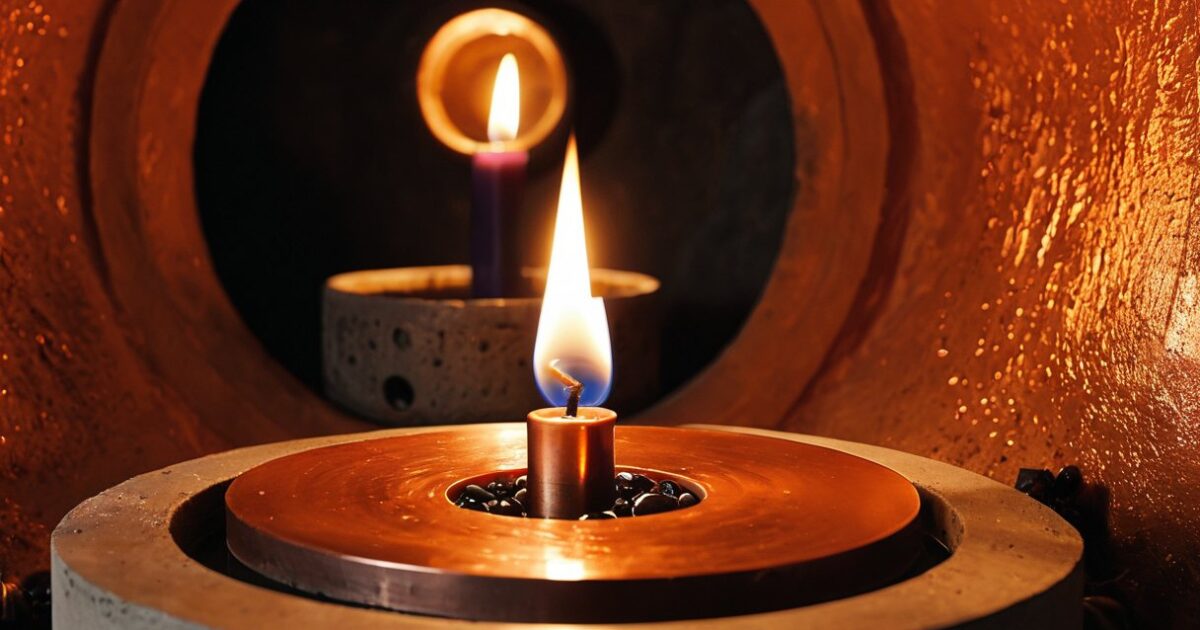
Have you ever noticed how a single, flickering flame can command your entire attention, pulling the noise of the world into a silent periphery until nothing exists but the light? In an era of digital fragmentation, where our attention is sliced into seconds by notifications and scrolling, the ability to hold a single point of focus has become a rare and precious skill. This is the essence of Trataka, a traditional Hatha Yoga cleansing technique designed to bridge the gap between the external world and the internal landscape of the mind.
Trataka is more than a simple exercise in staring; it is a disciplined process of concentration known as dharana. While modern mindfulness often emphasizes a general awareness of the present moment, Trataka is a targeted practice. It utilizes a physical object—the flame—as a focal point to still the fluctuations of the mind, eventually leading the practitioner toward a state of deep meditative absorption.
The Origins and Philosophy of Trataka
The term Trataka is derived from Sanskrit, meaning to gaze or look. It is documented in classical Hatha Yoga texts as one of the Shatkarmas, or the six purification techniques. While most Shatkarmas focus on the physical cleansing of the body, Trataka is unique because it purifies the nervous system and the mental faculty.
In the tradition of Iyengar yoga, precision and alignment are paramount. When applied to Trataka, this translates to the alignment of the gaze and the spine. The practice is designed to develop the Ajna Chakra, commonly referred to as the Third Eye. In spiritual anatomy, this center is not a physical eye, but a point of intuition and higher perception located between the eyebrows. By focusing the physical eyes on a steady point, the practitioner trains the mind to move from the outer world (Bahir Trataka) to the inner world (Antar Trataka).
This transition mirrors the psychological process of moving from sensory perception to conceptual insight. By stripping away distractions, the practitioner enters a state of one pointedness. This is not about achieving a supernatural vision, but rather about refining the quality of attention so that the mind becomes a clear mirror, capable of reflecting reality without the distortion of emotional turbulence.
The Science of Focus and the Mind
From a psychological perspective, the efficacy of candle gazing can be understood through the lens of sensory deprivation and selective attention. When we fixate on a single point of light, the brain begins to filter out peripheral stimuli. This process reduces the cognitive load, slowing down the internal monologue and inducing a state of relaxed alertness.
This mirrors many principles found in Mindfulness Based Stress Reduction (MBSR), where the focus on a single anchor—be it the breath or a sound—helps the practitioner detach from reactive thought patterns. By observing the flame without judgment, you are practicing the act of witnessing. You are not trying to force the flame to change; you are simply observing its nature. This cultivation of steady attention creates a neurological bridge, allowing you to transition from a state of scattered anxiety to a state of centered presence.
Preparing Your Sacred Space
To practice Trataka effectively, the environment must support the intention of stillness. The goal is to minimize external interruptions so that the only movement in the room is the dance of the flame.
First, choose a quiet space where you will not be disturbed for at least twenty minutes. Dim the lights or work in complete darkness to ensure the candle is the primary source of illumination. Ensure the room is well ventilated, as the scent of beeswax or soy candles can be soothing, but excessive smoke can irritate the eyes.
Position your candle at eye level. If the candle is too low, you will strain your neck; if it is too high, you will strain your ocular muscles. A small table or a dedicated altar is ideal. The candle should be placed approximately two to three feet away from you. This distance is crucial because it allows the eyes to relax while maintaining a sharp focus, preventing the strain that comes from staring too closely.
Step by Step Instructions for Your First Session
You can begin this practice tonight. The process is divided into two distinct phases: the external gaze and the internal visualization.
Phase One: Bahir Trataka (External Gazing)
- Sit in a comfortable meditative posture. Whether you choose Padmasana (Lotus pose) or simply sit on a chair with your feet flat on the floor, the priority is a straight, tall spine. Imagine a thread pulling the crown of your head toward the ceiling.
- Gently close your eyes and take three deep, diaphragmatic breaths. Release the tension in your shoulders and jaw.
- Open your eyes and fix your gaze on the brightest part of the flame. Do not stare aggressively; instead, let your gaze be soft and steady.
- Try to avoid blinking for as long as is comfortable. As the eyes begin to water, do not fight the sensation with tension. When you must blink, do so gently and immediately return your focus to the flame.
- As you gaze, you may notice your thoughts wandering. When this happens, acknowledge the thought without judgment and gently guide your attention back to the light. The flame is your anchor.
- Continue this for five to ten minutes, or until your eyes feel a natural need to close.
Phase Two: Antar Trataka (Internal Gazing)
- Gently close your eyelids. You will likely see an afterimage of the flame imprinted on the back of your eyelids. This is the afterimage, a natural physiological response.
- Shift your internal gaze to the space between your eyebrows (the Third Eye center).
- Visualize the image of the flame in that space. Try to keep the image steady and clear.
- If the image fades or wavers, do not struggle. Simply observe the darkness and the fading light.
- Breathe slowly and deeply, imagining the light of the flame illuminating the interior of your mind.
- Remain in this internal stillness for another five to ten minutes.
- To conclude, gently rub your palms together to create heat and place them over your closed eyes. This relaxes the optic nerves and seals the practice.
Safety and Practical Considerations
While Trataka is a grounding practice, it requires a mindful approach to physical safety. Always place the candle on a stable, non flammable surface and keep it away from curtains or drafts. Never leave a lit candle unattended.
Regarding ocular health, it is important to listen to your body. If you have a history of glaucoma or severe eye strain, consult a professional before engaging in prolonged gazing practices. The goal is not to endure pain or extreme dryness, but to cultivate a steady, relaxed focus. If your eyes become overly irritated, simply close them and move directly to the internal visualization phase.
The Emotional and Spiritual Impact
The beauty of Trataka lies in its ability to reveal the nature of the mind. In the early stages, you may find that your mind is incredibly noisy. You might feel restlessness, boredom, or a sudden surge of emotion. This is not a failure of the practice; it is the practice working. By narrowing your field of vision, you are bringing the subconscious noise to the surface where it can be observed and released.
Over time, this practice fosters a sense of profound inner quiet. Many practitioners report a feeling of mental clarity and an increased ability to concentrate on complex tasks in their daily lives. Spiritually, this corresponds to the opening of the Ajna Chakra, which is less about seeing the future and more about seeing the present with clarity. It is the movement from confusion to insight.
By consistently returning to the flame, you are training the will. You are teaching yourself that you have the power to choose where your attention goes. In a world that competes for your attention, the ability to consciously direct your focus is an act of spiritual sovereignty.
Integrating the Practice into Daily Life
Trataka does not have to remain confined to your meditation cushion. The quality of focus you develop during candle gazing can be carried into other areas of your existence. When you are listening to a loved one, you can apply the same presence you gave to the flame. When you are working on a difficult project, you can recall the steadiness of the light to center yourself.
This practice is a reminder that the light we seek externally is a reflection of the awareness we possess internally. The flame is merely a tool to help you find the stillness that already exists within you.
The journey of the Third Eye is not a leap into the supernatural, but a gradual descent into the depths of your own consciousness. Through the simple act of gazing at a flame, you move from the chaos of the periphery to the peace of the center. In that center, you find a version of yourself that is undistracted, awake, and profoundly present.
Frequently Asked Questions
How often should I practice Trataka for the best results?
Consistency is more important than duration. Practicing for ten to fifteen minutes daily is more effective than a long session once a week.
Can I use a digital image of a flame if I cannot use a real candle?
While a digital image provides a focal point, it lacks the organic movement and living energy of a real flame. A physical candle is recommended for the traditional sensory experience.
Is it normal to see colors or shapes during the internal gazing phase?
Yes, these are common visual phenomena called phosphenes. They are natural results of the eyes adjusting to the dark and should be observed without attachment or over analysis.
This page describes what the Meditations tradition teaches and how people practise it. It is not a prediction and not medical, psychiatric or crisis advice. How we research and write · report an error