Dreams
Jul 3, 2026
·
12 min read
·
Updated Jul 26, 2026
Dreaming of Snakes: Spiritual Meaning and Psychological Interpretation
🕯 9 min read · July 3, 2026
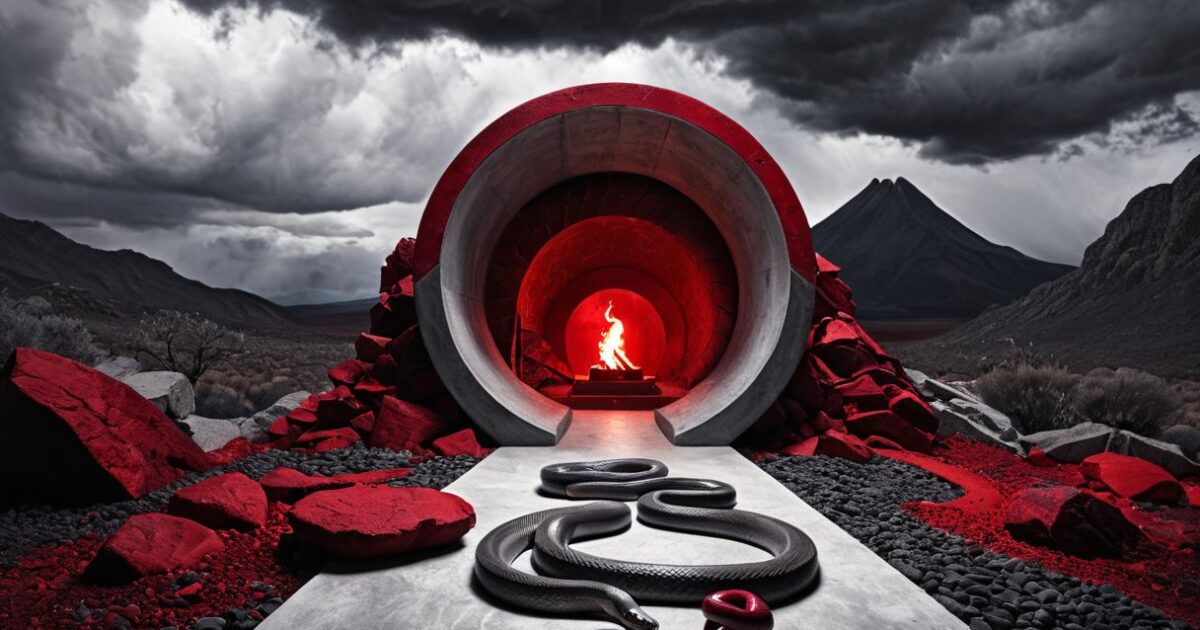
Snake dreams are among the most reported dreams on Earth — and the most argued-over. Depending on tradition, the serpent is healer, deceiver, kundalini rising or a coworker you shouldn’t trust. The honest answer: snake dreams are about transformation and threat-detection, and the details decide which. 🐍
🌍 The Snake Across Traditions
No dream symbol carries more contradictory freight. In Greek healing temples, snakes were sacred to Asclepius — medicine’s staff still bears one. In Eastern tradition, the serpent is kundalini: transformative energy coiled at the spine’s base. In Abrahamic imagery, it is the tempter. In Chinese dream lore, snakes often presage wealth; in Freud, they’re libido; in Jung, the snake is the instinctual psyche itself — ancient, cold-blooded wisdom the ego doesn’t control. A snake that sheds its skin whole has meant renewal to nearly every culture that watched one do it.
💭 What Your Snake Dream Likely Means
Being bitten: the classic wake-up call — something you’ve been ignoring demands attention now. Note where: hands (your work, your grip on a situation), feet (your path, foundations), heart (you already know). Many traditions read bites as initiations rather than attacks — venom as forced transformation.
Being chased: avoidance. The snake carries whatever you’re refusing to face; the dream repeats until you turn around. Pair with our guide to recurring dreams.
A calm snake simply present: transformation underway — often the healthiest snake dream. Something old is being shed on schedule.
Shedding skin: the renewal dream, explicit. An identity, role or era is coming off whole.
Many snakes: commonly anxiety about an environment — workplaces and social circles where you feel watched or outnumbered.
Killing the snake: ambiguous — victory over a threat, or suppression of your own instinctual wisdom. Ask honestly which one it felt like.
🧠 The Psychology
Evolutionary psychologists note that snake detection is hard-wired — primates that spotted serpents fast survived; our visual system still prioritises them, and threat-simulation theory holds that dreams rehearse exactly such dangers. Translation: some snake dreams are simply the brain running its oldest fire drill, spiked by daytime stress. Jungians add the deeper layer: the snake appears when instinct and intellect are out of alignment — when you’re overriding a gut knowing with a spreadsheet. The tell is the dream’s feeling: primal fear points to threat-rehearsal; awe or fascination points to transformation material.
📓 Working With the Dream
1) Record it immediately — species, colour, behaviour, setting, your feeling ( our dream recall guide helps). 2) Locate the life-parallel: what in waking life are you circling, avoiding or being warned about? 3) Honour the shed: if renewal imagery appeared, ask what identity is ready to come off — and help it. 4) If bitten, act: the ignored thing (health check, conversation, decision) is usually identifiable within a minute of honest thought. 🌙
❓ Colour Quick-Reference
Black: the unknown, shadow material — see our shadow work prompts. Green: growth or envy — feeling decides. White: spiritual message, purity of instinct. Red: passion or danger signal. Gold: wisdom, wealth omens in Eastern readings. The colour modifies the verb; the snake’s behaviour remains the sentence.
Frequently Asked Questions
What does dreaming of snakes mean spiritually?
Transformation, instinctual wisdom and renewal – the snake sheds its skin whole. Bites read as wake-up calls, chases as avoidance, calm snakes as healthy change underway.
Is a snake dream a warning?
Sometimes – snake detection is evolutionarily hard-wired, and dreams rehearse threats under stress. Primal fear in the dream points to warning; fascination points to transformation.
What does a snake bite in a dream mean?
Something ignored demands attention now. The bite location matters: hands relate to work and control, feet to your path, the heart to what you already know.
The Shadow Side of Serpent Symbolism
While often celebrated for renewal and wisdom, the snake also embodies profound shadow aspects, both personally and collectively. Psychologically, encountering a snake in a dream can represent confronting suppressed fears, anxieties, or aspects of ourselves we deem “unacceptable” or dangerous. This isn’t always about external threats; it can be the surfacing of our own aggression, jealousy, or manipulative tendencies that we’ve pushed into the subconscious. The serpent’s cold-blooded nature can symbolize emotional detachment or a chilling realization about a situation or person. Spiritually, a snake in a dream can highlight areas where we are being tempted away from our true path, where deceit is present, or where a destructive pattern is beginning to coil. It forces an honest look at where we might be compromising our integrity or allowing toxic influences to take hold. A dream of a tangled knot of snakes, for instance, might point to a complex web of deceit or self-deception that needs untangling. This shadow aspect isn’t inherently negative; rather, it’s an invitation to integrate these disowned parts of the self, to bring awareness to hidden dangers, and to transmute potential poisons into insight and strength.
Advanced Dream Interpretation: Context and Interaction
Beyond the snake’s behaviour, your interaction with it and the broader dreamscape offer critical layers of meaning. Consider these often-overlooked details:
- Your emotional response: Is it primal fear, curiosity, respect, disgust, or even a sense of kinship? Your feeling dictates whether the snake represents a threat to be overcome or a powerful ally/lesson to integrate. A dream where you feel calm despite a venomous snake’s presence suggests a mastery over a difficult situation or an acceptance of a challenging transformation.
- The snake’s environment:
- Water: Emotional depths, unconscious processes, intuition. A snake in clear water might be a healthy emotional flow; in murky water, hidden emotional turmoil.
- House/Familiar Setting: Personal space, inner world, family dynamics. Where in the house? (e.g., bedroom = intimacy/personal life; kitchen = nourishment/creation).
- Wilderness/Nature: Raw instinct, primal forces, connection to the earth, or uncontrolled aspects of life.
- Your action towards the snake:
- Handling/Petting: Integration, taming, or mastering an instinctual force. It could also signify a comfortable relationship with your own shadow or transformative power.
- Ignoring: Active avoidance of a crucial issue or inner knowing.
- Talking to it: Direct communication with your subconscious, seeking wisdom or understanding from an instinctual part of yourself.
- Being paralysed: Feeling overwhelmed or unable to act in the face of a perceived threat or transformative moment.
- The snake’s size and species (if identifiable): A tiny snake might be a minor irritation or a nascent potential; a giant boa could represent an overwhelming force or a profound, ancient wisdom. Specific species, if known, can carry cultural or personal associations (e.g., a cobra might evoke danger and sacred power; a garden snake, innocence or a subtle presence).
Working with Archetypes: Jung and the Serpent
Carl Jung, the Swiss psychiatrist and founder of analytical psychology, viewed the snake not merely as a personal symbol but as a powerful archetype — a universal, primordial image or pattern of thought inherited from our ancestors and embedded in the collective unconscious. For Jung, the serpent archetype represents the instinctual psyche itself: ancient, chthonic wisdom, often associated with the unconscious, healing, and transformation. It embodies the primal life force, the wisdom of the body, and the connection to the earth.
When the serpent appears in a dream from a Jungian perspective, it often signifies a confrontation with these deep, instinctual layers of the self that the conscious ego may have suppressed or ignored. It can be a call to integrate aspects of our primal nature, to acknowledge our animal instincts, or to connect with a deeper, non-rational knowing. The snake’s ability to shed its skin made it a potent symbol of renewal and rebirth for Jung, representing the cyclical process of death and regeneration in the psyche.
Jung also linked the serpent to the concept of the anima or animus (the unconscious feminine or masculine aspects within us) and the shadow (the unacknowledged and often darker aspects of the personality). A dream of a snake might indicate that these powerful, often hidden, components of the psyche are seeking integration or demanding attention. The challenge, then, is not to conquer or eliminate the snake, but to understand its message and integrate its primal energy into conscious awareness, thereby achieving greater wholeness and individuation.
The Serpent in Esoteric Traditions: Kundalini and Cosmic Energy
Beyond psychological interpretation, many esoteric traditions across the globe imbue the serpent with profound spiritual significance, often linking it to cosmic energy and awakening. One of the most prominent examples is the concept of Kundalini in Hindu Tantra and Yoga.
Kundalini, often depicted as a coiled serpent at the base of the spine (the Muladhara chakra), represents dormant divine feminine energy. When awakened through specific yogic practices (such as pranayama, asanas, and meditation), this energy is said to ascend through the central energy channel (sushumna nadi), piercing each chakra along the way until it reaches the crown chakra (Sahasrara). This ascent is believed to lead to profound spiritual awakening, enlightenment, and a deeper connection to the divine. Iyengar Yoga, for instance, while not explicitly focused on Kundalini awakening, emphasizes precise alignment and breath control that can indirectly influence energy flow in the body, preparing the subtle channels for such experiences.
Therefore, a dream of a snake in this context might symbolize the stirrings of this inner energy, a nascent spiritual awakening, or a call to engage in practices that foster spiritual growth. A snake rising or uncoiling in a dream could be a powerful metaphor for personal transformation and the activation of latent spiritual potential. Conversely, a coiled or stagnant snake might suggest blocked energy or a need to address spiritual stagnation.
Similarly, in ancient Egyptian mythology, the Uraeus (a stylized, upright cobra) was a symbol of sovereignty, royalty, divinity, and protection, often depicted on the headdresses of pharaohs and gods. It represented the fiery energy of the sun and the power of creation. Dreaming of such a serpent might therefore carry messages of personal power, divine connection, or the emergence of protective spiritual forces.
Decoding Your Snake Dream: A Practical Checklist
Once you’ve recorded your snake dream, use this structured approach to deepen your understanding:
- Identify the Dominant Emotion: Was it fear, awe, curiosity, disgust, peace, or something else? Your emotional response is often the most direct indicator of the dream’s core message. A dream filled with terror about a snake suggests a threat or unacknowledged fear; a dream with fascination or calm suggests transformation or integration.
- Note the Snake’s Condition:
- Healthy/Vibrant: Indicates robust transformation, healing, or instinctual wisdom.
- Sick/Injured: Suggests an aspect of your instinctual self is neglected or wounded, or a process of transformation is struggling.
- Dead: Can symbolize the end of a transformative phase, the suppression of instinct, or the successful overcoming of a perceived threat.
- Consider the Snake’s Action & Your Reaction:
- Biting/Attacking: As noted, a wake-up call. Where was the bite? What part of your life does that area represent?
- Chasing: Avoidance. What are you running from in waking life?
- Coiled/Still: Latent energy, waiting for the right moment, or a need for introspection.
- Moving Away: A transformation is concluding, or an instinctual aspect is receding.
- You Holding/Interacting Calmly: Suggests integration of instinctual wisdom, mastery over a challenging situation, or a healthy relationship with your deeper self.
- Analyze the Setting:
- Indoors (house, familiar place): Relates to personal, domestic, or psychological aspects of your life. Which room? What does that room signify?
- Outdoors (forest, desert, water): Connects to broader life situations, nature, or the collective unconscious. Water often signifies emotions or the unconscious; a desert, barrenness or a spiritual quest.
- In a confined space: Feeling trapped by a situation, or a transformation that feels stifled.
- Reflect on Personal Associations: Do you have any personal history or strong feelings about snakes? A childhood encounter, a phobia, or a cultural belief can significantly color your dream’s meaning. While archetypes are universal, personal associations provide a crucial layer of individual interpretation.
By systematically reviewing these elements, you move beyond a surface-level interpretation and engage with the deeper symbolic language of your unconscious, allowing the dream to reveal its nuanced message for your waking life.
This page describes what the Dreams tradition teaches and how people practise it. It is not a prediction and not medical, psychiatric or crisis advice. How we research and write · report an error