Book Summaries
Jun 25, 2026
·
9 min read
·
Updated Jul 9, 2026
Man and His Symbols by Carl Jung: Visual Symbolism and the Unconscious
🕯 7 min read · June 25, 2026
Man and His Symbols by Carl Jung: Visual Symbolism and the Unconscious
Have you ever woken from a dream with a lingering image that felt more real than your waking life? Perhaps it was a towering wave, a locked door, or a stranger whose face you could not see but whose presence felt intimately familiar. For many, these images are dismissed as random neurological firing or fragmented memories. However, for Carl Jung, these symbols are the primary language of the soul, a bridge connecting the conscious ego to the vast, uncharted territories of the unconscious.
In his final major work, Man and His Symbols, Jung sought to make his complex theories accessible to the general public. He recognized that the human psyche is not a logical machine, but a symbolic one. To ignore the symbols that emerge in our dreams, art, and myths is to ignore the very map the psyche provides for our personal growth.
The Architecture of the Unconscious
To understand visual symbolism, we must first understand where these images originate. Jung distinguished between two layers of the unconscious: the personal unconscious and the collective unconscious.
The personal unconscious contains forgotten memories and repressed experiences unique to the individual. If you dream of a specific dog from your childhood, that is a personal symbol. However, Jung proposed something more profound: the collective unconscious. This is a shared psychic inheritance common to all human beings, regardless of culture or era. It is a reservoir of ancestral experiences that manifests as archetypes.
Archetypes are not images themselves, but innate patterns or predispositions. They are the blueprints for human experience. When an archetype manifests in a dream or a vision, it takes the form of a symbol. For example, the archetype of the Great Mother might appear as a nurturing figure, a terrifying crone, or a lush garden. These symbols do not tell us a fixed story; rather, they point toward a psychological necessity or a tension that requires resolution.
The Language of Symbols versus Signs
A common mistake in modern spiritual practice is treating symbols as signs. A sign is a direct pointer with a single, fixed meaning. A red octagonal sign means stop. There is no ambiguity. A symbol, however, is something that represents something else that is often unknown or too complex for direct language.
A symbol does not provide a final answer; it opens a door. When we encounter a symbol—whether in a dream or through a meditative state—we are not looking for a dictionary definition. Instead, we are engaging in a dialogue with the unconscious. Jung argued that by paying attention to these images, we begin the process of individuation, the lifelong journey of becoming the most complete version of ourselves.
Decoding the Visuals: Common Archetypal Patterns
In Man and His Symbols, Jung emphasizes that while symbols have universal themes, their meaning is always filtered through the individual’s life. However, certain patterns recur across human history:
The Shadow
The Shadow represents the hidden or rejected parts of the personality. Visually, the Shadow often appears as a menacing figure, a dark stranger, or someone who possesses traits we despise in others. Integrating the Shadow is not about eliminating the darkness, but acknowledging it so that it no longer controls us from the periphery of our awareness.
The Anima and Animus
Jung proposed that every psyche contains both masculine and feminine elements. The Anima is the feminine inner personality of a man, and the Animus is the masculine inner personality of a woman. These often appear in dreams as idealized or challenging figures of the opposite gender, guiding the dreamer toward a balance of logic and intuition, strength and softness.
The Self and the Mandala
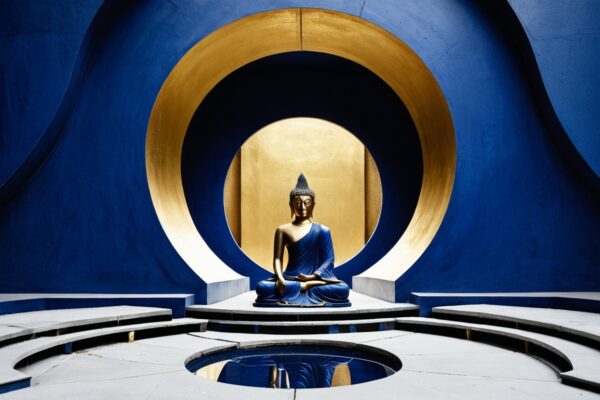
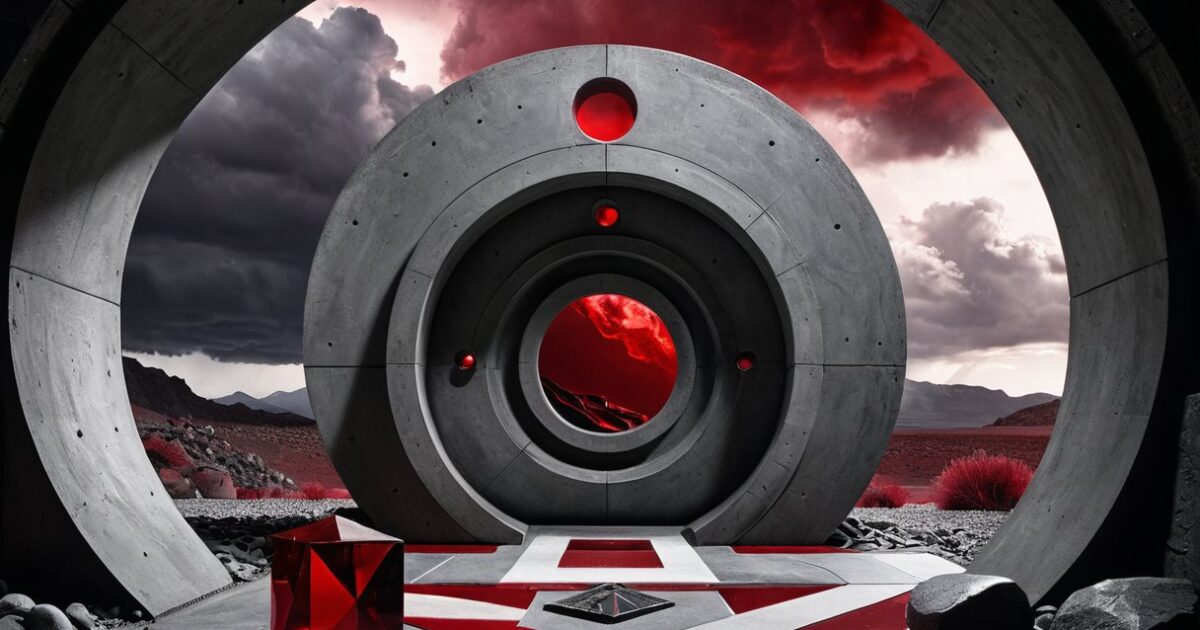
The Self is the totality of the psyche. The most frequent visual representation of the Self is the mandala—a circle containing a center. Across Buddhist, Hindu, and indigenous traditions, the circle represents wholeness and the integration of opposites. When a person begins to dream of circular patterns or balanced geometries, it often signals a period of psychological centering.
Practical Applications for Self-Discovery
Understanding the theory is one thing; applying it to your life is where the transformation happens. You do not need a degree in psychology to begin this work. You only need curiosity and a willingness to look at the parts of yourself that are uncomfortable.
Here is a step-by-step guide to working with your symbols tonight.
The Evening Reflection Practice
- Prepare your space. Set aside fifteen minutes before sleep. Ensure your environment is quiet and dimly lit to signal to your brain that the boundary between the waking and dreaming mind is softening.
- The Dream Journal. Place a notebook by your bed. Immediately upon waking, write down every image, color, and emotion from your dreams. Do not analyze them yet. Simply record the visual data. Use descriptive language: not just a house, but a decaying Victorian house with blue shutters.
- Active Imagination. If a specific image from a dream haunts you, sit in a comfortable chair and close your eyes. Visualize the image clearly. Instead of analyzing it intellectually, enter the image. Ask the figure or the object: What do you want from me? or What are you trying to show me?
- Dialogue. Allow the image to respond. The response may come as a word, a feeling, or a change in the image itself. This process, known as Active Imagination, allows the conscious mind to communicate with the unconscious in its own language.
Safety Note: Working with the Shadow or intense dream imagery can occasionally evoke strong emotional responses. If you find yourself overwhelmed by anxiety or distress, ground yourself by focusing on your physical senses—touch a cold surface, smell a strong scent, or practice a grounding breath.
Integrating Symbols through Established Traditions
Jung’s work does not exist in a vacuum; it resonates with various spiritual and somatic practices that help us bridge the gap between the conscious and unconscious.
Somatic Grounding and Yoga
The body often holds the tension that symbols reflect. B.K.S. Iyengar’s approach to yoga emphasizes precision and alignment, which can be used as a physical counterpart to psychological integration. By grounding the body through asana, we create a stable vessel capable of holding the intense emotional energy that arises during shadow work.
Mindfulness and Observation
Mindfulness-Based Stress Reduction (MBSR) teaches us to observe thoughts and feelings without judgment. This is essential when working with symbols. Instead of judging a dream image as bad or scary, we observe it with a neutral, curious gaze. This detachment allows the symbol to reveal its meaning naturally rather than forcing a preconceived interpretation.
The Use of Structured Imagery
Many people use tools like the Rider-Waite-Smith (RWS) tarot or the Elder Futhark runes not as predictive tools for fate, but as projective mirrors. By looking at a visual symbol—such as the Tower or the Fehu rune—the mind projects its own unconscious concerns onto the image. The card or rune does not tell the future; it reveals the current state of the subconscious.
The Goal of Individuation
The ultimate purpose of engaging with visual symbolism is not to solve a puzzle, but to achieve wholeness. Jung believed that the modern crisis of meaning stems from our disconnection from the symbolic world. We have become overly reliant on rationalism, ignoring the intuitive and instinctive depths of our nature.
When we embrace the symbols of the unconscious, we stop fighting against our nature and start collaborating with it. We realize that the monster in the dream is often a misplaced strength, and the void we fear is actually a space for growth.
Closing Thoughts
The journey into the unconscious is not a linear path toward a destination, but a spiral that returns us to ourselves over and over again, each time with more depth and understanding. Man and His Symbols reminds us that we are not merely the small, conscious ego that navigates the daily grind. We are the heirs to a vast, ancient history of human experience, and our dreams are the letters sent to us from that ancestral home. By learning to read these symbols, we stop being passengers in our own lives and become the conscious architects of our destiny.
Frequently Asked Questions
Can symbols be used to predict the future?
No. In Jungian psychology, symbols reflect the current state of the psyche and potential directions for growth, but they do not provide fixed predictions of external events. They are tools for internal insight, not divination.
Is Active Imagination safe for everyone?
For most, it is a helpful tool for self-reflection. However, individuals experiencing severe psychological instability or psychosis should only engage in this practice under the guidance of a licensed therapist.
Do I need to know the meaning of every archetype to understand my dreams?
No. While knowing archetypes provides a helpful framework, the most important meaning is the one that resonates personally. The unconscious speaks to you in your own unique dialect.
This page describes what the Book Summaries tradition teaches and how people practise it. It is not a prediction and not medical, psychiatric or crisis advice. How we research and write · report an error