Energy & Protection
Jun 25, 2026
·
11 min read
·
Updated Jul 20, 2026
Salt Magic: How to Use Salt for Cleansing and Protection
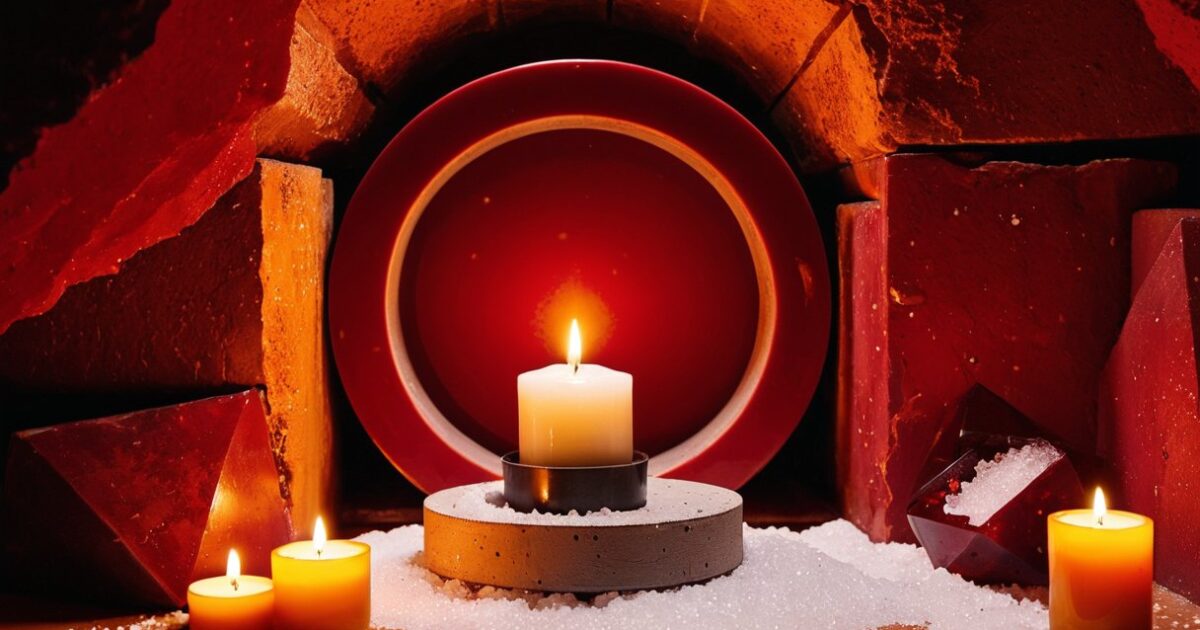
🕯 9 min read · June 25, 2026
Haveyou ever walked into a room and felt a lingering heaviness, as if the air itself needed clearing? Many people turn to simple, tangible actions to shift that feeling, and across cultures one substance appears again and again: salt. Its crystalline form has been used for centuries not only to preserve food but also to mark boundaries, purify spaces, and support inner focus. This article explores how salt can be used today as a tool for cleansing and protection, drawing on documented traditions and practical methods that anyone can try tonight. The guidance stays within the realm of symbolic, psychological, and hygienic uses—no claims of supernatural guarantees or medical cures are made.
The Symbolic Weight of Salt
Historical Roots
Salt’s role in purification appears in several well‑recorded traditions. In ancient Egypt, priests sprinkled natron—a natural mixture of sodium carbonate and bicarbonate—on statues and temple floors to prepare them for ritual work. The Romans used salt in the ceremony of *salutatio*, where a guest would be offered a pinch of salt upon entering a home as a sign of friendship and protection. Jewish practice includes the *melach* (salt) sprinkled on offerings in the Temple, symbolizing the covenant between God and the people (Leviticus 2:13). In Hindu puja, a small dish of salt is sometimes placed on the altar as an offering to deities, representing the earth element and the preservative quality of the divine. Celtic folklore records the custom of laying a line of salt across thresholds to keep unwanted influences from entering a dwelling. These examples show that salt has long been associated with boundary‑making, preservation, and a subtle form of energetic hygiene.
Psychological Perspectives
Carl Jung described salt as a symbol of the prima materia, the raw material from which the psyche emerges. In his writings on alchemy, he noted that salt represents the earthy, grounding aspect of the unconscious—a substance that can both dissolve and crystallize, mirroring the psyche’s capacity to break down old patterns and form new insights. This view aligns with modern mindfulness approaches that emphasize grounding through sensory experience. When we hold a grain of salt, feel its texture, or taste its brine, we engage the senses in a way that can anchor attention in the present moment, a core goal of practices such as Mindfulness‑Based Stress Reduction (MBSR).
Osho, in his discourses on meditation, often spoke of “being the salt of the earth” as a metaphor for preserving one’s inner clarity amidst external noise. He suggested that simple, repetitive actions—like washing the hands with salted water—could serve as a mini‑meditation, reminding practitioners to return to a state of alert relaxation. While Osho did not prescribe specific salt rituals, his teachings support the idea that mundane acts, when performed with awareness, can become tools for inner cleansing.
Connecting to Contemporary Symbolic Systems
In the Elder Futhark runic alphabet, the rune *Algiz* (sometimes interpreted as a protective sign) is occasionally used by modern rune workers as a focus for setting intentions of safety. Some contemporary practitioners place a small bowl of salt near their rune set before a reading, viewing the salt as a cleansing agent for the tools—a practice echoed in many traditions that cleanse divination objects with salt, water, or smoke.
The Rider‑Waite‑Smith (RWS) tarot deck associates the Suit of Pentacles with the earth element. Cards such as the Ten of Pentacles depict abundance, stability, and the preservation of wealth—qualities that salt symbolizes through its ability to prevent decay. While the deck does not depict salt explicitly, the earthy imagery invites a parallel: just as salt protects food, the Pentacles suggest protecting one’s material and energetic foundations.
In Iyengar yoga, the cleansing practices known as *shatkarma* include *Jala Neti*, a nasal rinse performed with lukewarm saline water. This technique is described in B.K.S. Iyengar’s *Light on Yoga* as a means to clear the nasal passages and promote a sense of lightness in the head—a physical cleansing that practitioners often report brings mental clarity. The saline solution mirrors the natural concentration of salt in bodily fluids, underscoring salt’s compatibility with the body’s own physiology.
Practical Salt Practices for Cleansing and Protection
The following three methods are rooted in the traditions mentioned above. Each can be performed with household items and takes roughly ten to fifteen minutes. Adjust the steps to suit your schedule and comfort level, and always observe the safety notes that follow.
Preparing a Salt Bath
A salt bath combines the physical warmth of water with the grounding presence of salt, creating a sensory experience that can help release tension and mark a transition from the day’s activities to a calmer state.
- **Choose your salt.** Sea salt or Epsom salt (magnesium sulfate) are both commonly used. Sea salt retains trace minerals that some traditions associate with the ocean’s purifying quality; Epsom salt is valued for its muscle‑relaxing properties.
- **Measure the amount.** For a standard bathtub, add roughly one to two cups of salt. If you have sensitive skin, start with half a cup and observe how your body responds.
- **Prepare the water.** Fill the tub with warm—not hot—water. Extreme heat can dehydrate the skin and may be unsuitable for those with cardiovascular concerns.
- **Dissolve the salt.** Stir the water
A simple salt bowl can act as a focal point for intentional cleansing within a room, drawing on the traditional understanding of salt as an absorber of stagnant energies. This method is particularly useful for spaces where you feel emotional residue from past events or simply wish to refresh the atmosphere.
- **Choose your vessel.** Select a small, non-porous bowl made of ceramic, glass, or stone. The material should feel natural and grounding to you. Avoid plastic, which can sometimes absorb and retain energies.
- **Fill with salt.** Coarse sea salt or rock salt is ideal for this purpose. Fill the bowl about two-thirds full. The larger crystal structure of these salts is traditionally believed to have a greater capacity for absorption.
- **Placement.** Place the salt bowl in an area of the room that feels energetically “heavy,” or in a central location where it can subtly influence the entire space. Common placements include a corner, near a doorway, or on a bedside table.
- **Set your intention.** As you place the bowl, take a moment to consciously state your intention. You might say aloud or silently, “May this salt absorb any negativity, tension, or stagnant energy from this space, leaving it clear and peaceful.”
- **Maintenance.** The salt in the bowl should be replaced regularly, ideally once a week or whenever you feel the need for a refresh. Some practitioners suggest that when the salt begins to clump, harden, or change color, it indicates it has absorbed a significant amount of energy and is ready to be discarded.
- **Disposal.** When discarding the salt, it’s important to do so with intention. Do not reuse the salt for cooking or other purposes. Flush it down a toilet, or ideally, take it outside and bury it in the earth away from living plants, returning the absorbed energies to be neutralized by the soil. Avoid simply throwing it in the trash, as the intention is to release, not just contain.
- **Safety note:** Keep salt bowls out of reach of pets and small children, as ingesting large amounts of salt can be harmful. Ensure the bowl is placed on a stable surface where it won’t be easily knocked over.
Performing a Salt Hand Wash for Energetic Release
This quick and accessible practice, inspired by Osho’s insights into mindful action and the cleansing properties of salt, can be used to symbolically wash away the day’s stresses or to prepare for a focused activity.
- **Gather your materials.** You will need a small amount of fine-grained salt (table salt or fine sea salt works well), and access to running water.
- **Wet your hands.** Turn on the tap and wet your hands thoroughly with lukewarm water.
- **Apply the salt.** Sprinkle about a teaspoon of salt into your palms.
- **Rub consciously.** Gently rub your hands together, allowing the salt to lightly exfoliate your skin. As you do this, focus on the sensation of the salt and water. Imagine that with each rub, you are physically and energetically scrubbing away any mental fatigue, emotional residue, or external pressures you’ve accumulated.
- **Set your intention.** You might silently affirm, “I release what no longer serves me. My hands are clear, and my mind is calm.”
- **Rinse thoroughly.** Rinse your hands under the running water, consciously visualizing all the unwanted energies flowing away with the water down the drain.
- **Dry with awareness.** Pat your hands dry with a clean towel, noticing the feeling of freshness and lightness.
- **Frequency.** This practice can be done daily, before or after challenging meetings, or whenever you feel the need for a quick energetic reset.
- **Safety note:** If you have open cuts or very sensitive skin, the salt may cause irritation. In such cases, use a very small amount of fine salt or opt for a different cleansing method. Always ensure you rinse your hands completely to avoid drying out your skin.
Common Misconceptions and Ethical Considerations
While salt practices are generally safe and beneficial when approached with a grounded perspective, it’s important to address common pitfalls and ethical considerations to ensure these tools are used responsibly.
Avoiding Superstition and Magical Thinking
It’s crucial to differentiate symbolic and psychological cleansing from literal, supernatural claims. Salt does not possess innate magical powers to ward off evil spirits or guarantee protection from physical harm. Its efficacy lies in its capacity as a ritualistic tool to focus intention, ground awareness, and create a psychological boundary. As Carl Jung observed, symbols derive their power from the collective unconscious and individual meaning-making, not from inherent mystical properties. Believing that salt alone will solve complex problems without addressing underlying issues can lead to a form of magical thinking that bypasses genuine self-reflection and practical problem-solving. For instance, placing a salt barrier around a home might offer a sense of security, but it does not replace the need for secure locks or healthy communication within the household.
Respecting Cultural Origins and Avoiding Appropriation
Many salt traditions are deeply embedded in specific cultural and religious contexts. While it’s valuable to learn from these practices, it’s equally important to approach them with respect and avoid cultural appropriation. When drawing from traditions like Hindu puja or Celtic folklore, acknowledge their origins and understand the context in which they developed. The goal is to be informed and inspired, not to claim ownership or misrepresent practices. For example, while a salt bowl can be a personal cleansing tool, it should not be presented as a direct replica of a sacred ritual from a closed practice unless one is an initiated member of that tradition. The practices outlined here are generalized and adapted for individual, personal use, aiming to respect the spirit of cleansing without encroaching on specific sacred rites.
The Importance of Intention and Personal Meaning
Ultimately, the effectiveness of any symbolic practice, including those involving salt, is significantly amplified by the intention and personal meaning you bring to it. As renowned yoga teacher B.K.S. Iyengar emphasized in his teachings on asana, “It is not the quantity but the quality of practice that brings results.” Simply going through the motions with salt will yield limited benefit. However, when combined with conscious intention—whether it’s to release stress, create a peaceful environment, or ground oneself—salt becomes a potent aid for psychological and energetic hygiene. The salt itself is a catalyst, but your awareness and intention are the true agents of change. This aligns with the principles of mindfulness, where focused attention transforms ordinary actions into profound experiences.
This page describes what the Energy & Protection tradition teaches and how people practise it. It is not a prediction and not medical, psychiatric or crisis advice. How we research and write · report an error