Sound Healing
Jun 25, 2026
·
9 min read
·
Updated Jul 26, 2026
Tibetan Singing Bowls: Complete Guide to Choosing and Using Them
🕯 7 min read · June 25, 2026
Tibetan Singing Bowls: Complete Guide to Choosing and Using Them
Have you ever sat in a crowded room, overwhelmed by the noise of modern life, and felt a sudden, deep longing for a single moment of absolute stillness? Perhaps you have visited a wellness center or a meditation retreat and felt a vibration ripple through your chest as a metal bowl began to sing, pulling your scattered thoughts into a single, focused point of presence. This experience is not magic, but the application of acoustic physics and mindful intention.
Tibetan singing bowls, also known as Himalayan bowls, are tools of sound therapy used to facilitate deep relaxation and meditative states. While often associated with mysticism, their efficacy lies in the principle of entrainment, where the brain’s internal frequencies synchronize with the external rhythm of the bowl, shifting the practitioner from a state of high-alert beta waves to the relaxed alpha or theta states associated with deep meditation.
Understanding the Nature of Singing Bowls
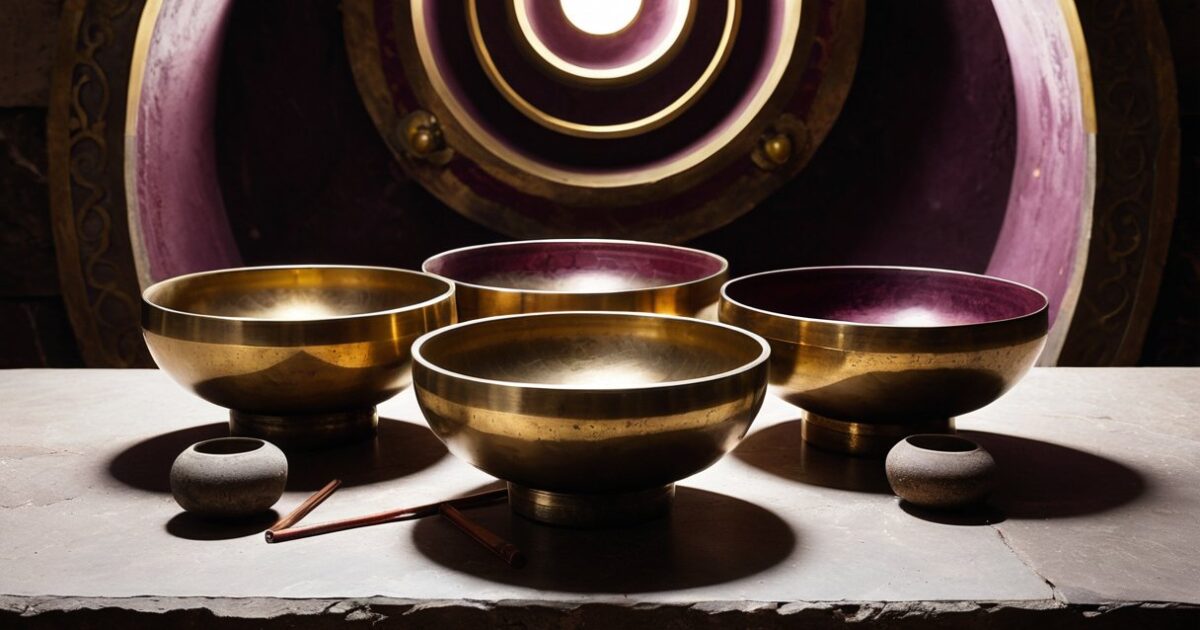
Before selecting a bowl, it is essential to understand what they are and how they function. Traditionally, these bowls were crafted from a blend of metals—often seven different metals representing the celestial bodies—though modern versions vary widely in composition.
The sound produced by a singing bowl is a complex harmonic. Unlike a tuning fork, which produces a single frequency, a singing bowl produces a fundamental tone accompanied by several overtones. This layering of sound creates a rich, immersive texture that helps the mind let go of linear thinking.
In the context of psychological wellness, this process mirrors the concepts explored by Carl Jung regarding the subconscious. Just as Jung sought to integrate the shadow and the conscious mind to achieve wholeness, sound healing uses frequency to bypass the analytical mind, allowing the practitioner to access deeper emotional layers without the interference of internal dialogue.
How to Choose Your First Singing Bowl
Selecting a bowl is a sensory experience. Because no two handmade bowls are identical, you are looking for a tool that resonates specifically with your own physical and emotional frequency.
Assessing the Tone and Sustain
When testing a bowl, listen for the sustain—the length of time the sound continues to ring after the initial strike. A high-quality bowl will have a long, steady decay. If the sound cuts off abruptly or feels discordant, it may indicate a flaw in the metal or a lack of harmonic balance.
The tone should feel grounded. If the sound feels too piercing or creates tension in your forehead, it may be too high for your current needs. Conversely, a deep, low hum is often more effective for grounding and physical relaxation.
Hand-Hammered vs. Machine-Made
You will encounter two primary types of bowls. Machine-made bowls are perfectly symmetrical and produce a very consistent, clear note. They are excellent for those who prefer a predictable sound. Hand-hammered bowls, however, possess slight irregularities that create a wider spectrum of overtones. These are often preferred by seasoned practitioners because the complex harmonics are more effective at inducing meditative states.
Size and Purpose
The size of the bowl generally dictates the frequency. Larger bowls produce lower frequencies, which are often felt more intensely in the physical body and are ideal for grounding. Smaller bowls produce higher frequencies, which are typically used for focusing the mind or clearing mental fog.
Step-by-Step Guide to Using Your Bowl Tonight
You do not need a certification to begin incorporating sound into your evening routine. The goal is not to achieve a specific supernatural result, but to create a container of stillness.
Step 1: Prepare Your Space
Clear a small area where you can sit comfortably. Ensure you are on a stable surface; placing the bowl on a soft cushion can dampen the sound, so a hard floor or a wooden table is preferable. Turn off notifications on your devices to prevent sudden interruptions.
Step 2: The Initial Strike
Hold the bowl gently in the palm of your non-dominant hand, ensuring your fingers are not gripping the sides, as this will mute the vibration. Using the padded mallet, strike the side of the bowl gently, about one inch from the rim. Close your eyes and follow the sound as it fades into silence. This acts as a bridge, signaling to your nervous system that it is time to shift from doing to being.
Step 3: The Singing Technique
To produce the continuous singing tone, hold the mallet firmly and press it against the outer rim of the bowl. Move the mallet in a slow, steady circular motion around the edge. Apply consistent pressure without pressing too hard. As the bowl begins to vibrate, focus your attention on the physical sensation of the sound in your chest and head.
Step 4: Integrating Mindfulness
As you rotate the mallet, synchronize your breath. Inhale for four counts as you move the mallet, and exhale for four counts. This mimics the rhythmic breathing patterns found in Mindfulness-Based Stress Reduction (MBSR) programs, which are clinically recognized for reducing cortisol levels and improving emotional regulation.
Step 5: Returning to Stillness
Slowly decrease the pressure of the mallet until the sound ceases. Do not rush to open your eyes. Sit in the resulting silence for two to three minutes. This period of silence is where the actual integration occurs, as the mind settles into the void left by the sound.
Applying Sound to the Body
While singing bowls are often used for ambient meditation, they can also be used for targeted somatic relaxation. This practice is similar to the precision and alignment found in Iyengar yoga, where the focus is on the specific placement of the body to achieve a state of balance.
To use a bowl on the body, place the bowl gently on a fleshy area, such as the upper back or the thigh. Strike the bowl softly. The vibrations will travel directly into the muscle tissue. This is particularly effective for releasing tension in the shoulders or lower back.
Safety Note: Never place a singing bowl directly on the spine, the crown of the head, or over an area with a recent injury or surgical implant. If you have a pacemaker or are prone to seizures, consult a medical professional before using vibrational therapy.
The Philosophy of Sound and Self-Discovery
Using a singing bowl is more than a relaxation technique; it is an exercise in presence. In the teachings of Osho, the movement toward meditation often involves moving through stages of awareness—from the noise of the ego to the silence of the witness. The singing bowl serves as a tool for this transition.
The sound provides a focal point, or a mantra of frequency. When the mind wanders to the stresses of the workday or the anxieties of tomorrow, the vibration of the bowl gently pulls the awareness back to the present moment. This is the essence of self-discovery: realizing that the stillness you are seeking is not something to be acquired, but something that is already there, hidden beneath the noise.
Integrating Sound into a Holistic Practice
For those who wish to deepen their spiritual journey, the singing bowl can be paired with other grounded traditions. For example, using a bowl to clear the mind before a session of RWS tarot reading can help the practitioner approach the cards with a neutral, objective perspective rather than one clouded by emotional projection.
Similarly, those who study the Elder Futhark runes may find that a brief sound bath helps them enter a state of receptivity, allowing them to reflect on the archetypal meanings of the runes without forcing a specific outcome or seeking a fixed fate.
The common thread in all these practices is the pursuit of equilibrium. Whether through the alignment of the body in yoga, the exploration of the psyche in Jungian analysis, or the resonance of a Tibetan bowl, the objective is to return the individual to a state of centeredness.
Closing Thoughts on the Path of Sound
The journey with a singing bowl is a personal one. There is no right or wrong way to feel during a session; some may experience a profound sense of peace, while others may find that stored emotions surface as the body relaxes. Both experiences are valid and necessary. By treating the bowl not as a magical object, but as a sophisticated tool for mindfulness, you open the door to a more grounded and intentional way of living. In the resonance of the metal and the depth of the silence, you may find the most honest version of yourself.
Frequently Asked Questions
How often should I use my singing bowl?
You can use a singing bowl daily. Many people find it most beneficial during a morning meditation to set an intention or in the evening to signal the body to prepare for sleep.
Do I need to cleanse my bowl energetically?
While some practitioners enjoy rinsing their bowls or using incense, there is no historical requirement to do so for the bowl to function. The most important factor is keeping the bowl physically clean and free of debris.
Can I use a singing bowl for others?
Yes, you can use a bowl to facilitate relaxation for others by playing it near them or placing it on their body. Always communicate with the person first to ensure they are comfortable with the volume and the physical proximity of the instrument.
This page describes what the Sound Healing tradition teaches and how people practise it. It is not a prediction and not medical, psychiatric or crisis advice. How we research and write · report an error