Ancestral Healing
Jun 18, 2026
·
13 min read
·
Updated Jul 26, 2026
How to Build an Ancestor Altar: A Complete Practical Guide
🕯 10 min read · June 18, 2026
In many mystery traditions the ancestorial altar stands as a luminous bridge between the living and the unseen lineage that sustains us. It is not merely a shelf of photographs; it is a sanctified locus where scent, sound, and symbol converge to invoke the wisdom of those who walked before us. Building such an altar can be a potent act of reverence, a ritual laboratory for personal transformation, and a concrete reminder that our story is a thread woven into a larger tapestry. Below is a step‑by‑step, esoteric‑practical guide that walks you through the conception, construction, and consecration of an ancestor altar that honors both the material and the subtle.
1. Choosing the Sacred Space
The altar’s power is proportional to the intentionality of its location. Begin by scouting a quiet corner of your home where natural light touches the floor at sunrise or where the night sky is visible. The space should be:
- Undisturbed – free from high‑traffic pathways, so you won’t be constantly rearranging.
- Elevated – a table, a shelf, or a repurposed wooden crate placed on a low stool; the height signals respect.
- Protected – consider a spot with a door that can be closed for private work, or use a folding screen to delineate the area.
Before you set anything down, cleanse the area with the three classic methods: a sweep with a broom misted with sage water, a sound clearing using a small hand‑bell, and a visual clearing by envisioning a column of white light flowing from the ceiling to the floor.
2. Gathering the Physical Components
Every altar is a micro‑cosm of the macro‑cosmos. Assemble items that speak to the five elements, to your family’s cultural heritage, and to the specific ancestors you wish to honor.
- Base: A wooden board, a stone slab, or a woven mat. Wood grounds the altar in the Earth element; stone adds permanence; a mat invites the breath of the wind.
- Photographs or Portraits: Choose clear, preferably black‑and‑white images that convey the sitter’s essence. If photos are unavailable, use a born‑as‑letter, a relic, or a symbolic token (e.g., a cracked spoon for a great‑grandmother who was a cook).
- Ancestor Tokens: Small heirlooms, a piece of fabric, a lock of hair, a favorite book, or a handcrafted amulet. Each token should be placed on a separate small plate or bowl to keep energies distinct.
- Elemental Vessels:
- Earth – a bowl of river stones or dried herbs.
- Water – a shallow crystal cup containing spring water (changed weekly).
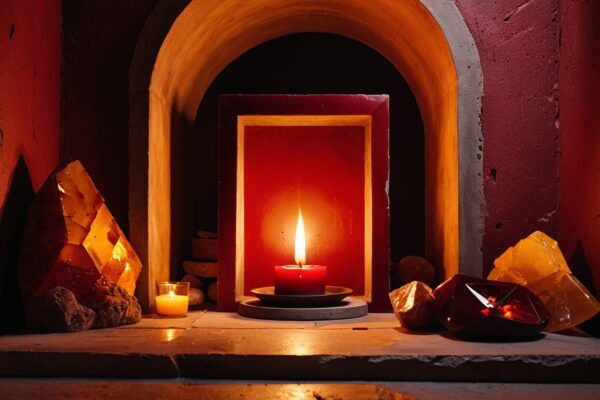
- Fire – a red candle or a tiny oil lamp.
- Air – a feather, incense stick, or a tiny wind chime.
- Spirit – a crystal point or a small mirror to reflect the unseen.
- Writing Implements: A quill or a bamboo pen, ink made from walnut shells, and a small ledger titled “The Genealogical Grimoire” for recording messages.
- Sound Objects: A tiny singing bowl, a drum, or a set of bells to invoke the vibrational signature of lineage.
3. Arranging the Layout
Order on the altar mirrors cosmic order. Follow the traditional “five‑point mandala” or design a personal geometry that feels resonant. Below is a classic template:
- Place the base at the center.
- Arrange the photographs in a semicircle that faces the sunrise (East). This honors the dawning of life.
- Set the elemental vessels at the cardinal points: Earth (South), Water (West), Fire (South‑East), Air (North).
- Position the ancestor tokens directly in front of each photograph, as if they are standing beside the image.
- Lay the writing implements and the Genealogical Grimoire on the East side of the altar, open to the present moment.
- Place the sound objects at the far North, allowing vibrations to travel outward.
Once arranged, step back and observe the symmetry. Adjust until the composition feels balanced both visually and energetically. You may wish to draw faint lines with chalk to mark the alignment, then erase them after the first consecration.
4. Consecrating the Altar
Consecration is the moment the altar awakens. Perform this ritual when the moon is waxing – a time of growth – or during a family birthday for added potency.
- Grounding: Stand barefoot, inhale the Earth’s scent, and visualize roots extending from your feet into the floor, anchoring you to the present.
- Invocation of Elements: Light the fire candle, sprinkle a few drops of water on the earth bowl, wave the feather through the incense smoke, and tap the stone bowl gently. Speak each element’s name in the language of your ancestors (e.g., “Terra,” “Aqua,” “Ignis,” “Ventus”).
- Ancestor Call: Holding the quill, write the name of each ancestor you wish to honor on a slip of paper. Fold each slip and place it beneath the corresponding token. As you do this, say a brief line of gratitude: “I remember you, I honor you, I walk your path.”
- Sound Activation: Strike the singing bowl or drum three times, allowing the vibration to ripple through the space. Imagine the sound as a thread weaving your heart to the ancestral line.
- Seal the Space: Circle the altar with a line of sea salt or a thin rope of black cord, then step back and recite a closing phrase such as: “May this altar stand as a doorway, open to love, closed to harm.”
After the consecration, leave the altar undisturbed for at least one hour. Return later to observe any subtle sensations—temperature shifts, faint aromas, or an inexplicable feeling of being watched.
5. Daily and Seasonal Maintenance
An altar is a living entity; neglect leads to stagnation. Adopt a rhythm that aligns with both your calendar and the cycles of nature.
- Morning Refresh: Light a fresh candle, replace the water, and add a pinch of fresh herbs to the earth bowl.
- Evening Journal: Open the Genealogical Grimoire, record any dreams, messages, or symbols that appeared that day. Write them in a flowing script to keep the channel open.
- Weekly Offerings: Place a small portion of seasonal fruit, a cup of tea, or a dropped tear of gratitude on the altar. Speak aloud a short thanks to the specific ancestor you feel most connected to at that moment.
- Seasonal Purge: At the solstices and equinoxes, clear the altar completely. Sweep away old herbs, burn spent incense, and wash the stone bowl in running water. Then rebuild, adding a new token that represents a recent discovery in your family tree.
- Periodic Re‑Consecration: Every six months, repeat the full consecration ritual, but this time incorporate a new element—a chant learned from a distant relative, a traditional dish, or a spoken language of your lineage.
6. Advanced Esoteric Enhancements
When the basic altar feels stable, you may deepen its power with subtle correspondences.
- Sigil Overlay: Draw a personalized sigil that combines your birth chart’s angular points with the family crest. Place the sigil on a translucent vellum and lay it over the base.
- Astrological Timing: Align the altar’s major adjustments with your personal Mars return or a lunar eclipse that mirrors a pivotal family event.
- Elemental Infusion: Bury a small crystal (e.g., amethyst for the mind, obsidian for protection) in the earth bowl for a full lunar month, then retrieve it and embed it in the altar’s side.
- Sound Frequency: Play a 432 Hz recording of chanting in the background during meditation at the altar; the frequency is said to harmonize ancestral DNA.
- Energy Mapping: Use a dowsing pendulum over the altar to locate any energetic “cold spots.” Place a tiny candle at each to warm the field.
These enhancements are optional but can amplify the subtle dialogue between you and your lineage, creating a feedback loop that supports both personal growth and ancestral healing.
7. Integrating the Altar into Life’s Milestones
Think of the altar not as a static display but as an active participant in rites of passage.
- Birth: Add a newborn’s first hair or a tiny cloth swaddling from the mother’s line.
- Marriage: Place the two families’ tokens side by side, joining them with a braided cord.
- Loss: Light three black candles, recite a family lament, and offer a bowl of rice to symbolize sustenance for the spirit.
- Retirement: Create a “Legacy Scroll” that details the achievements you wish to pass on, and fold it into a ceremonial knot on the altar.
By weaving the altar into these critical moments, you reinforce the idea that the ancestors are present not only in memory but in the unfolding narrative of your everyday existence.
6. The Psychology of Ancestor Veneration
From a depth-psychology perspective, engaging with an ancestor altar taps into profound aspects of the human psyche. Carl Jung, for instance, spoke extensively about the collective unconscious – a reservoir of ancestral experiences and archetypes inherited by all humanity. While Jung’s work focused on universal patterns, the ancestor altar provides a personalized gateway to this deeper lineage.
The act of creating and maintaining an altar can be understood as a form of active imagination, a Jungian technique where one consciously engages with unconscious content. By placing tokens, photographs, and offerings, we are not just remembering; we are actively dialoguing with the symbolic representations of our forebears. This can lead to a greater sense of self-integration, as unresolved family patterns or “ghosts in the family tree,” as often discussed in family systems therapy, can be acknowledged and, eventually, integrated. The altar becomes a safe container for processing these often complex emotional inheritances.
Furthermore, the ritualistic nature of altar work fosters mindfulness. Much like the structured practices of Mindfulness-Based Stress Reduction (MBSR), the repetitive actions of cleansing, arranging, and offering anchor us in the present moment. This focused attention can reduce anxiety and cultivate a deeper sense of presence, allowing for a more profound connection to both our inner landscape and our external environment. The altar becomes a tangible reminder of our place in a larger narrative, fostering resilience and a sense of belonging.
7. Common Pitfalls and How to Avoid Them
While the path of ancestor veneration is deeply personal, certain missteps can hinder its efficacy. Being aware of these can help ensure your altar remains a source of strength and clarity.
- Over-Complication: Newcomers often feel the need to acquire elaborate items or follow rigid rules. Remember, the most powerful altars are often the simplest, built with intention and personal resonance. Start small, and allow your altar to evolve organically. A single meaningful token and a candle can be profoundly effective.
- Treating it as a “Wish-Granting Machine”: An ancestor altar is not a tool for manipulating outcomes or making demands. It is a space for honor, remembrance, and reciprocal relationship. Approaching it with a transactional mindset diminishes its sacred purpose and can lead to frustration when specific outcomes don’t materialize.
- Neglecting Maintenance: As discussed, an altar is a living entity. Forgetting to refresh offerings, clean the space, or engage with it regularly can lead to a feeling of stagnation or disconnection. Consistency, even if it’s just a few moments each day, is key to maintaining its vitality.
- Fear or Guilt: Some individuals may carry unresolved emotions regarding certain ancestors. It’s crucial to approach the altar with an open heart, acknowledging that all ancestors, even those with difficult histories, contributed to your existence. The altar is a space for healing and understanding, not judgment. If intense negative emotions arise, consider journaling about them or seeking guidance from a trusted spiritual mentor or therapist.
- Lack of Boundaries: While connecting with ancestors is powerful, it’s also important to maintain healthy energetic boundaries. Ensure your closing phrase during consecration (“closed to harm”) is heartfelt. If you ever feel overwhelmed or drained after working with the altar, take a break and re-evaluate your practices, perhaps focusing on grounding and protection rituals before engaging again.
8. Integrating Ancestral Wisdom into Daily Life
The wisdom gleaned from your ancestor altar needn’t be confined to its dedicated space; it can enrich your entire life. Think of the altar as a training ground for a deeper, more mindful existence.
- Dream Incubation: Before sleep, sit at your altar and pose a question to your ancestors regarding a challenge or decision you face. Place a small, smooth stone under your pillow. Upon waking, immediately record any dreams, images, or feelings in your Genealogical Grimoire. This technique, similar to ancient temple sleep practices, can open channels to intuitive guidance.
- Mindful Lineage Walking: As you go about your day, consciously acknowledge the skills, talents, and even challenges you’ve inherited. When you find yourself demonstrating a particular gift, internally thank the ancestor from whom it might have sprung. When facing a challenge, consider how an ancestor might have navigated similar terrain. This fosters a sense of continuity and inner strength.
- Ritualized Meal Sharing: Before eating a meal, especially one prepared with love, take a small portion and place it on your altar as an offering. This simple act transforms a mundane activity into a sacred one, acknowledging that sustenance is a gift from the Earth and from the lineage that taught you how to cultivate and appreciate it.
- Creative Expression: Let the inspiration from your ancestors flow into your creative pursuits. This could be writing poetry, painting, composing music, or even crafting. Many artists find their deepest wellspring of inspiration in the stories and experiences of their family history. The altar can serve as a focal point for this creative communion.
- Honoring Life Transitions: Use your altar as a sacred space for marking significant life events. Whether it’s a birthday, an anniversary, a new job, or a personal milestone, bring an item symbolizing the event to the altar. Share your joys and sorrows, inviting your ancestors to bear witness and offer their unseen support during these passages.
This page describes what the Ancestral Healing tradition teaches and how people practise it. It is not a prediction and not medical, psychiatric or crisis advice. How we research and write · report an error