Osho
Jun 8, 2026
·
11 min read
·
Updated Jul 18, 2026
Kundalini Meditation: Osho’s Evening Practice of Shaking and Dancing
🕯 9 min read · June 8, 2026
Editorial Note · Breath pacing was tested for accessibility — seated and lying variations are included where helpful. Verified Jul 2026 against reader FAQ threads.
If Dynamic Meditation is the morning fire, Kundalini Meditation is the evening water — a softer, more feminine energy that doesn’t force anything, but allows everything to dissolve.
About this guide: The sections above explain context and symbolism. The protocol below is a documented method you can practice tonight — grounded in established traditions, not invented rituals or guaranteed predictions.
Osho designed Kundalini as the complement to Dynamic. Where Dynamic uses explosive catharsis to clear the mind, Kundalini uses gentle, involuntary shaking to release the body’s held tensions — the accumulated stress and unexpressed emotion that settles into the muscles, the joints, the organs over the course of a day, a year, a lifetime.
The Four Stages
Stage 1 — Shaking (15 minutes)
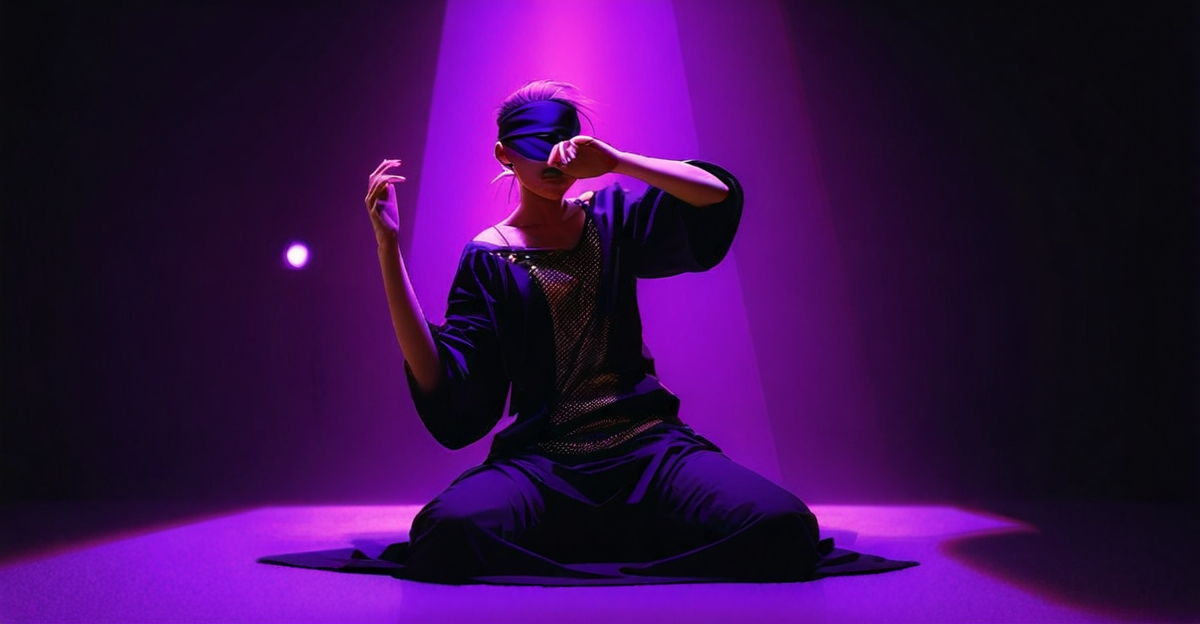
Stand with feet slightly apart. Begin to allow the body to shake. Start gently, from the feet upward. The critical instruction is: don’t shake — let the shaking happen. You are not creating the shaking; you are allowing it to arise spontaneously from within the body.
As the shaking deepens, you may notice it moving through different areas — the knees, the hips, the belly, the shoulders. Each area releasing something of its own. Some people cry during this stage without knowing why. This is the body’s intelligence at work.
Stage 2 — Dance (15 minutes)
Dance freely — any movement the body wishes. There is no right way. The dance may be wild or gentle, structured or chaotic. The only guidance: let the body lead. You are not choreographing; you are following.
Stage 3 — Stillness (15 minutes)
Sit or stand completely still. Close the eyes. Watch whatever arises — thoughts, sensations, feelings — without reacting, without following. The witness becomes available naturally.
Stage 4 — Rest (15 minutes)
Lie down. Nothing to do. Simply rest in your own presence. Allow whatever happened in the first three stages to integrate fully.
“In Kundalini, the shaking is not something you do. It is something that happens to you. When it really happens — you will feel it is not you who is shaking. It is existence shaking you.”
— Osho
The Secret of Stage One
The most important teaching around Kundalini Meditation is about the shaking. Most people first try to “do” the shaking — they perform it, generate it with muscular effort. The shift happens when you stop trying and simply allow.
When you relax completely — when you stop controlling the movement and let the body find its own shaking — something fundamentally different occurs. It feels like the body is being moved by something larger than itself. This is not a metaphor. Many practitioners report this unmistakably after their first genuine surrender into the shaking.
Kundalini and the Body’s Wisdom
Many people who practice Kundalini Meditation regularly report that tensions they had carried for years — in the shoulders, the lower back, the jaw — gradually dissolve. Not because they were “worked on” directly, but because the body was given permission to release through movement.
Kundalini is specifically an evening meditation — designed for the time between day’s activity and night’s sleep. The afternoon or early evening is ideal. Done regularly, it creates a natural transition: from the doing and achieving of day, to the restfulness and receptivity of night.
Step-by-Step Practice Protocol
The protocols below come from documented spiritual, psychological, or contemplative traditions. They support self-reflection and skill-building — not medical diagnosis, crisis care, or literal prediction of future events.
Practice Osho active meditations exactly as staged — catharsis first, silence second. Not suitable during acute psychiatric crisis without professional guidance.
Time needed: 45–60 minutes (technique-dependent)
- Empty stomach (2+ hours after food); loose clothes; safe floor space; inform housemates if loud stages are used.
- Use official stage-timed music if available (10+10+10+15+15 for Dynamic) — timers prevent guessing.
- Stage 1–3: follow breath, expression, and movement instructions fully; do not suppress sound or shaking.
- Stage 4 (freeze/stillness): stop instantly; remain a statue; witness sensations without fixing them.
- Stage 5: gentle movement or celebration as instructed; lie down 5 minutes after if dizzy.
- Journal immediately: what released, what silence felt like, one integration action for the day. Skip driving until grounded.
Tradition & references: Published Osho International Foundation stage instructions for Dynamic, Kundalini, Nadabrahma, and related meditations; Vigyan Bhairav Tantra (translated sutras, reflective context).
Historical Roots and Influences
While Osho’s Kundalini Meditation is a modern, structured practice, its name and underlying principles draw from ancient traditions. The term “Kundalini” itself originates from classical Indian yogic and Tantric philosophies, referring to a dormant divine energy believed to reside at the base of the spine. When awakened, this energy is said to rise through the central energetic channel (sushumna nadi), activating various energy centers (chakras) and leading to profound states of spiritual awareness and liberation.
Texts such as the Hatha Yoga Pradipika and the Shiva Samhita describe techniques for awakening Kundalini, often involving specific postures (asanas), breathwork (pranayama), and energetic locks (bandhas). These ancient practices were typically taught by a guru to a dedicated student over many years, emphasizing rigorous preparation and purification.
Osho’s approach, however, adapted these concepts for a modern context, creating active meditations designed to be accessible to Western practitioners often burdened by mental and emotional suppression. He recognized that for many, direct access to subtle energy work was hindered by accumulated tension. The shaking and dancing stages of his Kundalini Meditation are, in essence, a cathartic preparation, aiming to release physical and emotional blockages before deeper energetic experiences can unfold. This pragmatic reinterpretation allowed individuals to engage with the concept of Kundalini without requiring decades of traditional yogic discipline, making the path of self-discovery more immediate and experiential.
The Psychological Lens: Jungian Parallels and Somatic Release
From a depth psychology perspective, Osho’s Kundalini Meditation offers intriguing parallels with concepts articulated by Carl Jung. Jung, who explored the collective unconscious and archetypal energies, saw the individuation process as a journey toward psychic wholeness, often involving the integration of repressed or unconscious material.
The “shaking” stage, in particular, can be understood as a somatic release mechanism for what Jung termed the “shadow” – the unconscious aspects of the personality that the conscious ego rejects or represses. Accumulated stress, unexpressed emotions, and even traumatic memories can become physically “stored” in the body. The involuntary shaking provides a non-cognitive pathway for these energies to surface and dissipate. This aligns with contemporary somatic therapies, which recognize the body’s role in psychological healing and the importance of releasing trauma held in the nervous system.
Dr. Peter A. Levine, a pioneer in Somatic Experiencing, emphasizes how the body’s natural fight-flight-freeze responses, when incomplete, can lead to chronic tension and dysregulation. The shaking in Osho’s meditation can mimic the natural tremoring response observed in animals after a threat, which helps discharge excess survival energy. By allowing the body to shake without conscious control, practitioners engage a primal, instinctual mechanism for self-regulation and release.
The subsequent stages of dance, stillness, and rest further support this integration. The free dance allows for spontaneous expression and the processing of emerging emotions. The stillness cultivates a mindful, witnessing awareness, helping to integrate the released material without judgment. Finally, the rest stage provides a period for the nervous system to recalibrate and for the body-mind to absorb the changes, fostering a deeper sense of inner peace and equilibrium. This progression mirrors a therapeutic process of activation, release, processing, and integration.
Common Pitfalls and How to Navigate Them
While Osho Kundalini Meditation is designed to be accessible, certain common pitfalls can hinder the experience or even lead to discomfort. Awareness of these can significantly enhance your practice.
- Trying too hard to shake: As Osho himself emphasized, the shaking is not something you *do*. The biggest mistake beginners make is to actively try to initiate or intensify the shaking through muscular effort. This creates tension rather than release. Instead, focus on relaxation, letting go, and allowing the body’s natural impulses to emerge. Imagine your body is a leaf gently vibrating in the wind.
- Intellectualizing the experience: During the meditation, especially in the stillness and rest stages, the mind may try to analyze, judge, or understand what is happening. While reflection is valuable *after* the meditation, during the practice, the goal is to be present with the sensations, emotions, and thoughts without attachment. If you find yourself overthinking, gently bring your attention back to your body or breath.
- Suppressing emotions or sounds: The active stages can bring up strong emotions—sadness, anger, joy, fear—and the urge to make sounds. Suppressing these natural expressions can block the release process. Create a safe space where you feel comfortable allowing whatever arises to be expressed, whether it’s crying, laughing, or making vocalizations.
- Forcing stillness: In Stage 3 (Stillness), the instruction is to remain still. However, some practitioners interpret this as rigidly holding their body, which can create new tension. The intention is to cease *voluntary* movement, not to suppress subtle tremors or involuntary shifts that might still be occurring as the body integrates. Be still, but not rigid.
- Ignoring the importance of the environment: The quality of your practice space matters. Ensure it’s a place where you won’t be interrupted, where you feel safe to let go, and where the temperature is comfortable. Dimming the lights can also help create a more inward-focused atmosphere.
- Inconsistent practice: Like any profound practice, the benefits of Kundalini Meditation accrue over time with consistency. Sporadic practice may offer momentary relief, but regular engagement allows for deeper layers of release and integration to unfold. Aim for a consistent schedule, even if it’s not daily, to build momentum.
Integrating Kundalini Meditation into Daily Life
The profound experiences within Osho’s Kundalini Meditation are not meant to remain isolated to the meditation cushion. The ultimate aim is for the insights and releases to integrate into daily living, fostering greater presence, emotional resilience, and authentic expression.
One primary benefit is an increased awareness of the body’s subtle signals. After regularly allowing the body to shake and release, you may become more attuned to nascent tensions or emotional blockages before they become overwhelming. This heightened somatic awareness can serve as an early warning system, prompting you to take breaks, stretch, or engage in other self-care practices.
The practice also cultivates a deeper capacity for non-doing and surrender. In a world that often values constant activity and control, the instruction to “let the shaking happen” or “let the dance lead” is a radical act. Carrying this principle into daily life can manifest as a greater ability to trust natural processes, to release the need to micromanage every outcome, and to allow for spontaneity. This can reduce stress and foster a more flow-like experience in work, relationships, and creative pursuits.
Furthermore, the stages of stillness and rest develop the “witnessing consciousness” – the capacity to observe thoughts, emotions, and sensations without being swept away by them. This skill is invaluable in navigating challenging situations. Instead of reacting impulsively, you can pause, observe your inner landscape, and choose a more conscious response. This aligns with mindfulness-based stress reduction (MBSR) techniques, which emphasize non-judgmental awareness of present-moment experience.
Finally, the emotional catharsis experienced can lead to greater emotional freedom and authenticity. As old patterns of suppression are released, there is more space for genuine feelings to arise and be expressed appropriately. This can enrich relationships, foster creativity, and lead to a more vibrant and unburdened experience of life. The “evening water” quality of Kundalini Meditation thus prepares you not just for a restful night, but for a more integrated and conscious day ahead.

Meditation & Yoga Teacher
Anil Prakash has practiced and taught meditation and pranayama for fifteen years across several traditions, from MBSR to the active methods of Osho. He writes step-by-step, evidence-aware guides and always notes contraindications and safe practice.
Read Anil Prakash's full profile →✦
Editorial Standards
Practices on AfterDarkIntuition are researched from depth psychology (Jung), established spiritual traditions, and contemporary therapeutic frameworks. They are for self-reflection and personal growth — not medical, psychiatric, or crisis care. If you are in crisis, please contact a licensed professional or emergency services. About our editorial approach →
Editorial Note
Written for self-reflection and spiritual exploration. Not medical or psychological advice. Our editorial standards →
Written for self-reflection and spiritual exploration. Not medical or psychological advice. Our editorial standards →