Rituals
Jun 25, 2026
·
10 min read
·
Updated Jul 25, 2026
Money Altar: A Practical Ritual for Abundance and Prosperity
🕯 9 min read · June 25, 2026
MoneyAltar: A Practical Ritual for Abundance and Prosperity
Introduction
Imagine standing at the end of a long day, feeling the weight of bills, the whisper of uncertainty about future security, and a quiet wish that life could flow a little more easily. Rather than reaching for a quick fix or a promise of instant wealth, many people find that creating a small, intentional space in their home helps shift the inner dialogue from scarcity to possibility. This article offers a step‑by‑step guide to building a personal money altar that draws on documented psychological, meditative, and symbolic traditions. The practice is not a guarantee of financial gain; instead, it is a way to clarify values, cultivate a mindset of openness, and align everyday actions with a sense of abundance.
Foundations: Psychological and Symbolic Roots
Jungian Symbolism of Wealth
Carl Gustav Jung taught that symbols act as bridges between the conscious mind and the deeper layers of the psyche. In his work on archetypes, he noted that images of treasure, gold, or fertile fields often represent the psyche’s potential for growth and individuation. By placing a symbol of wealth on an altar, we give the unconscious a concrete focal point that can stimulate reflection on what prosperity means beyond mere numbers—such as security, generosity, and personal fulfillment.
Mindfulness and MBSR
The Mindfulness‑Based Stress Reduction (MBSR) program, developed by Jon Kabat‑Zinn, emphasizes present‑moment awareness without judgment. When we approach an altar with mindful attention—observing the candle’s flame, feeling the texture of a stone, noticing the breath—we train the mind to stay grounded. This practice reduces reactive anxiety about money and creates a mental space where clearer decisions can arise.
Osho’s Stages of Awareness
Osho described meditation as a progression from external focus to inner stillness, often using dynamic techniques that involve movement, breath, and sound. While his full methods are best learned from qualified teachers, the underlying idea—that awareness can be cultivated through intentional action—fits well with an altar ritual. Lighting a candle, arranging objects, and then sitting in quiet observation become a miniature version of that staged awareness process.
Runic Wisdom: Elder Futhark
The Elder Futhark runic alphabet, used by early Germanic peoples, includes the rune Fehu (ᚠ), traditionally associated with cattle, wealth, and the flow of resources. Historical inscriptions show Fehu used in contexts of exchange and blessing. Drawing or placing this rune on an altar is a way to invoke an ancient cultural reminder that prosperity is tied to movement, exchange, and respect for what sustains life.
Tarot Reflections: RWS Deck
The Rider‑Waite‑Smith (RWS) tarot deck, first published in 1909, offers a set of archetypal images that many use for contemplation rather than fortune‑telling. The Ace of Pentacles, for example, depicts a hand emerging from a cloud holding a golden coin surrounded by sprouting growth—a visual metaphor for new material opportunity rooted in fertile ground‑ed in earthly stability. Reflecting on such an image encourages the mind to consider what conditions support growth in one’s own life.
Embodied Practice: Iyengar Yoga
B.K.S. Iyengar’s approach to yoga emphasizes precise alignment, the use of props, and sustained attention to bodily sensations. A simple standing pose like Tadasana (mountain pose) teaches grounding through the feet, lengthening through the spine, and openness in the chest. When performed mindfully, this posture reinforces the feeling of being solid and receptive—qualities that parallel a stable financial foundation.
Preparing Your Space
Choosing a Location
Select a surface that is low enough to reach comfortably but high enough to keep the arrangement undisturbed—a small table, a shelf, or even a sturdy windowsill. The area should be free of clutter that could distract the eye. If possible, orient the space toward the direction that feels most inviting to you; many traditions note east as a direction of beginnings, but personal preference matters more than rigid rules.
Cleansing the Area
Before placing any objects, clear the surface physically. Wipe it with a damp cloth, then dry it. Some practitioners sprinkle a pinch of sea salt around the edges as a symbolic gesture of purification, a practice noted in various European folk traditions. The act itself—wiping, sprinkling, and breathing deeply—serves as a mindfulness cue that the space is being prepared for intentional work.
Setting Intentions
Write a short, present‑tense statement that captures what you wish to invite, not a demand for a specific sum. For example: “I am open to receiving resources that support my well‑being and allow me to share generously.” Keep the wording realistic and aligned with your values. Place this note where you can see it during the ritual; it acts as a reminder of the mindset you are cultivating.
Building the Altar: Elements and Their Meaning
The Base
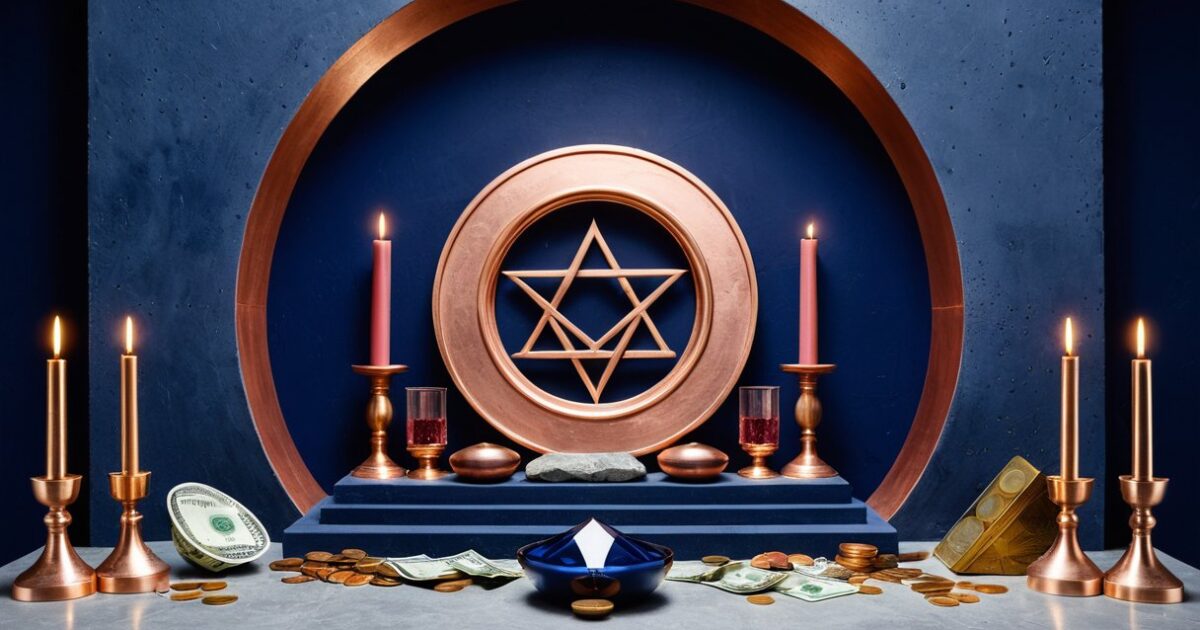
Lay a natural‑fiber cloth—linen, cotton, or wool—in a color that feels grounding to you (earth tones such as deep green, brown, or muted blue work well). The cloth defines the sacred perimeter of the altar and provides a clean backdrop for the objects.
Earth Element
Place a small stone, a piece of raw crystal, or a pinch of soil in a tiny dish. In many traditions, stone represents stability and the enduring nature of the earth. Choose a specimen that you find pleasing to touch; its texture invites tactile awareness during the ritual.
Water Element
A shallow bowl filled with fresh water symbolizes flow, adaptability, and the emotional realm. Water reminds us that resources, like rivers, are most beneficial when they move rather than stagnate. Change the water daily to keep it fresh and to reinforce the habit of renewal.
Fire Element
A single unscented tea light or votive candle provides the fire element, representing transformation, energy, and the spark of action. Always place the candle on a heat‑resistant holder and never leave it unattended. Extinguish it safely after the ritual.
Air Element
If you enjoy a subtle scent, a single stick of natural incense (such as sandalwood or cedar) or a
Building the Altar: Elements and Their Meaning (continued)
Air Element (continued)
If you enjoy a subtle scent, a single stick of natural incense (such as sandalwood or cedar) or a small feather represents the air element. Air symbolizes intellect, communication, and the breath of life. It reminds us to breathe deeply and to articulate our intentions clearly. If using incense, ensure proper ventilation.
Plant Kingdom
A small, living plant in a pot, or a fresh flower in a vase, brings the vibrant energy of the plant kingdom to your altar. This element represents growth, renewal, and the interconnectedness of life. Choose a plant that is easy to care for, like a small succulent or a sprig of rosemary, which also carries traditional associations with remembrance and clarity.
Symbol of Abundance
This is where personal meaning comes in. Select an object that genuinely represents abundance to you. This could be a smooth, round stone, a picture of a flourishing garden, a small, polished coin (not necessarily valuable, but symbolic), or even a miniature replica of something you associate with prosperity. The key is that it resonates deeply with your personal vision of well-being, rather than being chosen for its perceived monetary value.
Personal Touch
Finally, add one or two items that are uniquely meaningful to you. Perhaps a small, framed photo of a loved one, a piece of jewelry that holds sentimental value, or a handwritten affirmation. These items personalize the altar, making it a true reflection of your inner world and reinforcing the idea that abundance is deeply personal and multifaceted.
Daily Practice: Engaging with Your Altar
Morning Activation
Approach your altar in the morning, ideally before the demands of the day fully begin. Light the candle and take a few deep, grounding breaths. Place your hands gently on the surface of the altar or hold a grounding object like the stone. Spend a moment in quiet contemplation, allowing your intention statement to resonate within you. This isn’t about asking for something, but rather about aligning your internal state with a sense of openness and gratitude for what is already present and what is to come. This brief ritual, even 2-3 minutes, sets a mindful tone for your day.
Evening Reflection
At the close of your day, revisit your altar. Extinguish the candle safely. Reflect on any moments of abundance, generosity, or resourceful thinking you experienced throughout the day, no matter how small. This practice, similar to a gratitude journal, retrains the mind to notice and appreciate positive experiences, shifting focus away from perceived lack. Consider what you learned, what you gave, and what you received. This reflective pause helps to integrate the day’s experiences and reinforce your abundance mindset before rest.
Weekly Deepening
Once a week, take a little more time with your altar. You might gently dust the objects, refresh the water, or tend to your plant. This is also an opportunity to sit for a longer period of focused meditation. You could use a simple breath awareness practice, or if you’re inclined, engage with a single tarot card like the Ace of Pentacles, contemplating its imagery and what new opportunities it might be pointing to in your life. This deeper engagement strengthens your connection to the altar and allows for more profound reflection on your path to prosperity.
Avoiding Instant Gratification and Wishful Thinking
Expecting Instant Results
One of the most common misconceptions is that an altar is a magic wand for immediate financial gain. As noted by Dr. Clarissa Pinkola Estés in her work on the wild feminine, true transformation is often a slow, organic process, not an overnight miracle. The altar is a tool for cultivating an inner shift, which then influences outer actions and perceptions over time. Patience and consistent practice are far more valuable than a belief in instant fixes.
Treating it as a “Wishing Well”
While intention setting is crucial, approaching the altar solely as a place to make demands can lead to disappointment. The practice is less about “getting” and more about “becoming” – becoming a person who is more aligned with the principles of abundance, generosity, and thoughtful resource management. Instead of focusing on “I want X dollars,” try framing your intentions as “I cultivate the wisdom to manage resources well,” or “I am open to opportunities that allow me to thrive.”
Neglecting the Altar
A dusty, forgotten altar sends a message of neglect, both to the space and to your own intentions. Just as a garden thrives with regular tending, your altar benefits from consistent, albeit brief, engagement. If daily practice feels overwhelming, commit to a few times a week, or even just a weekly refresh. The consistency reinforces the mental pathways you are trying to build.
Comparing Your Altar to Others’
Social media often presents idealized versions of spiritual practices. Avoid the trap of comparing your humble, personal altar to elaborate displays you might see online. Your altar’s power comes from its personal resonance and consistent use, not from its aesthetic grandeur or the monetary value of its components. Focus on what feels authentic and meaningful to you, rather than striving for an external ideal.
This page describes what the Rituals tradition teaches and how people practise it. It is not a prediction and not medical, psychiatric or crisis advice. How we research and write · report an error