Osho
Jun 8, 2026
·
10 min read
·
Updated Jul 5, 2026
Osho on Fear: How to Transform Your Greatest Terror Into
🕯 8 min read · June 8, 2026
Editorial Note · Written for self-reflection with clear limits on what spirituality can and cannot replace (therapy, medical care). Focus: Osho on Fear: How.
Osho on Fear: How to Transform Your Greatest Terror Into Freedom
About this guide: The sections above explain context and symbolism. The protocol below is a documented method you can practice tonight — grounded in established traditions, not invented rituals or guaranteed predictions.
What is the thing you are most afraid of? For some, it is the silence of a lonely room; for others, it is the inevitable descent into the darkness of death; for many, it is simply the terror of being truly seen for who they are. We spend the majority of our lives building elaborate fortresses of security, careers, and relationships, all designed to keep the shadow of fear at bay. Yet, the more we flee, the faster fear pursues us.
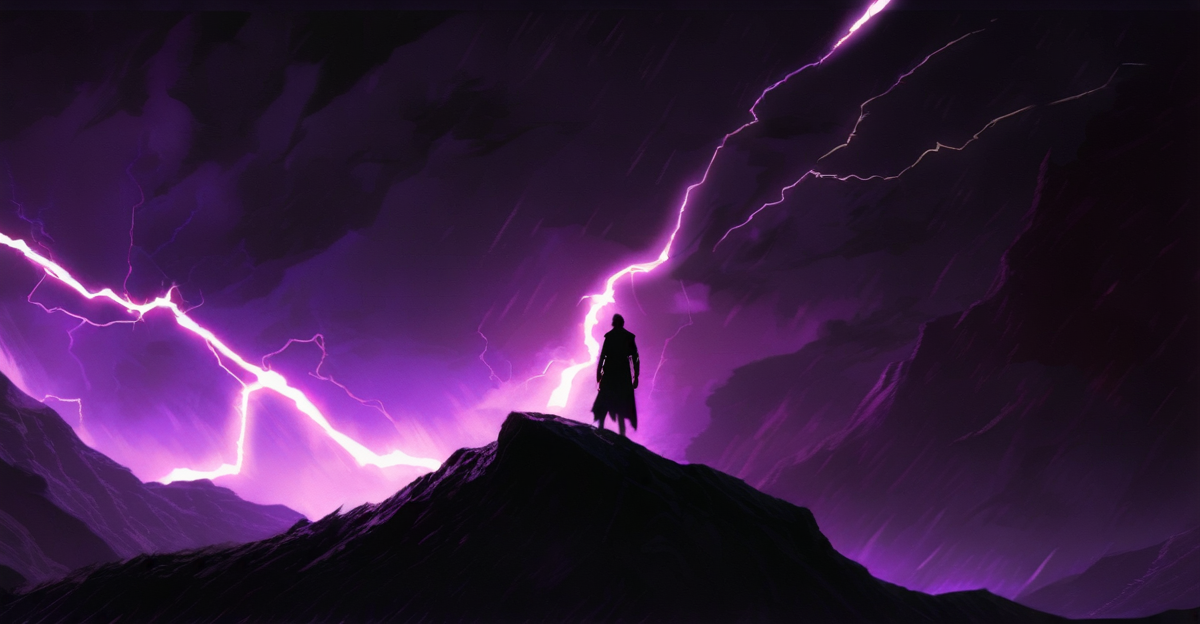
Osho, the provocative mystic and master of meditation, proposed a radical departure from the traditional way we handle anxiety. While the world tells us to fight fear, suppress it, or distract ourselves from it, Osho suggests something that feels counterintuitive, almost dangerous: walk directly into the center of the storm. He teaches that fear is not an enemy to be defeated, but a doorway to be entered. When you stop running, the nature of fear changes. It ceases to be a wall and becomes a bridge.
The Illusion of Security and the Root of Fear
To understand Osho’s perspective on fear, we must first understand what he calls the illusion of security. Most of our fear is not based on a present danger, but on a projected future. We fear losing what we have, or we fear not attaining what we desire. This is the mind playing a game of shadows. The mind creates a version of the future, attaches a feeling of lack or danger to it, and then convinces the body that the danger is happening right now.
Osho argues that the root of all fear is the ego. The ego is a constructed identity—a mask we wear to fit into society. Because this mask is fragile, the ego is in a constant state of panic. It fears judgment, failure, and ultimately, its own disappearance. When you identify yourself as your job, your social status, or even your personality, you are essentially clinging to a handful of sand. The harder you squeeze to keep the sand from slipping through your fingers, the more anxious you become.
True freedom begins when you realize that the person who is afraid is not you. You are the witness, the silent observer who watches the fear arise, peak, and dissolve. By shifting your identity from the fearful ego to the witnessing consciousness, you create a space between yourself and the emotion. In that space, the power of fear vanishes.
The Alchemy of Acceptance: Moving from Resistance to Presence
The primary reason fear persists is resistance. When we feel fear, our immediate instinct is to push it away. We say, I should not feel this, or I must get rid of this anxiety. This resistance creates a tension that feeds the fear, turning a small spark of nervousness into a raging fire of panic.
Osho teaches the alchemy of acceptance. Instead of fighting the fear, he suggests we welcome it. Imagine fear as a guest knocking at your door. Instead of locking the door and pretending you aren’t home, you open the door wide and invite the guest in. You say, Come in, fear. Sit with me. Let me see you.
When you stop resisting, the energy of fear changes. Fear is essentially a high-frequency energy. When it is resisted, it feels like tension. When it is accepted and observed, it transforms into a state of intense alertness. This is the secret of the mystic: the transformation of fear into awareness. When you look directly at your terror without blinking, you discover that the monster is actually a mirror. It shows you exactly where you are still clinging to the illusion of the ego.
Practical Tools for Transforming Terror
Understanding the theory is one thing, but experiencing the freedom is another. To move from the head to the heart, we need practical methods. Osho emphasized that the body is the gateway to the soul, and therefore, we must work with the body to dissolve fear.
The Art of Witnessing
The most potent tool in the Osho toolkit is the practice of witnessing. This is not about thinking about your fear, but observing it as a biological event.
When a wave of fear hits, do not label it as my fear. Instead, observe it as a sensation in the body. Notice where it lives. Is it a tightness in the chest? A knot in the stomach? A dryness in the throat? Watch these sensations as if you were a scientist observing a chemical reaction. Do not try to change them; simply acknowledge them. By observing the physical manifestation of fear, you disconnect the emotional narrative from the bodily experience. You realize that the sensation is just energy, and energy cannot hurt you.
Dynamic Release through Movement
Osho recognized that for many, sitting in silent meditation while terrified is impossible. The energy is too high. This is why he developed Dynamic Meditation. To transform fear, you must first release the accumulated tension in the body.
Try a practice of conscious shaking. Stand with your feet shoulder-width apart and begin to shake your entire body—your arms, your legs, your shoulders—as if you are shaking off a layer of dust. Let the shaking become chaotic and wild. Breathe deeply and loudly. This process helps discharge the fight-or-flight energy that fear deposits in the nervous system. Once the physical tension is released, the mind becomes quiet, and you can enter a state of deep stillness where fear cannot survive.
The Practice of Conscious Surrender
Surrender is often misunderstood as weakness or defeat. In Osho’s vision, surrender is the ultimate act of courage. It is the decision to stop fighting the flow of existence.
Practical surrender looks like this: In a moment of intense anxiety, instead of trying to control the situation, consciously let go. Imagine yourself as a leaf floating on a river. You do not know where the river is taking you, but you trust the water. Say to yourself, I surrender to this moment. I allow everything to happen exactly as it is. In this total surrender, the boundary between you and the universe dissolves, and the fear of loss disappears because there is no longer a separate self to lose anything.
Facing the Ultimate Fear: The Mystery of Death
The greatest terror for most humans is death. Osho suggests that our fear of death is actually a fear of the unknown. We are afraid because we believe that death is the end of our existence. However, he reminds us that we have already died a thousand times. Every time a cell in your body dies, every time a phase of your life ends, a small death occurs.
The secret to overcoming the fear of death is to live so fully in the present moment that death becomes irrelevant. If you are totally present, there is no future to be afraid of and no past to regret. You are simply here. Osho teaches that when you live in a state of celebration and mindfulness, death is not a tragedy but a culmination—a final merging into the infinite.
By meditating on the impermanence of all things, you stop clinging. When you stop clinging, you stop fearing. You realize that you are not the body or the mind, but the eternal awareness that precedes birth and survives death.
The Gateway to Freedom
The journey from terror to freedom is not a linear path. There will be days when the fear returns, and the old patterns of resistance will try to pull you back into the fortress of security. The key is to remember that the fear is not a sign that something is wrong, but a sign that you are on the verge of a breakthrough.
Every time you face your fear with awareness, a layer of the ego falls away. You become lighter, more transparent, and more alive. You begin to realize that the very thing you were running from was the catalyst for your awakening. The terror was the invitation to wake up from the dream of separation.
As you integrate these practices, you will find that you no longer seek a life without fear, but rather a life where fear is a companion that reminds you to stay present. You discover that on the other side of fear is a profound peace—a peace that does not come from the absence of conflict, but from the center of the storm.
True freedom is not the absence of fear, but the realization that you are larger than any fear that could possibly arise. You are the sky, and the fear is merely a passing cloud. The cloud may be dark, and it may bring a storm, but the sky remains untouched, vast, and eternally blue.
Frequently Asked Questions
What should I do if my fear feels too overwhelming to observe?
Start with the body first. Use movement, dancing, or shaking to release the physical energy before attempting to witness. Once the peak of the adrenaline has passed, you can gently begin to observe the remaining sensations without judgment.
Is it possible to completely eliminate fear from my life?
Fear is a natural biological response, so it will always exist as a mechanism for survival. The goal is not to eliminate the emotion, but to change your relationship with it so that it no longer controls your actions or your peace of mind.
How does witnessing differ from simply ignoring the problem?
Ignoring is a form of avoidance and resistance, which pushes the fear into the subconscious. Witnessing is an active, conscious engagement where you look directly at the fear with curiosity and presence, which allows the energy to process and dissolve.
Step-by-Step Practice Protocol
The protocols below come from documented spiritual, psychological, or contemplative traditions. They support self-reflection and skill-building — not medical diagnosis, crisis care, or literal prediction of future events.
Practice Osho active meditations exactly as staged — catharsis first, silence second. Not suitable during acute psychiatric crisis without professional guidance.
Time needed: 45–60 minutes (technique-dependent)
- Empty stomach (2+ hours after food); loose clothes; safe floor space; inform housemates if loud stages are used.
- Use official stage-timed music if available (10+10+10+15+15 for Dynamic) — timers prevent guessing.
- Stage 1–3: follow breath, expression, and movement instructions fully; do not suppress sound or shaking.
- Stage 4 (freeze/stillness): stop instantly; remain a statue; witness sensations without fixing them.
- Stage 5: gentle movement or celebration as instructed; lie down 5 minutes after if dizzy.
- Journal immediately: what released, what silence felt like, one integration action for the day. Skip driving until grounded.
Tradition & references: Published Osho International Foundation stage instructions for Dynamic, Kundalini, Nadabrahma, and related meditations; Vigyan Bhairav Tantra (translated sutras, reflective context).

Meditation & Yoga Teacher
Anil Prakash has practiced and taught meditation and pranayama for fifteen years across several traditions, from MBSR to the active methods of Osho. He writes step-by-step, evidence-aware guides and always notes contraindications and safe practice.
Read Anil Prakash's full profile →✦
Editorial Standards
Practices on AfterDarkIntuition are researched from depth psychology (Jung), established spiritual traditions, and contemporary therapeutic frameworks. They are for self-reflection and personal growth — not medical, psychiatric, or crisis care. If you are in crisis, please contact a licensed professional or emergency services. About our editorial approach →
Editorial Note
Written for self-reflection and spiritual exploration. Not medical or psychological advice. Our editorial standards →
Written for self-reflection and spiritual exploration. Not medical or psychological advice. Our editorial standards →