Crystals
Jun 8, 2026
·
11 min read
·
Updated Jul 20, 2026
Rose Quartz Meaning: The Stone of Unconditional Love
🕯 9 min read · June 8, 2026
Editorial Note · This rose quartz guide reflects hands-on pairing with heart-opening journaling, not recycled metaphysical copy.
There are stones of power, stones of protection, stones of clarity and sight. Rose quartz is none of these. Rose quartz is the stone of the heart — and the heart, in the end, is the only oracle that matters.
About this guide: The sections above explain context and symbolism. The protocol below is a documented method you can practice tonight — grounded in established traditions, not invented rituals or guaranteed predictions.

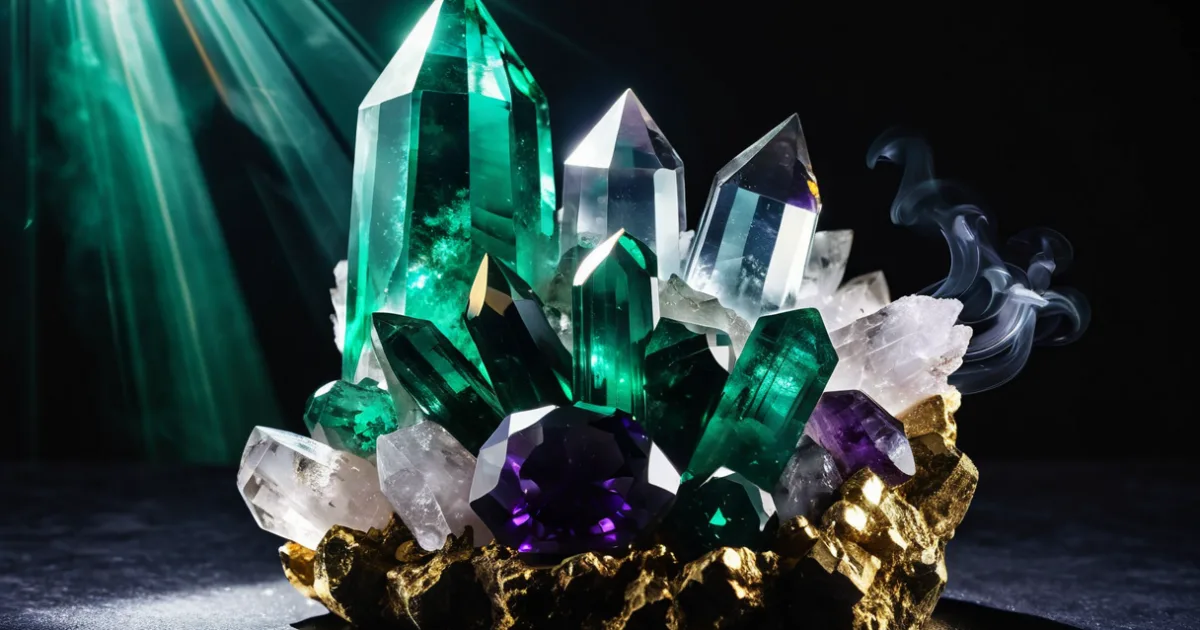
Raw rose quartz — pale pink with soft translucent glow
The Stone of Unconditional Love
Rose quartz is the pink variety of quartz, colored by traces of titanium, iron, or manganese. But more than any other stone in the mineral kingdom, rose quartz has been associated — across virtually every culture that has worked with it — with a single quality: love.
Not romantic love specifically, though it includes that. The deeper association is with unconditional love — the love of a parent for a child, the love of existence itself, the fundamental kindness that underlies everything. In the Sufi tradition this is called Rahmah. In Buddhism, Metta. Rose quartz is the mineral expression of this quality.
Heart Chakra and Emotional Healing
Rose quartz is the primary stone of the heart chakra (Anahata). The heart chakra governs not just romantic relationships but all relationship — to others, to oneself, to life itself. When the heart chakra is contracted — by grief, by past wounds, by fear of vulnerability — the entire being contracts around it.
Working with rose quartz is said to gently open this contraction. Not by force, but by invitation. The stone seems to create a field that makes it safe to feel, safe to open, safe to receive.
How to Work with Rose Quartz
Self-Love Practice
Hold a piece of rose quartz over the heart center. Close the eyes. Breathe slowly and deeply. With each inhale, imagine a soft rose-pink light entering the heart. With each exhale, imagine anything that has been hardening — any old pain, any self-judgment — releasing. Do this for five minutes and notice how you feel afterward.
Sleep
Rose quartz near the bed (or under the pillow) is said to promote loving dreams and a generally softer quality of sleep — particularly good for people with anxiety or those recovering from heartbreak.
Relationships
Place rose quartz in the relationship corner of your home (far right from the main entrance in feng shui). Or carry a tumbled piece when navigating difficult conversations — the stone seems to support the capacity for empathy and non-reactive listening.
“What is love? Not the emotion — the emotion comes and goes. Love is the ground state. It is what remains when everything else has been stripped away. Rose quartz helps you remember what that feels like.”
Step-by-Step Practice Protocol
The protocols below come from documented spiritual, psychological, or contemplative traditions. They support self-reflection and skill-building — not medical diagnosis, crisis care, or literal prediction of future events.
A grounded crystal mindfulness session — no claims of curing illness; use stones as tactile anchors for attention.
Time needed: 10–15 minutes
- Cleanse physically: rinse under lukewarm water 30 seconds (avoid water-soluble stones like selenite) or wipe with a dry cloth; dry completely.
- Sit comfortably; hold the stone in both hands at chest level. Set a timer for 5–10 minutes.
- Breathe naturally; notice temperature, weight, texture. When the mind wanders, return attention to the stone — same as breath meditation.
- Optional: place the stone on your desk or pillow as a reminder of your intention (not as a medical treatment).
- Journal: What emotion or thought repeated during the session? One action to support that insight offline.
- Store crystals away from direct sunlight if color-sensitive (amethyst, rose quartz).
Tradition & references: Common mineral care practices (Gemological Institute guidelines for handling specimens); mindfulness-based stress reduction (MBSR) body-awareness methods — crystals are focal objects, not medical devices.
Rose Quartz in Psychological Frameworks
While often discussed in spiritual terms, the effects attributed to rose quartz can also be understood through various psychological lenses. The concept of “unconditional love” resonates deeply with Carl Rogers’ humanistic psychology, particularly his emphasis on “unconditional positive regard.” When an individual experiences this, it fosters self-acceptance, reduces defensiveness, and promotes personal growth. Rose quartz, in this context, acts as a tangible anchor or a symbolic prompt for cultivating an inner state of unconditional positive regard towards oneself and others. The act of holding the stone, focusing on its properties, and setting an intention for love and compassion can be seen as a form of self-directed cognitive reframing or a mindfulness practice aimed at shifting emotional states.
Furthermore, the stone’s association with the heart chakra and emotional healing can be interpreted through the lens of affect regulation. Emotional wounds often lead to avoidance behaviors or emotional constriction. The suggestion that rose quartz “makes it safe to feel” aligns with therapeutic approaches that emphasize creating a safe internal space for processing difficult emotions. By consciously engaging with the stone, individuals might be employing a form of self-soothing, using the tactile and visual input to ground themselves and gently encourage emotional openness. This is not to say the stone possesses inherent healing powers in a medical sense, but rather that its symbolic and tactile presence can facilitate psychological processes of self-compassion, emotional release, and boundary setting in a gentle, non-confrontational manner.
Common Misconceptions and Ethical Considerations
Despite its gentle nature, several misconceptions surround the use of rose quartz that warrant clarification:
- Misconception 1: Instant Love Potion. Rose quartz is sometimes erroneously marketed as a “love magnet” that will instantly attract a romantic partner. While it can foster an internal state conducive to healthy relationships by promoting self-love and openness, it does not magically manifest external circumstances or partners. Its work is primarily internal, preparing the individual for love rather than conjuring it.
- Misconception 2: Replacement for Therapy. While working with rose quartz can be a supportive self-care practice, it is not a substitute for professional psychological or medical help, especially for deep-seated trauma, severe anxiety, or depression. It functions as an adjunct for emotional well-being, not a primary treatment.
- Misconception 3: Passive Receiver. Some believe merely owning rose quartz is enough. However, its benefits are most potent when actively engaged with through intention, mindfulness, and conscious practice. It serves as a tool for personal work, not a passive charm.
Ethical Considerations: When purchasing rose quartz, consider its sourcing. While generally abundant, responsible mining practices are crucial. Seek suppliers who can verify ethical and sustainable extraction to ensure your pursuit of unconditional love isn’t contributing to environmental or human exploitation. Additionally, be wary of exaggerated claims or guarantees of specific outcomes. The true value of rose quartz lies in its capacity to symbolize and support an internal journey of love and compassion, which is a deeply personal and ongoing process.
Rose Quartz Through History and Tradition
The allure of rose quartz is not a modern phenomenon. Its gentle beauty and perceived energetic properties have captivated cultures for millennia. Archaeological evidence suggests its use dates back to at least 7,000 BCE in Mesopotamia, where beads made from rose quartz have been unearthed, indicating its early significance as an adornment and perhaps a talisman.
Ancient Egyptian and Roman civilizations revered rose quartz, believing it possessed anti-aging properties and could clear the complexion. They used it in facial masks and as an ingredient in cosmetic preparations. The Greeks and Romans also associated it with deities of love and beauty, such as Aphrodite and Venus, further solidifying its connection to matters of the heart.
In the ancient Americas, particularly among indigenous cultures in what is now Brazil, rose quartz was fashioned into amulets and used in healing rituals. Its presence in burial sites across various ancient civilizations points to a belief in its ability to offer comfort and love even in the afterlife.
The enduring thread through these diverse historical contexts is the consistent association of rose quartz with love, beauty, and emotional well-being. This cross-cultural consistency speaks to a deeper, archetypal connection between the stone’s aesthetic and its symbolic meaning, transcending specific mythologies or belief systems. As Carl Jung might suggest, certain symbols hold universal resonance within the collective unconscious, and rose quartz seems to tap into this primal understanding of love and connection.
Common Misconceptions and Clarifications
Despite its widespread popularity, several misconceptions often arise when discussing rose quartz. Addressing these can help ground our understanding and foster a more authentic relationship with the stone.
Misconception 1: Rose quartz is a magic bullet for finding love. While rose quartz is often associated with attracting love, it’s crucial to understand this isn’t a passive process. The stone acts as an energetic support, helping to cultivate an inner state of openness, self-love, and compassion. It doesn’t guarantee a specific outcome or a perfect partner. As spiritual teacher Ram Dass often emphasized, “The quieter you become, the more you can hear.” Rose quartz can help quiet the internal noise that blocks us from recognizing and receiving love, but the inner work remains ours.
Misconception 2: Rose quartz must be “charged” by experts to be effective. While various traditions suggest cleansing and charging crystals (often through moonlight, sunlight, or smudging with herbs), the primary “power” of rose quartz—or any crystal—lies in its ability to serve as a tangible anchor for intention and focus. Its inherent energetic properties are constant. The rituals of cleansing and charging are often more about preparing the user’s mind and energy field, setting an intention, and establishing a mindful connection, rather than altering the stone itself. A simple practice, such as the MBSR-inspired protocol outlined previously, is often more than sufficient.
Misconception 3: Rose quartz can medically heal physical ailments. This is perhaps the most critical misconception to address. Rose quartz, like all crystals, is not a substitute for professional medical advice or treatment. While it can support emotional well-being, which in turn can positively influence physical health, it does not cure diseases, mend broken bones, or treat mental health disorders. Its role is complementary, working on energetic and symbolic levels to foster a sense of peace, self-acceptance, and emotional balance. Always consult with qualified healthcare professionals for any medical concerns.
Integrating Rose Quartz into Daily Life
Beyond specific practices, rose quartz can be a subtle yet powerful ally in navigating the complexities of daily life. Its gentle energy can be integrated in ways that support emotional resilience and foster a more compassionate outlook.
In the Workspace: Place a small tumbled rose quartz on your desk. Its presence can serve as a gentle reminder to approach tasks and interactions with patience and understanding. In high-stress environments, a quick moment of holding the stone can help re-center and soften the edges of frustration, promoting a more harmonious atmosphere. This aligns with mindfulness principles of bringing non-judgmental awareness to the present moment, even in challenging situations.
During Meditation or Contemplation: While the step-by-step practice offers a structured approach, rose quartz can also be a simple companion during any form of contemplative practice. Holding it, or placing it on your heart center during meditation, can deepen the focus on compassion (Metta) or self-acceptance. The tangible presence of the stone can act as a grounding point, helping to anchor awareness when the mind begins to wander.
As a Thought Anchor: Carry a small piece of rose quartz in your pocket. Whenever you touch it, let it be a cue to pause and check in with your emotional state. Are you feeling rushed? Stressed? Angry? The stone can prompt a brief moment of self-compassion, a gentle reminder to breathe, and to offer yourself the same kindness you would extend to a dear friend. This is a practical application of cognitive behavioral therapy (CBT) principles, using an external cue to interrupt unhelpful thought patterns and redirect attention towards desired emotional states.

Astrologer & Numerologist
Elena Sol studies the symbolic systems of astrology and numerology and their roots in cultural history. She is interested in how these frameworks help people reflect on identity and timing, and writes with a healthy respect for what they can and cannot claim.
Read Elena Sol's full profile →✦
Editorial Standards
Practices on AfterDarkIntuition are researched from depth psychology (Jung), established spiritual traditions, and contemporary therapeutic frameworks. They are for self-reflection and personal growth — not medical, psychiatric, or crisis care. If you are in crisis, please contact a licensed professional or emergency services. About our editorial approach →
Editorial Note
Written for self-reflection and spiritual exploration. Not medical or psychological advice. Our editorial standards →
Written for self-reflection and spiritual exploration. Not medical or psychological advice. Our editorial standards →