Tarot
Aug 5, 2026
·
7 min read
Tarots Mirror: What the Collective Unconscious Reveals
🕯 5 min read · August 5, 2026
In tumultuous times, when the ground beneath our feet feels less stable than usual, it’s natural to seek understanding. We cast our gaze outward, searching for meaning in the grander scheme of things, and inward, hoping to find a compass in the chaos. This innate human drive to make sense of the inexplicable, to find patterns in apparent randomness, is perhaps why collective readings—particularly with tools like the Tarot—are experiencing a resurgence in popularity.
But what does it truly mean to ask, “What the actual f*** is happening?” of a deck of cards, and more importantly, what can such a query reveal about our shared human experience? Beyond the trending hashtags and viral posts, there lies a profound depth in turning to ancient systems for contemporary insights. It’s an acknowledgment that while individual journeys are unique, we are all swimming in the same collective currents, and sometimes, a divinatory mirror can show us not just our own reflection, but the swirling depths of the shared unconscious.
Beyond Fortune-Telling: The Roots of Collective Inquiry
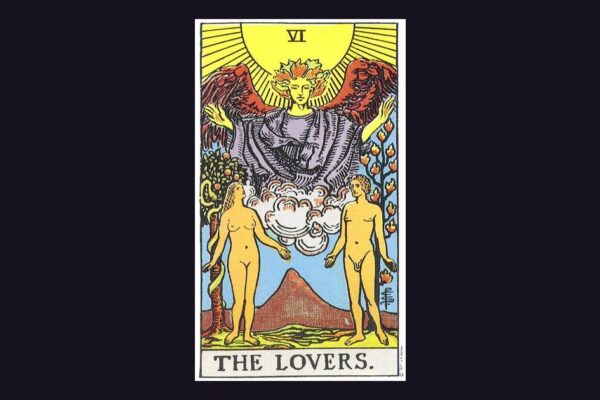
To understand the power of a “WTAF is happening” spread, we must first look beyond the modern parlor trick perception of Tarot and acknowledge its deeper historical and psychological roots. While its precise origins are debated, Tarot cards emerged in 15th-century Italy not as tools for predicting the future, but as allegorical games and philosophical teaching aids. The images on the cards—the Major Arcana in particular—represent archetypal human experiences, life stages, and universal forces. These aren’t just pretty pictures; they are symbolic keys to understanding the human condition.
Carl Jung, the Swiss psychiatrist and founder of analytical psychology, extensively explored the concept of the collective unconscious. He proposed that humanity shares a reservoir of experiences, images, and symbols inherited from our ancestors—archetypes that manifest across cultures and throughout history. The Tarot, with its consistent symbolic language, can be seen as a direct conduit to this collective wellspring. When we ask “what is happening” on a broad scale, we are, in essence, tapping into these shared archetypal patterns that are playing out in our world.
Historically, communal forms of divination were not uncommon. Ancient oracles, shamans, and seers often interpreted signs and portents not just for individuals but for entire communities or nations. The I Ching, for example, has been consulted for millennia to understand the ebb and flow of cosmic forces affecting collective endeavors. The practice of using Tarot to gauge the “collective energy” is a modern iteration of this ancient human impulse: to seek guidance from beyond the immediate, to gain perspective on forces larger than ourselves, and to understand the prevailing psychological and spiritual climate that shapes our shared reality.
Crafting Your Own “Collective Unconscious” Spread: A Practical Approach
For those looking to move beyond simple three-card draws and engage with the deeper currents, creating a spread designed to illuminate the collective can be a powerful practice. This isn’t about predicting specific events, but rather understanding the underlying energies, challenges, and potentials at play. Here’s a structured approach you can adapt:
Designing Your Spread
The key is to ask questions that encourage archetypal and broad interpretations. Avoid “yes/no” or highly specific questions. Here’s a sample spread, but feel free to modify:
- Card 1: The Overarching Energy (The “WTAF” Card): What is the dominant, defining energy or theme currently impacting the collective? This card speaks to the core feeling or challenge.
- Card 2: The Unseen Influence (The “Undercurrent”): What hidden forces, unconscious patterns, or unspoken truths are at play beneath the surface? This card often reveals what is being ignored or is just beginning to emerge.
- Card 3: The Collective Challenge (The “Obstacle”): What is the primary hurdle or lesson the collective is currently facing? This isn’t necessarily negative, but points to an area requiring growth or confrontation.
- Card 4: The Collective Resource (The “Gift”): What strength, wisdom, or opportunity is available to the collective at this time? What can we draw upon for support?
- Card 5: The Path Forward (The “Guidance”): What action, perspective, or shift in consciousness is most beneficial for navigating these energies? This is not a prediction, but a suggestion for collective engagement.
Interpreting Your Cards
Once you’ve laid out your cards, approach them with an open mind. Remember:
- Look for Patterns and Connections: Do certain suits dominate? Are there many Major Arcana cards, suggesting significant archetypal shifts, or more Minor Arcana, indicating day-to-day challenges?
- Consider Card Reversals: While some readers always read reversals, for a collective reading, a reversed card might suggest an energy that is blocked, misunderstood, or being expressed in an unhealthy way within the broader population.
- Trust Your Intuition: Beyond the traditional meanings, what gut feelings or images do the cards evoke for you in the context of the collective?
- Avoid Personalization: While your personal experiences might inform your interpretation, strive to see the cards through a wider lens, considering global or societal trends.
Common Misconceptions: What Collective Tarot Is NOT
As with any powerful tool, there are pitfalls to avoid when engaging with collective Tarot readings. Understanding what it is *not* is as crucial as understanding what it *is*:
- It is not predictive of specific events: A collective reading won’t tell you the stock market will crash next Tuesday or who will win an election. It speaks to underlying energies and psychological states, which *can* influence events, but it’s not a crystal ball for headlines.
- It is not a substitute for critical thinking or action: Understanding the collective energy is meant to inform, not to absolve us of responsibility. If a reading highlights collective apathy, the response isn’t to shrug, but to consider how individuals might counter that apathy.
- It is not a monolithic truth: The “collective” is vast and diverse. A reading will offer a general energetic snapshot, but individual experiences within that collective will always vary. Your interpretation is filtered through your own lens, and other readers might see different nuances.
- It is not an excuse for fear-mongering: While some cards might indicate challenges, the purpose is insight and empowerment, not to induce panic. Readings should always offer a path to understanding and potential constructive engagement, even with difficult energies.
- It is not always “easy” to read: Collective energies can be complex, contradictory, and deeply uncomfortable. A genuine reading won’t shy away from revealing difficult truths, but it will always aim to frame them within a context of growth or awareness.
Engaging with Tarot in a collective context is a practice of expanded awareness. It’s a way of using an ancient symbolic language to gain a deeper, more nuanced understanding of the shared psychological and spiritual landscape we inhabit. It acknowledges that we are all interconnected, and by understanding the currents of the collective unconscious, we can navigate our individual paths with greater wisdom and compassion.
Topic inspired by a discussion first seen at New Age Hipster.
This page describes what the Tarot tradition teaches and how people practise it. It is not a prediction and not medical, psychiatric or crisis advice. How we research and write · report an error