Tarot
Jul 11, 2026
·
10 min read
·
Updated Jul 20, 2026
When Illness Meets the Cards: A Healing Tarot Spread

🕯 8 min read · July 11, 2026
In the last few months the tarot community has been buzzing about a spread that speaks directly to people living with cancer, and the conversation feels less like a trend and more like a collective sigh of relief. Social platforms such as Reddit’s r/tarot have turned the “I’m in the middle of cancer” layout into a shared language for patients, caregivers, and readers who want a concrete way to honor the emotional terrain of treatment. The spread matters now because it offers a structured pause — a moment to name fear, hope, and the small victories that medical charts rarely capture.
At the same time, the rise of this spread reflects a broader shift: readers are asking for tools that respect the body’s wisdom without promising miracle cures. When a deck is used to map the inner landscape of chemotherapy, surgery, or remission, it becomes a companion rather than a crystal ball. This article walks through the tradition behind illness‑focused readings, gives a beginner‑friendly version you can try today, and highlights the ethical lines that keep the practice grounded.
Historical Roots of Illness‑Focused Tarot
Tarot has always been a mirror for the human condition, and illness is one of the oldest subjects in the cards. In the 15th‑century Italian courts, the Visconti‑Sforza decks were sometimes consulted for health prognostication, while the later Marseille tradition placed the Death and Temperance cards at the center of healing narratives. By the 19th century, occultists such as Éliphas Lévi linked the Major Arcana to the alchemical stages of bodily transformation, suggesting that each card could represent a phase of disease and recovery.
Modern practitioners inherit that lineage but filter it through psychology and palliative care. The Healing Journey spread popularized by Rachel Pollack in the 1990s used seven positions to trace diagnosis, treatment, emotional response, support, insight, integration, and future outlook. The current cancer‑specific layout condenses those ideas into five cards, each chosen for its archetypal resonance with the physical and spiritual challenges of oncology. Knowing this history reminds us that the spread is not a new invention but a thoughtful evolution.
A Step‑by‑Step Spread for the Cancer Journey
Below is a practical five‑card spread you can lay out on any quiet surface. Shuffle with intention, then draw the cards in the order listed. Write a brief note for each position; the act of recording turns a fleeting impression into a reference you can revisit during appointments or tough nights.
- Card 1 – The Diagnosis Mirror: What does the current medical reality look like? Let the image speak to the facts you already know.
- Card 2 – The Treatment Path: Which energies support the chosen protocol? Look for symbols of strength, precision, or gentle nourishment.
- Card 3 – Emotional Landscape: Name the feeling that rises most often — fear, anger, gratitude, numbness. The card gives it a face.
- Card 4 – Support Network: Who or what holds you? This may be a person, a practice, or an inner resource such as breath.
- Card 5 – Integration Insight: What lesson or gift is emerging from the ordeal? The final card points toward meaning beyond survival.
- Optional Card 6 – Future Horizon: If you feel ready, draw a sixth card for a glimpse of life after active treatment.
- Close the reading by thanking the deck, grounding yourself with three deep breaths, and placing the notes where you’ll see them daily.
Common Misconceptions and Ethical Boundaries
A frequent misunderstanding is that the cards can predict remission dates or replace oncologists. Tarot does not diagnose; it illuminates the inner narrative that runs alongside medical data. Readers who claim predictive certainty risk giving false hope or unnecessary dread, both of which can interfere with treatment adherence.
Another pitfall is using the spread as a performance for others rather than a private dialogue with self. When a reading is shared on social media without consent, the vulnerability of the patient becomes content. Ethical practice asks the querent to set boundaries — keep the notes, decide who sees them, and pause the session if emotions become overwhelming. The cards are a mirror, not a stage.
The cancer‑focused spread works because it honors both the body’s battle and the soul’s need for story. By rooting the layout in a centuries‑old tradition, offering clear steps, and naming the ethical guardrails, we give readers a tool that feels both ancient and immediately useful. Try it once, notice what surfaces, and let the cards become a quiet ally on the road to healing.
Topic inspired by a discussion first seen at r/tarot.
Beyond Prediction: Tarot as a Tool for Psychological Integration
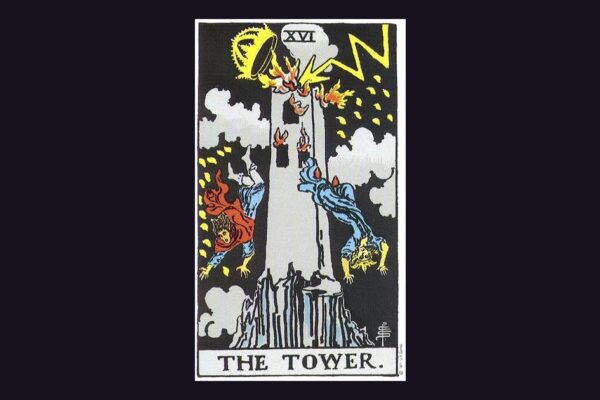
While the immediate utility of a cancer-focused tarot spread lies in its capacity to illuminate the present moment, its deeper power resonates with principles of depth psychology. Carl Jung, for instance, spoke extensively about the collective unconscious and archetypes – universal patterns of experience that manifest in myths, dreams, and, significantly, in symbolic systems like the tarot. When we engage with a card like the Tower during a diagnosis, it’s not merely a depiction of sudden upheaval; it taps into an archetype of radical change and forced demolition that can help an individual process the profound disruption of illness.
The act of drawing and interpreting cards in the context of a health crisis can be seen as a form of active imagination, a Jungian technique where one consciously engages with unconscious content. By giving form and narrative to internal states – fear, resilience, hope – the cards help externalize and therefore manage intense emotions. This isn’t about predicting a medical outcome, but about integrating the psychological impact of the illness into a coherent personal narrative. As Jungian analyst Marie-Louise von Franz often emphasized, understanding the symbolic language of the psyche is crucial for psychological healing, even when physical healing remains uncertain.
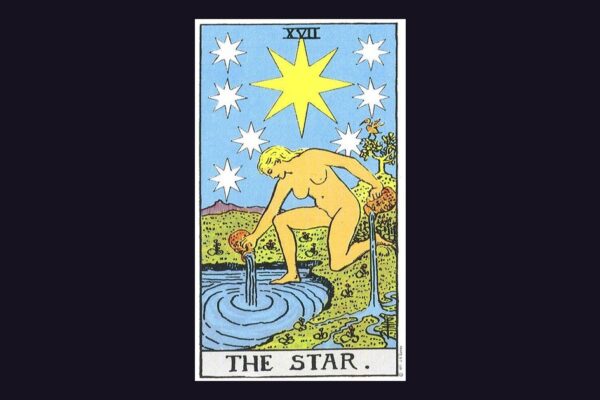
Furthermore, the structure of the spread itself, moving from diagnosis to emotional landscape to support, mirrors the stages of grief and adaptation often experienced by those facing serious illness. Elisabeth Kübler-Ross’s foundational work on the five stages – denial, anger, bargaining, depression, and acceptance – finds echoes in how individuals might interpret cards in each position. A Five of Swords in the “Emotional Landscape” position might speak to the anger and defeat felt, while a subsequent Star card in the “Integration Insight” position could signify a nascent sense of hope or spiritual connection emerging from the ordeal. The tarot, in this light, becomes a visual, tactile journaling process, aiding in the psychological work of acceptance and meaning-making.
Cultivating Presence: Tarot and Mindfulness in Illness
In the face of chronic or life-threatening illness, the mind often races, caught between past regrets and future anxieties. This is where the practice of mindfulness, as taught in programs like Mindfulness-Based Stress Reduction (MBSR) developed by Jon Kabat-Zinn, offers a powerful complement to tarot work. Both practices emphasize bringing attention to the present moment without judgment. When you shuffle a deck and draw cards for a healing spread, you are, by definition, engaging in a mindful act.
Consider the process: the focused breathing before drawing, the conscious selection of each card, and the deliberate attention given to its imagery and symbolism. This isn’t passive fortune-telling; it’s active engagement with the present. The “Diagnosis Mirror” card asks you to observe “what the current medical reality looks like” – an invitation to acknowledge facts without immediately being swept away by fear or fantasy. Similarly, the “Emotional Landscape” card prompts you to “name the feeling that rises most often,” fostering emotional literacy and non-judgmental awareness, hallmarks of mindfulness practice.
The cards provide a tangible anchor for this present-moment awareness. Instead of ruminating on “what if” scenarios, the querent is invited to focus on the immediate visual and symbolic information presented. This can be particularly grounding when the body itself feels alien or unpredictable. By engaging with the tarot, one is not trying to escape the reality of illness but rather to meet it with greater awareness and intention. This cultivation of presence can reduce stress, improve coping mechanisms, and even enhance a sense of agency, even when external circumstances are beyond control.
Just as Iyengar yoga emphasizes precise alignment and conscious breath to connect mind and body, a mindful tarot reading encourages precise attention to the symbolism of the cards to connect with one’s inner landscape. It’s a gentle yet firm redirection of attention from overwhelming external circumstances to the internal resources and narratives that can be accessed and processed.
Beyond the Individual: Tarot as a Communal Anchor
While often perceived as a solitary practice, tarot, especially in the context of illness, can serve as a powerful communal anchor. The initial observation that “social platforms such as Reddit’s r/tarot have turned the ‘I’m in the middle of cancer’ layout into a shared language” underscores this often-overlooked aspect. When individuals share their readings (with consent and appropriate boundaries, as discussed previously), they are not just sharing personal insights; they are contributing to a collective narrative of resilience, vulnerability, and hope.
This communal engagement mirrors the concept of “witnessing” found in many spiritual and therapeutic traditions. To have one’s experience seen and acknowledged, especially during a time of profound challenge, can be deeply healing. A shared tarot spread provides a framework for this witnessing. A caregiver, for example, might draw a “Support Network” card for their loved one, gaining insight into how best to offer comfort or what resources to tap into. This shared language can bridge the communication gaps that often arise during stressful medical journeys, allowing for more empathetic and effective support.
Moreover, the recurring archetypes in tarot—the Strength card representing inner fortitude, the Hermit signifying introspection, or the Empress embodying nurturing—become universal symbols that transcend individual circumstances. When one person posts about drawing the Strength card during chemotherapy, it resonates with others facing similar battles, creating a sense of solidarity and shared understanding. This collective resonance transforms the personal struggle into a shared human experience, reducing feelings of isolation.
The value of this communal aspect is not about crowdsourcing interpretations or seeking medical advice, but about fostering connection and mutual understanding. It provides a non-denominational spiritual language through which people can articulate the ineffable aspects of illness and healing, finding common ground in the face of profound personal challenges. This collective sharing, when handled ethically, strengthens both the individual’s coping mechanisms and the community’s capacity for empathy and support.
This page describes what the Tarot tradition teaches and how people practise it. It is not a prediction and not medical, psychiatric or crisis advice. How we research and write · report an error