Tarot
Jun 8, 2026
·
11 min read
·
Updated Jul 5, 2026
The Minor Arcana: A Complete Guide to the 56 Suit Cards
🕯 9 min read · June 8, 2026
Editorial Note · Reviewed with our tarot editors for positional clarity — upright and reversed cues stay tied to your actual question context.
The Minor Arcana: A Complete Guide to the 56 Suit Cards
About this guide: The sections above explain context and symbolism. The protocol below is a documented method you can practice tonight — grounded in established traditions, not invented rituals or guaranteed predictions.
Have you ever pulled a card during a reading and felt a sudden, inexplicable jolt of recognition? Perhaps it was the sudden appearance of the Three of Swords during a heartbreak, or the triumphant energy of the Six of Wands after a hard won victory. While the Major Arcana represent the grand, archetypal milestones of the human soul, the Minor Arcana are the whispers of the everyday. They are the textures of our morning coffee, the tension in a boardroom meeting, the flicker of a new romance, and the quiet ache of loneliness. If the Major Arcana are the plot points of a novel, the Minor Arcana are the dialogue and the sensory details that make the story feel real.
To master the Minor Arcana is to move from understanding the destination to understanding the journey. These 56 cards translate the abstract lessons of the spirit into the practical language of human experience. By learning to read the suits, you stop asking what is destined to happen and start asking how to navigate the current moment with grace and intention.
The Architecture of the Minor Arcana
The Minor Arcana are divided into four suits, each corresponding to a specific element, a realm of human experience, and a particular energy. Understanding these elemental foundations is the fastest way to decode any reading without relying solely on a guidebook.
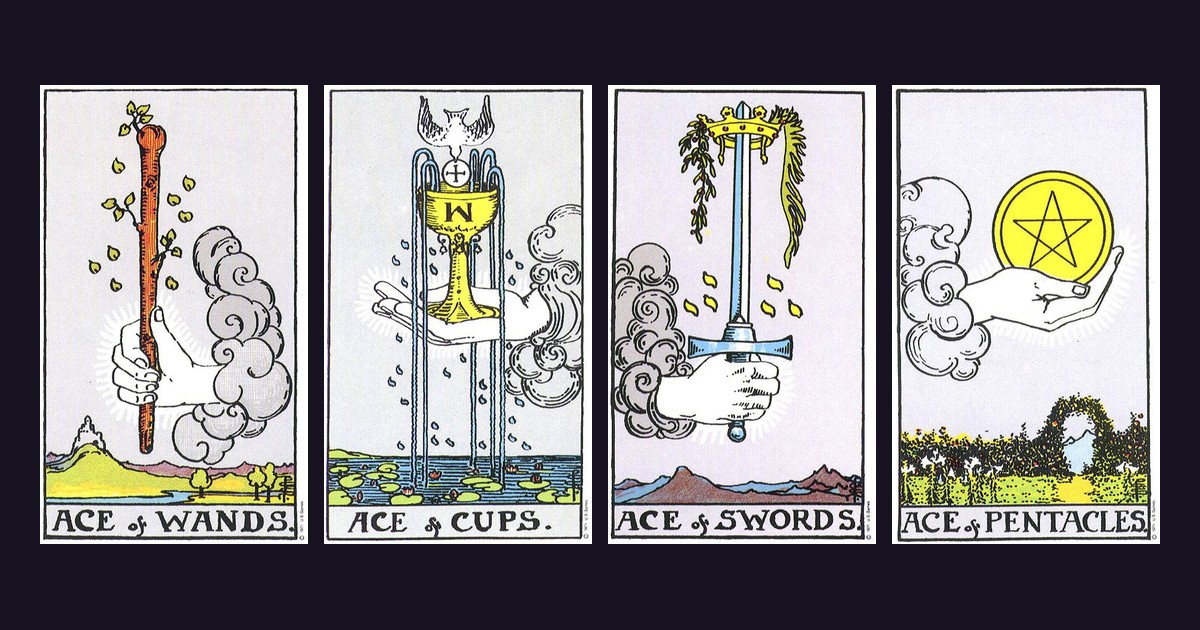
The suit of Wands represents the element of Fire. This is the realm of passion, inspiration, ambition, and the spark of creation. When Wands appear, the energy is outward, fast, and often impulsive. It is the drive that pushes us to start a new project or the anger that flares when our boundaries are crossed.
The suit of Cups represents the element of Water. This is the domain of emotions, intuition, relationships, and the subconscious. Cups deal with how we feel, how we love, and how we process grief. This energy is fluid, receptive, and deeply internal.
The suit of Swords represents the element of Air. This is the sphere of the intellect, communication, conflict, and truth. Swords are the sharp edges of the mind. They represent the clarity of a decision but also the pain of a harsh word. This is the energy of logic, strategy, and mental discipline.
The suit of Pentacles represents the element of Earth. This is the realm of the physical world, finances, career, health, and manifestation. Pentacles are about the tangible results of our labor. This energy is slow, steady, grounding, and focused on longevity and security.
Decoding the Number System
One of the most powerful secrets to reading the Minor Arcana is understanding the numerological progression. Instead of memorizing 56 individual meanings, you can combine the suit energy with the number energy to intuit the meaning of any card.
The Aces are the seeds. They represent new beginnings, raw potential, and a gift from the universe. An Ace of Cups is a new emotional opening; an Ace of Pentacles is a new financial opportunity.
The Twos represent balance, duality, and choice. They often signal a crossroads or the need for partnership.
The Threes represent growth, initial expression, and synthesis. This is where the seed of the Ace begins to sprout into something tangible.
The Fours represent stability, stagnation, or a need for rest. Depending on the suit, this can be a healthy period of peace or a frustrating feeling of being stuck.
The Fives represent conflict, loss, or instability. This is the point of tension where we are forced to change or adapt.
The Sixes represent recovery, harmony, and movement. They signal a return to balance after the storm of the Five.
The Sevens represent reflection, assessment, and sometimes a test of faith or patience.
The Eights represent mastery, movement, or hard work. They show the dedication required to reach a goal.
The Nines represent near completion and culmination. This is the peak of the suit energy, often felt as intense satisfaction or intense solitude.
The Tens represent the finality of a cycle. They indicate a conclusion, a legacy, or a situation that has reached its absolute limit.
The Court Cards: The People and the Personas
The Court Cards are often the most intimidating part of the deck because they can represent actual people, specific personality traits, or internal states of being. To read them effectively, look at them as stages of maturity.
Pages are the messengers. They represent the youthful, curious energy of a student. A Page is someone who is learning, exploring, or receiving news. They are the dreamers and the beginners.
Knights are the action takers. They represent the focused, sometimes impulsive energy of the adolescent or young adult. Knights move the energy of the suit forward. The Knight of Swords charges in with logic, while the Knight of Pentacles moves with slow, methodical precision.
Queens are the masters of internal energy. They represent maturity, intuition, and nurturing. A Queen does not necessarily act; she embodies. She is the emotional intelligence of the Cups and the strategic wisdom of the Swords.
Kings are the masters of external energy. They represent authority, structure, and leadership. The King is the one who implements the vision and maintains the order of his realm.
Practical Application: How to Read the Suits in Action
To move from theory to practice, you must begin integrating these cards into your daily life. The goal is to move away from rote memorization and toward intuitive recognition.
Try the Daily Draw method. Every morning, pull one Minor Arcana card. Instead of looking up the meaning immediately, ask yourself: Where did I see this energy yesterday? If you pull the Eight of Pentacles, perhaps you noticed your focus during a difficult task at work. If you pull the Five of Cups, perhaps you felt a lingering sadness over a missed opportunity. By linking the card to a real emotion or event, you anchor the symbol in your own lived experience.
When reading for others, look for the dominant suit. If a spread is dominated by Swords, the querent is likely overthinking or trapped in a mental loop. If Pentacles dominate, the issue is likely grounded in material security or physical health. If you see a sea of Cups, the situation is driven by emotion rather than logic.
Integrating the Minor Arcana into Spiritual Growth
The Minor Arcana are not just predictive tools; they are mirrors. When a card appears that you dislike, such as the Five of Swords, do not view it as a bad omen. Instead, view it as a prompt for shadow work. Ask yourself: Where am I winning a battle but losing the war? Where is my need to be right damaging my relationships?
By treating the Minor Arcana as a spiritual diagnostic tool, you can identify the specific imbalances in your life. A lack of Wands suggests a need for more passion and creativity. An excess of Swords suggests a need to step out of the head and back into the heart.
When you encounter a challenging card, practice the act of alchemy. If you pull the Three of Swords (heartbreak), ask the deck: What is the lesson in this pain that leads to the healing of the Six of Swords? This transforms a reading from a fortune telling session into a roadmap for spiritual evolution.
The Dance of the Elements
For those seeking a deeper level of mastery, observe how the suits interact. In tarot, elements can be harmonious or conflicting. Fire (Wands) and Air (Swords) fuel one another, creating a whirlwind of intellectual passion. Water (Cups) and Earth (Pentacles) nourish one another, creating the fertile ground for emotional security.
However, too much Fire can evaporate Water, meaning that obsession or anger can drown out intuition and love. Too much Air can erode Earth, meaning that over-analyzing a situation can destroy the practical foundations of a project. When you see these conflicts in a spread, you are seeing the internal friction the querent is experiencing.
The beauty of the Minor Arcana lies in their relatability. They remind us that the mundane is actually sacred. Every argument, every paycheck, every crush, and every moment of boredom is a thread in the larger mix of the soul’s journey. By paying attention to these small cards, we learn that there is no such thing as an ordinary day. Every single interaction is an opportunity to align ourselves with the higher wisdom of the Major Arcana.
As you continue your journey with the 56 suit cards, remember that the deck is a conversation between your conscious mind and your intuition. Trust the images, feel the elemental energy, and allow the cards to speak to you in the language of your own life. You are not just reading a deck of cards; you are learning to read the rhythm of your own existence.
Frequently Asked Questions
Do the Minor Arcana have less importance than the Major Arcana?
Not at all; they simply operate on a different scale. While the Major Arcana deal with spiritual themes and life paths, the Minor Arcana deal with the daily events and emotional states that shape those paths.
How do I know if a Court Card is a person or a personality trait?
Look at the context of the surrounding cards. If the reading is about a relationship, it is likely a person; if the reading is about internal growth, it is likely a facet of the querents own personality.
Can I read the Minor Arcana in reverse?
Yes, reversals often indicate that the energy of the card is blocked, internalized, or manifesting in an unbalanced way. For example, a reversed Ace of Wands might suggest a creative spark that is present but currently suppressed.
Step-by-Step Practice Protocol
The protocols below come from documented spiritual, psychological, or contemplative traditions. They support self-reflection and skill-building — not medical diagnosis, crisis care, or literal prediction of future events.
This is a standard reflective tarot session — you use the cards as symbolic prompts for honest self-inquiry, not fortune-telling.
Time needed: 15–25 minutes
- Prepare: sit at a clean surface, one question written in a journal (one sentence, present-tense). Breathe 4 counts in, 6 counts out, three times.
- Shuffle while holding the question; stop when it feels complete (often 1–3 minutes). Cut the deck once with your non-dominant hand.
- Draw the spread your article describes (or three cards: context · challenge · guidance). Place cards left to right.
- Before opening a guidebook, note first impressions: colors, figures, direction figures face, your bodily response.
- Record upright/reversed orientation, 3 keywords per card, and one sentence linking each card to your question.
- Write one concrete action for the next 48 hours inspired by the Advice theme — small and measurable.
- Close: summarize the spread in your own words; store date, question, and cards drawn for later review.
Tradition & references: Rider-Waite-Smith deck structure; reflective reading methods taught in books such as Rachel Pollack’s 78 Degrees of Wisdom and Mary K. Greer’s Tarot for Your Self.

Tarot & Symbolism Specialist
Mara Vey has read tarot and Elder Futhark runes for over a decade and writes on the psychology of symbols. She approaches divination as a tool for reflection rather than fortune-telling, grounding every reading in documented tradition.
Read Mara Vey's full profile →✦
Editorial Standards
Practices on AfterDarkIntuition are researched from depth psychology (Jung), established spiritual traditions, and contemporary therapeutic frameworks. They are for self-reflection and personal growth — not medical, psychiatric, or crisis care. If you are in crisis, please contact a licensed professional or emergency services. About our editorial approach →
Editorial Note
Written for self-reflection and spiritual exploration. Not medical or psychological advice. Our editorial standards →
Written for self-reflection and spiritual exploration. Not medical or psychological advice. Our editorial standards →