Runes
Jun 8, 2026
·
12 min read
Tiwaz Rune: Justice, Sacrifice, and the Warrior Spirit

🕯 10 min read · June 8, 2026
Editorial Note · Elder Futhark meanings were checked against primary sources; casting steps focus on practical reading, not keyword lists.
Tiwaz Rune: Justice, Sacrifice, and the Warrior Spirit
About this guide: The sections above explain context and symbolism. The protocol below is a documented method you can practice tonight — grounded in established traditions, not invented rituals or guaranteed predictions.
Have you ever stood at a crossroads where the right path was clear, but the cost of taking it felt almost unbearable? Perhaps you faced a situation where standing up for the truth meant risking your reputation, your comfort, or a cherished relationship. In those moments, you are not merely fighting a battle; you are engaging with the energy of Tiwaz. This is the vibration of the spiritual warrior, the one who understands that true victory is not found in the defeat of an enemy, but in the triumph of integrity over convenience.
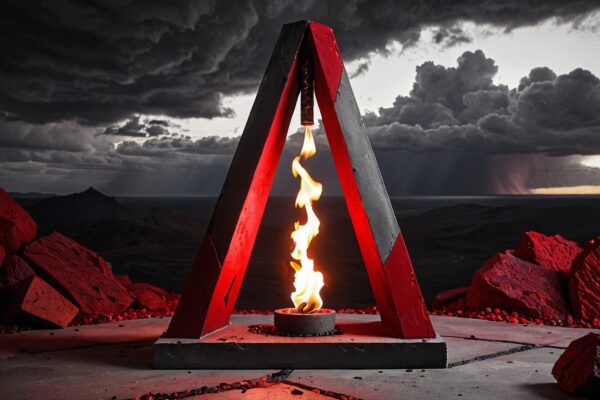
In the Elder Futhark, the ancient alphabet of the Germanic and Norse peoples, Tiwaz is the rune of the god Tyr. It is shaped like an upward-pointing arrow, a symbol of aspiration, direction, and the unwavering climb toward a higher moral ground. While many mistakenly associate this rune solely with war or aggression, Tiwaz is actually the rune of the legalist, the peacemaker, and the selfless leader. It represents the disciplined application of will in service of the greater good.
The Myth of Tyr: The Price of Peace
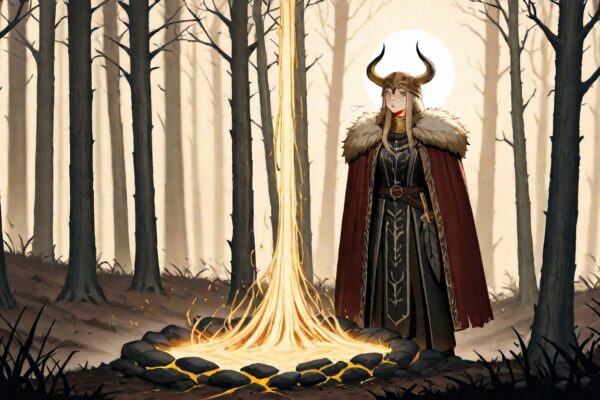
To understand Tiwaz, we must look to the story of Tyr, the one-handed god. In Norse mythology, the gods were locked in a terrifying stalemate with the monstrous wolf Fenrir. The wolf grew so powerful that he threatened the safety of all nine realms. The gods attempted to bind him with magical chains, but Fenrir, sensing a trap, refused to be bound unless one of the gods placed their hand in his mouth as a gesture of good faith.
While the other gods trembled in fear, Tyr stepped forward. He knew that the moment the chains locked, Fenrir would bite his hand off. He also knew that this sacrifice was the only way to secure the safety of the cosmos. Tyr did not act out of a desire for glory, but out of a commitment to the collective survival of his people. He traded his physical wholeness for the preservation of cosmic order.
This is the core essence of Tiwaz. It teaches us that leadership is not about power or dominance, but about the willingness to bear a burden so that others may be free. When Tiwaz appears in your life, it is a call to examine what you are willing to sacrifice for your highest values. It asks: What is the cost of your integrity, and are you brave enough to pay it?
The Vibration of Justice and Divine Law
In a modern world often clouded by ambiguity and moral gray areas, Tiwaz serves as a spiritual compass. It represents the concept of the thing, the ancient Norse assembly where disputes were settled through law and evidence rather than blood-feuds. Tiwaz is the energy of the courtroom, the contract, and the oath.
When this rune manifests, it signals a time for objectivity. It encourages us to step back from our emotional reactions and look at a situation through the lens of divine justice. This is not the justice of revenge, but the justice of balance. It is the understanding that every action has a consequence and that the most sustainable victory is the one achieved through fairness and honor.
For the modern seeker, Tiwaz is a reminder that your word is your bond. In an era of fleeting commitments, practicing the energy of Tiwaz means becoming a person of absolute reliability. It is the discipline of doing what you said you would do, even when the initial excitement has faded and the work becomes tedious.
The Warrior Spirit in the Modern Age
The warrior spirit of Tiwaz is often misunderstood as an urge to fight. In reality, the true warrior is the one who has mastered themselves. The arrow of Tiwaz points upward, indicating that the primary battle is not against an external foe, but against the shadows of the self: fear, laziness, ego, and doubt.
Integrating the warrior spirit into your daily life means cultivating a state of focused intention. Imagine your will as a laser beam. Instead of scattering your energy across a dozen different distractions, Tiwaz asks you to pick one objective and pursue it with singular devotion. This is the energy of the athlete training for a marathon, the student mastering a difficult craft, or the advocate fighting for a marginalized community.
This energy is characterized by a quiet confidence. The Tiwaz warrior does not need to shout to be heard or dominate to be respected. Their power comes from their alignment with truth. When you are acting in accordance with your highest soul purpose, you possess an inner stability that no external storm can shake.
Practical Applications of Tiwaz in Daily Life
Integrating a rune into your spiritual practice requires more than just intellectual understanding; it requires embodied action. Here are several ways to work with the energy of Tiwaz to bring order, justice, and strength into your life.
Creating a Space of Integrity
If you are facing a legal battle, a difficult negotiation, or a conflict with a loved one, you can use Tiwaz to center your energy. Begin by clearing your space with incense or sound. Sit in silence and visualize a golden arrow extending from the base of your spine, piercing through the crown of your head and extending upward into the heavens.
As you breathe, affirm your commitment to the truth. Say to yourself, I seek not to win, but to be just. By shifting the goal from victory to justice, you remove the desperation that often leads to poor decision-making. This alignment attracts the support of the universe, as you are now acting as a conduit for divine order.
The Ritual of Sacred Sacrifice
Tiwaz asks us to consider what we must let go of to reach the next level of our evolution. To practice this, take a piece of parchment and write down a habit, a resentment, or a limiting belief that is hindering your growth.
Next to this list, write what you intend to gain by letting these things go. For example, you might sacrifice the need to be right in every argument in exchange for deeper intimacy in your marriage. Burn the paper in a safe container, visualizing the smoke carrying away the old energy, leaving behind the strength and clarity of the arrow.
Runic Meditation for Willpower
When you feel overwhelmed or lacking in direction, draw the Tiwaz rune on a small stone or a piece of wood. Hold the object in your dominant hand and close your eyes. Imagine the shape of the rune glowing with a deep blue or gold light.
Focus on a specific goal you have been avoiding. Feel the resistance in your body—the fear or the procrastination. Then, imagine the arrow of Tiwaz cutting through that resistance, clearing a path. Spend ten minutes in this state of focused intent, feeling the strength of Tyr flowing through your veins. This practice helps rewire the brain for discipline and action.
Tiwaz in Divination: Interpreting the Arrow
When Tiwaz appears in a runic reading, its meaning depends heavily on the surrounding runes, but its core message remains one of victory through discipline.
If you are asking about a career move, Tiwaz suggests that success is possible, but it will not be handed to you. It will be earned through hard work, strategic planning, and unwavering persistence. It is a green light, but one that requires you to put in the effort.
In matters of the heart, Tiwaz can be a complex sign. It may suggest that a relationship requires more structure or that a boundary needs to be set. It calls for honesty and transparency. If there has been a betrayal, Tiwaz encourages a fair resolution rather than an emotional explosion.
If the rune appears in a reversed position or in a challenging aspect, it may warn of misplaced aggression or a lack of direction. It may suggest that you are fighting a battle that is not yours to fight, or that your ego is masquerading as your will. In this case, the lesson is to pause and ask: Am I acting out of a desire for power, or a desire for justice?
Balancing Strength with Compassion
The danger of the warrior spirit is the risk of becoming rigid. A sword that cannot bend will eventually snap. To truly master Tiwaz, one must balance the arrow of will with the softness of the heart.
True justice is not cold; it is tempered with mercy. The most powerful leaders are those who can be firm in their principles while remaining compassionate toward the struggles of others. Think of the warrior as a guardian rather than a conqueror. The goal is to create a safe space where others can flourish, not to build a monument to your own strength.
When you feel the intensity of Tiwaz rising, balance it by practicing acts of kindness. Use your strength to lift others up. When the warrior spirit is used to protect the vulnerable, it reaches its highest spiritual expression.
Living the Path of the Upward Arrow
Walking the path of Tiwaz is not always easy. It is the path of the long haul, the path of the lonely climb, and the path of the conscious sacrifice. However, it is also the only path that leads to genuine self-respect. There is a profound peace that comes from knowing that you have acted with honor, regardless of the outcome.
As you move through your week, look for opportunities to embody the spirit of Tyr. Be the one who tells the truth when it is uncomfortable. Be the one who keeps the promise when it is inconvenient. Be the one who stands up for the quiet voice in the room. In doing so, you transform your life into a living prayer of integrity.
Remember that you are the architect of your own character. Every time you choose the higher road, you are carving the rune of Tiwaz into the fabric of your soul. You are transforming your struggles into strength and your sacrifices into wisdom. Trust the direction of the arrow, trust the strength of your spirit, and walk forward with the courage of a warrior who knows that the greatest victory is the mastery of oneself.
Frequently Asked Questions
Does Tiwaz always mean I will win my legal or personal battle?
Not necessarily in the way you might expect. Tiwaz guarantees a victory of integrity, meaning you will achieve the most just outcome, which may sometimes mean accepting a loss that leads to a greater spiritual gain.
Is Tiwaz a masculine rune?
While traditionally associated with the god Tyr, the energy of the warrior spirit is universal and exists in all genders. It represents the active, assertive, and disciplined aspect of the human psyche, regardless of gender identity.
How is Tiwaz different from the rune Thurisaz?
Thurisaz is the energy of the raw, chaotic force and the defensive wall, whereas Tiwaz is the energy of directed will and strategic justice. While Thurisaz is the thunderbolt, Tiwaz is the precision of the arrow.
Step-by-Step Practice Protocol
The protocols below come from documented spiritual, psychological, or contemplative traditions. They support self-reflection and skill-building — not medical diagnosis, crisis care, or literal prediction of future events.
A single-rune draw or three-rune cast using Elder Futhark — focus on reflection, not prophecy.
Time needed: 15–20 minutes
- Use 24 runes on a plain cloth. Hold your question silently for one minute.
- Mix runes in the bag or cup; draw one (daily focus) or three (situation · action · outcome).
- Lay runes left to right. If a rune lands reversed (optional in your tradition), note it — many readers use upright-only for simplicity.
- Consult the historical rune poem meaning; write how it applies to your question today — not to a fixed future.
- Journal one behavior you will try this week aligned with the rune’s virtue (e.g., Fehu → resource stewardship; Thurisaz → healthy boundaries).
- Return runes to the bag; thank the session (secular closing phrase or moment of silence).
Tradition & references: Elder Futhark rune poems (Codex Regius tradition); casting methods described in works such as Ralph Blum’s The Book of Runes (interpretive) and academic runology references for historical meanings.

Tarot & Symbolism Specialist
Mara Vey has read tarot and Elder Futhark runes for over a decade and writes on the psychology of symbols. She approaches divination as a tool for reflection rather than fortune-telling, grounding every reading in documented tradition.
Read Mara Vey's full profile →✦
Editorial Standards
Practices on AfterDarkIntuition are researched from depth psychology (Jung), established spiritual traditions, and contemporary therapeutic frameworks. They are for self-reflection and personal growth — not medical, psychiatric, or crisis care. If you are in crisis, please contact a licensed professional or emergency services. About our editorial approach →
Editorial Note
Written for self-reflection and spiritual exploration. Not medical or psychological advice. Our editorial standards →
Written for self-reflection and spiritual exploration. Not medical or psychological advice. Our editorial standards →