Yoga
Jul 27, 2026
·
17 min read
Ustrasana: Opening to Vulnerability & Strength
🕯 14 min read · July 27, 2026
Have you ever felt the subtle weight of the world on your shoulders, a persistent hunch in your posture reflecting an inner closing off? Perhaps you’ve noticed a constriction in your breath, or a general sense of being guarded, even when you long to feel more open and expansive. It’s a common human experience to carry tension in our upper bodies, often manifesting as stiffness in the spine, shoulders, and chest – areas intimately connected to our capacity for vulnerability, self-expression, and even joy.
If you’re seeking a path to unlock these physical and emotional binds, to reclaim a sense of spaciousness within, then understanding and mindfully approaching Ustrasana, or Camel Pose, offers a profound opportunity. This guide will take you beyond the superficial stretch, exploring its historical roots, its deep psychological resonance, and providing you with a step-by-step methodology to integrate this powerful asana safely and effectively into your practice, ensuring you cultivate not just flexibility, but also a profound sense of inner liberation.
Ustrasana: The Gateway of the Heart
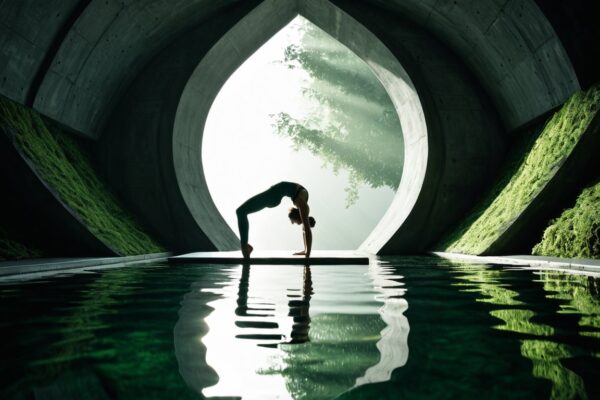
Ustrasana, commonly known as Camel Pose, is a deep backbending asana that, at its heart, is an intense chest opener and a significant stretch for the front of the body. In Sanskrit, “Ustra” translates to “camel,” and “asana” means “posture.” The pose mimics the majestic, arching back of a camel, known for its resilience and ability to traverse vast, arid landscapes. This isn’t merely a physical imitation; it speaks to the stamina and fortitude that Ustrasana can help cultivate within the practitioner. In the lineage of Iyengar Yoga, B.K.S. Iyengar himself emphasized the pose’s capacity to “invigorate the internal organs and stimulate the nervous system,” highlighting its comprehensive impact beyond just muscular stretching. It’s a pose of courage, demanding both physical strength and mental surrender.
Historically, backbends like Ustrasana have been revered in yogic traditions for their energetic and spiritual implications. They are often associated with opening the Anahata chakra, the heart center, which in yogic philosophy is the seat of love, compassion, and emotional balance. When this energy center is blocked, we might experience feelings of isolation, guardedness, or an inability to give and receive love freely. Ustrasana, by physically expanding the chest and encouraging a deep, full breath, is believed to help clear these energetic pathways, fostering a sense of emotional release and openness. From a modern psychological perspective, particularly within the framework of depth psychology, Carl Jung’s concept of the “shadow” can be illuminating here. Often, our unconscious fears, vulnerabilities, or past traumas are held in the body, manifesting as tension or a protective posture. Deep backbends like Camel Pose can bring these unconscious elements to the surface, offering an opportunity for conscious integration and healing. The physical act of opening the chest can, for some, be a symbolic act of vulnerability, allowing for a deeper exploration of one’s inner landscape.
Beyond the esoteric, Ustrasana is a potent tool for counteracting the pervasive effects of modern life. Many of us spend hours hunched over screens, leading to kyphosis (a rounded upper back) and tight pectoral muscles. Ustrasana actively works to reverse these patterns, strengthening the spinal extensors, stretching the hip flexors, and opening the chest and shoulders. This physical re-alignment can have a profound impact on one’s overall posture, breath capacity, and even mood. The stimulation of the thyroid and parathyroid glands, located in the neck and often compressed in forward-folding postures, is also a noted benefit, contributing to balanced metabolic function. It is a pose that demands presence, encouraging a full engagement with the body’s sensations, which aligns perfectly with mindfulness-based stress reduction (MBSR) principles, where observing present moment experience without judgment is key to reducing stress and fostering well-being.
The Foundations You Must Cultivate Before Ustrasana
Before embarking on the full expression of Ustrasana, it is crucial to establish a strong foundation through preparatory poses and an understanding of key anatomical principles. Rushing into a deep backbend without adequate preparation can lead to strain or injury. The body needs to be intelligently warmed and the mind prepared to approach this challenging yet rewarding asana. Think of it as building the lower levels of a strong structure before adding the roof; each component is essential for stability and longevity.
- A Supple Spine: Ensure your spine is adequately warmed and mobile. Practices like Cat-Cow (Marjaryasana-Bitilasana) and gentle spinal twists (e.g., Supine Spinal Twist) are excellent for this. The goal is to articulate each vertebra, not to force a deep bend from a cold, stiff back.
- Open Quadriceps and Hip Flexors: Ustrasana deeply stretches the front of the thighs and the hip flexors. Tightness in these areas can pull on the lower back, causing discomfort or strain. Poses like Low Lunge (Anjaneyasana) and Bridge Pose (Setu Bandhasana) are invaluable for gradually increasing flexibility in these areas.
- Strong Core Engagement: A strong core is paramount for protecting the lower back in backbends. Engaging the transversus abdominis (the deepest abdominal muscle) helps to stabilize the pelvis and lumbar spine. Practice gentle core work like pelvic tilts and drawing the navel towards the spine.
- Shoulder and Chest Mobility: The ability to lift and open the chest is central to Ustrasana. Poses like Gomukhasana (Cow Face Pose) arm variation, Eagle Pose (Garudasana) arms, and gentle chest stretches with a strap can help to improve shoulder girdle mobility and open the pectoral muscles.
- A Grounded Mind: Ustrasana can be intense, both physically and emotionally. Cultivate a sense of groundedness and patience. Practice mindful breathing (Pranayama) to calm the nervous system and prepare for the energetic shifts that backbends can evoke. Remember Osho’s stages of meditation, where the initial “Catharsis” or release often precedes deeper states of stillness; sometimes, emotional release can occur in intense poses like this.
- Listen to Your Body: This is perhaps the most critical foundation. Every body is different, and what feels accessible one day might not the next. Never push into pain. Respect your body’s current limitations and use props (such as blankets under the knees or blocks for hands) as needed.
Ustrasana for Beginners: Your First Journey to Openness
For those new to the practice, approaching Ustrasana with gentleness and awareness is key. This isn’t about achieving a perfect backbend on day one, but rather about exploring the sensations of openness and expansion in a safe and sustainable way. Remember, consistency in small steps often yields greater, more lasting results than sporadic, intense efforts.
- Set the Foundation: Kneeling and Alignment. Begin by kneeling on your mat with your knees hip-width apart and your thighs perpendicular to the floor. Ensure your shins and the tops of your feet are pressing gently into the mat. You might find it helpful to place a folded blanket under your knees for extra cushioning, especially if you have sensitive kneecaps.
- Engage Your Core and Lift Your Heart. Place your hands on your lower back, fingers pointing down, providing support. Gently draw your tailbone towards your pubic bone, engaging your core muscles to protect your lower back. As you inhale, imagine a string pulling your sternum upwards towards the ceiling, lengthening your spine.
- Gentle Backbend and Hand Placement. Keeping your hips stacked over your knees, begin to lean back slowly, allowing your chest to open. Your hands can stay on your lower back for support, or if comfortable, reach back for your heels, one at a time. If reaching your heels feels too much, place blocks beside your ankles to elevate your reach.
- Breath and Neck Position. Once in the pose, breathe deeply and evenly, allowing each inhale to expand your chest and each exhale to release any tension. Keep your neck long and in line with your spine; avoid letting your head drop back completely unless you have a very open neck and no cervical spine issues. A slight tuck of the chin can protect the neck.
- Exiting the Pose with Care. To come out, bring your hands back to your lower back for support. Engage your core and slowly, with control, press yourself back up to a kneeling position. Take a moment in an upright kneeling posture, then gently move into Child’s Pose (Balasana) to neutralize your spine and release any residual tension.
Common Challenges in Ustrasana and Their Refinements
Even seasoned practitioners encounter nuances in Ustrasana. Addressing common misalignments and sensations can transform the pose from a struggle into a deeply nourishing experience. Remember, the goal isn’t perfection, but rather a mindful exploration of your body’s capabilities.
Compressing the Lower Back
A common tendency is to collapse into the lower back, creating discomfort or even pain. This often happens when the core isn’t sufficiently engaged, and the hips drift backward. To correct this, actively press your hips forward so they stay aligned directly over your knees. Engage your glutes and draw your tailbone towards your pubic bone, creating length in the lumbar spine rather than compression. Visualizing an invisible thread lifting your sternum can also help distribute the backbend more evenly through your upper and mid-back.
Neck Strain or Dropping the Head Too Soon
Many practitioners either hold their neck too rigidly or let their head drop back without proper support, leading to strain. Instead of forcing the head back, maintain a long neck, keeping the chin slightly tucked or in a neutral position. If your neck feels comfortable and your upper back is open, you can then gently release the head back, but always prioritize the integrity of your cervical spine. Think of lengthening the front of the throat rather than crunching the back of the neck. You might also find that strengthening the neck muscles through gentle exercises can aid in maintaining a comfortable head position in Ustrasana.
Difficulty Reaching the Heels
For many, the initial flexibility required to reach the heels can be a barrier, leading to frustration or overstretching. Instead of forcing it, use props to bring the ground closer to you. Place yoga blocks on their highest or medium setting just outside your ankles. As you lean back, reach for the blocks instead of your heels. This allows you to experience the chest opening and backbend without compromising spinal integrity or straining your shoulders. Over time, as your flexibility increases, you can gradually lower the blocks or even remove them entirely.
Knee Pain or Discomfort
Knee pain can be a significant deterrent in Ustrasana. This often stems from direct pressure on the kneecaps or insufficient cushioning. The simplest solution is to use a folded blanket or a thick towel under your knees for extra padding. Ensure your shins and the tops of your feet are pressing firmly into the mat, distributing the weight more evenly. If the pain persists, it might indicate an underlying knee issue, and it’s always wise to consult a healthcare professional or an experienced yoga instructor for personalized guidance.
Tightness in the Quadriceps or Hip Flexors
Tightness in the front of the thighs (quadriceps) or hip flexors can limit the depth of your backbend and make Ustrasana feel restrictive. Before entering the pose, spend some time warming up these areas. Consider gentle lunges, low lunges, or even a few rounds of Surya Namaskar (Sun Salutations) to prepare your body. In the pose itself, consciously attempt to lengthen through the front of your thighs as you press your hips forward. This active extension helps to open these areas gradually over time.
Camel Pose in Daily Living: Expanding Beyond the Mat
The lessons learned on the yoga mat, particularly from a posture like Ustrasana, extend far beyond physical flexibility. This powerful heart-opener can offer profound insights into our emotional and psychological landscapes, influencing how we navigate work, relationships, and our inner world.
Opening to Opportunity in Professional Life
Consider the energy of Ustrasana: an expansive opening, a willingness to be vulnerable and exposed. In a professional context, this translates to an attitude of openness to new ideas, collaboration, and even constructive criticism. When facing a challenging project or a new role, rather than retreating into old patterns, imagine the chest-opening sensation of Camel Pose. This can be a mental anchor to approach situations with a more receptive and confident stance, less guarded and more willing to innovate. It’s about being present and available, much like the practice of spiritual grounding helps us to stay centered amidst chaos, Ustrasana can help us remain open to new possibilities.
Cultivating Empathy and Connection in Relationships
Ustrasana is a potent heart-opener, both physically and metaphorically. In our relationships, this translates to a greater capacity for empathy, compassion, and authentic connection. When disagreements arise or emotional distance creeps in, recall the feeling of expanding your heart space in Ustrasana. This can serve as a reminder to approach loved ones with an open heart, to listen actively without judgment, and to communicate with vulnerability rather than defensiveness. It encourages us to drop our emotional guards, fostering deeper intimacy and understanding, allowing us to truly see and be seen by others.
Emotional Regulation Through Vulnerability
The act of opening the front of the body in Ustrasana can feel vulnerable, and this vulnerability is precisely where its power for emotional regulation lies. When we experience strong emotions like anxiety, fear, or sadness, our natural tendency is often to hunch inward, protecting our hearts. Ustrasana invites us to do the opposite: to open, to breathe deeply into the discomfort, and to trust in our resilience. By consciously practicing this physical opening, we can retrain our nervous system to respond to emotional challenges with greater courage and less constriction. It’s not about suppressing emotions, but about creating space for them to be processed and released, fostering a sense of inner calm and acceptance.
When the Hips Speak: Listening for Guidance in Ustrasana
While the physical benefits of Ustrasana are tangible, the emotional and psychological openings can sometimes be profound, even challenging. As we open the heart and chest, we invite vulnerability and can stir up old emotions or deeply held patterns. For many, a self-practice is a powerful and sufficient container for this exploration. The quiet introspection of your mat can be a sacred space to observe what arises, practice non-reactivity, and gently process.
However, there are times when the sensations or emotions that surface in Ustrasana might feel overwhelming, confusing, or simply too intense to navigate alone. If you find yourself consistently experiencing significant anxiety, panic, or a flooding of difficult memories during or after practice, it’s a clear signal to seek external support. Similarly, if you feel “stuck” in a particular emotional pattern or find that the pose is consistently triggering rather than liberating, a trained professional can offer invaluable guidance.
A qualified yoga teacher, especially one with experience in trauma-informed yoga or therapeutic applications, can help you modify the pose, understand the energetic shifts, and provide tools for grounding and integration. They can also help you discern whether what you’re experiencing is a normal part of the process or something that warrants deeper psychological exploration. In cases of persistent emotional distress, a licensed therapist or counselor can provide a safe space and structured approach to address underlying issues. Carl Jung’s work on the unconscious and the shadow self reminds us that these deeper layers often hold both our wounds and our greatest potential for growth. Engaging with these aspects requires both courage and, at times, expert accompaniment. Knowing when to reach out is not a sign of weakness, but of self-awareness and wisdom.
Ustrasana’s Echoes: Integrating Your Practice
Bringing the insights and openings from Ustrasana into your daily life is where the real transformation happens. It’s not just about the pose itself, but how its lessons ripple through your being. Here’s how to integrate the experience:
- Cultivate Openness Beyond the Mat: Notice where you might be holding back or closing off in daily interactions. Can you bring a subtle sense of Ustrasana’s heart-opening into a difficult conversation or a moment of vulnerability?
- Practice Mindful Receptivity: Just as Ustrasana invites you to receive breath and sensation, practice receiving feedback, compliments, or even challenging news with a similar non-judgmental awareness.
- Strengthen Your Inner Support System: The backbend in Ustrasana requires strength and stability. Similarly, identify and nurture the internal resources (resilience, self-compassion, core values) that support you through life’s challenges.
- Ground Your Enthusiasm: The expansive nature of Ustrasana can sometimes lead to feeling ungrounded. After a potent practice, ensure you reconnect with the earth — perhaps through a simple seated meditation or a walk in nature. For more on this, explore our guide on Spiritual Grounding: Symptoms of Being Ungrounded.
- Honour Your Boundaries: As discussed, Ustrasana can be intense. Learn to recognize your limits, both on and off the mat, and respect them. This is a crucial aspect of self-care.
- Embrace Vulnerability: The exposed chest in Camel Pose can symbolize an invitation to vulnerability. Practice allowing yourself to be seen, both by others and by yourself, in your authentic state.
- Breathe Through Discomfort: The breath is your anchor in Ustrasana. Carry this lesson into daily life: when faced with discomfort or stress, return to the steadying rhythm of your breath.
- Reflect and Journal: Take time after your practice to journal about any physical sensations, emotional shifts, or insights that arose. This helps to integrate the experience consciously.
Ustrasana, like many profound yoga practices, offers more than just physical exercise; it’s a journey into the self, a dialogue between body and spirit. Approach it with curiosity, respect, and a willingness to listen to what your inner landscape reveals.
Frequently Asked Questions
What are the primary benefits of practicing Camel Pose (Ustrasana)?
Ustrasana is renowned for its deep backbend, which can help open the chest and shoulders, promoting spinal flexibility and improving posture. Many practitioners also report a boost in energy and a release of emotional tension through this heart-opening pose.
Who should avoid Camel Pose or practice it with caution?
Individuals with severe back or neck injuries, high or low blood pressure, or migraines should generally avoid Ustrasana. Pregnant women or those with recent abdominal surgery should also exercise extreme caution or opt for modified versions under expert guidance.
What are some common modifications for beginners in Camel Pose?
Beginners can start by placing blankets under their knees for cushioning or keeping their hands on their lower back for support instead of reaching for their heels. Another modification involves tucking the toes under to elevate the heels, making them easier to grasp.
How can I deepen my Camel Pose once I’m comfortable with the basic form?
To deepen Ustrasana, focus on lengthening the spine and lifting the chest towards the ceiling, rather than just collapsing into the lower back. Actively engaging the glutes and inner thighs can also provide greater stability and allow for a more expansive backbend.
Is Camel Pose considered a ‘heart-opening’ pose, and what does that mean spiritually?
Yes, Ustrasana is widely recognized as a significant heart-opening pose in yoga traditions. Spiritually, this refers to the energetic activation of the Anahata (heart) chakra, which is often associated with compassion, love, and emotional release.
✦
Editorial Standards
Practices on AfterDarkIntuition are researched from depth psychology (Jung), established spiritual traditions, and contemporary therapeutic frameworks. They are for self-reflection and personal growth — not medical, psychiatric, or crisis care. If you are in crisis, please contact a licensed professional or emergency services. About our editorial approach →
Editorial Note
Written for self-reflection and spiritual exploration. Not medical or psychological advice. Our editorial standards →
Written for self-reflection and spiritual exploration. Not medical or psychological advice. Our editorial standards →