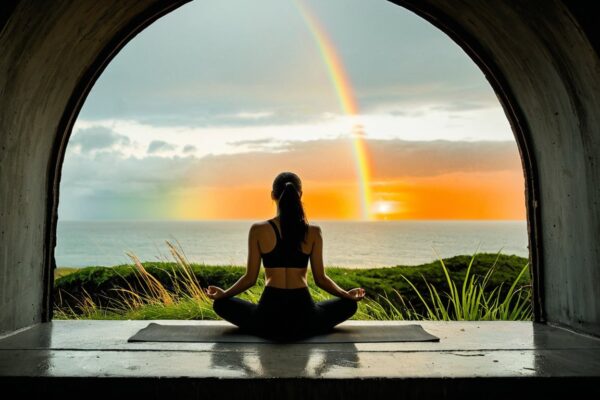
Yoga
Jun 8, 2026
·
9 min read
Yoga Nidra: The Ancient Art of Yogic Sleep for Deep Healing
🕯 8 min read · June 8, 2026
Editorial Note · Reviewed by our editorial team for actionable steps, sourcing, and safety boundaries before going live. Focus: Yoga Nidra: The Ancient.
Yoga Nidra: The Ancient Art of Yogic Sleep for Deep Healing
About this guide: The sections above explain context and symbolism. The protocol below is a documented method you can practice tonight — grounded in established traditions, not invented rituals or guaranteed predictions.
Have you ever woken up from a nap feeling more exhausted than when you lay down, or spent a night tossing and turning while your mind played a relentless highlight reel of every mistake you made in the last decade? Most of us treat sleep as a biological necessity, a simple switch we flip to turn off the world. But there is a state of consciousness that exists in the shimmering threshold between wakefulness and sleep, a space where the body is profoundly dormant but the mind remains luminous and aware. This is the realm of Yoga Nidra.
Often described as psychic sleep, Yoga Nidra is not sleep in the conventional sense. It is a systematic method of inducing complete physical, mental, and emotional relaxation. While traditional yoga focuses on asana or the physical postures, Yoga Nidra is the yoga of the subconscious. It is a journey inward, a guided descent into the deepest layers of the self to clear the psychic debris that accumulates in our daily lives.
The Architecture of the Conscious Mind
To understand why Yoga Nidra is so potent for healing, we must first look at how our consciousness is structured. In the Vedic tradition, the mind is seen as a series of sheaths, or koshas, that wrap around the eternal soul. We typically spend our lives operating in the outermost layers: the physical body and the breath.
When we experience stress, trauma, or chronic anxiety, these impressions are not just thoughts; they are stored as samskaras, or latent impressions, in the subconscious mind. These are the emotional knots that tie us to old patterns of behavior. Conventional meditation often asks us to observe these thoughts from a distance, but Yoga Nidra takes us deeper. By bringing the body into a state of total stillness, we bypass the critical filter of the conscious mind and enter the subconscious. In this state, we can plant seeds of intention and release old traumas without the ego interfering or resisting the process.
The Science of the Hypnagogic State
While the roots of this practice are mystical, modern neuroscience provides a grounding explanation for its efficacy. Yoga Nidra guides the brain from the beta state of active alertness into alpha and theta waves. Theta waves are typically associated with dreaming and deep meditation.
In the theta state, the brain is highly plastic and receptive. This is why Yoga Nidra is often compared to a deep reset button for the nervous system. By consciously slowing down the brain waves while maintaining a thread of awareness, we shift the body from the sympathetic nervous system (fight or flight) to the parasympathetic nervous system (rest and digest). This shift is where true healing occurs. Cortisol levels drop, the heart rate stabilizes, and the body begins the cellular repair processes that are often inhibited by the chronic stress of modern urban living.
The Anatomy of a Yoga Nidra Session
A typical practice is not something you do; it is something you experience. Unlike a vinyasa class where you move through shapes, in Yoga Nidra, the only requirement is that you lie still. You are guided by a voice that acts as a tether, keeping you from falling into an unconscious sleep while leading you deeper into relaxation.
The Sankalpa: The Seed of Intention
The heart of Yoga Nidra is the Sankalpa. A Sankalpa is more than a New Year’s resolution or a positive affirmation. It is a sacred resolve, a statement of truth phrased in the present tense. For example, instead of saying I will be confident, a practitioner might say I am confident and at peace.
Because the Sankalpa is planted during the theta state, it bypasses the skeptical mind. It is sown directly into the fertile soil of the subconscious. Over time, this intention begins to manifest in the practitioner’s waking life, shifting their baseline identity from one of lack to one of wholeness.
Rotation of Consciousness
The practice then moves into the rotation of consciousness. The guide directs your attention to different parts of the body in a rapid succession: right thumb, index finger, middle finger, wrist, elbow. This is not a focused meditation on a single point, but a sweeping movement of awareness. This process disconnects the mind from the external environment and anchors it firmly within the physical vessel, effectively silencing the mental chatter.
Emotional and Physical Opposites
To further balance the nervous system, Yoga Nidra often employs the practice of opposites. You might be asked to evoke the feeling of extreme cold, followed immediately by the sensation of intense heat. You might feel heaviness, then lightness. This process trains the mind to remain equanimous regardless of the external circumstances, teaching the subconscious that it can navigate any emotional landscape without becoming overwhelmed.
Bringing the Practice Home: A Simple Guide
You do not need a certified guru to begin experiencing the benefits of yogic sleep. While guided recordings are the best way to start, you can cultivate the spirit of Yoga Nidra in your own space.
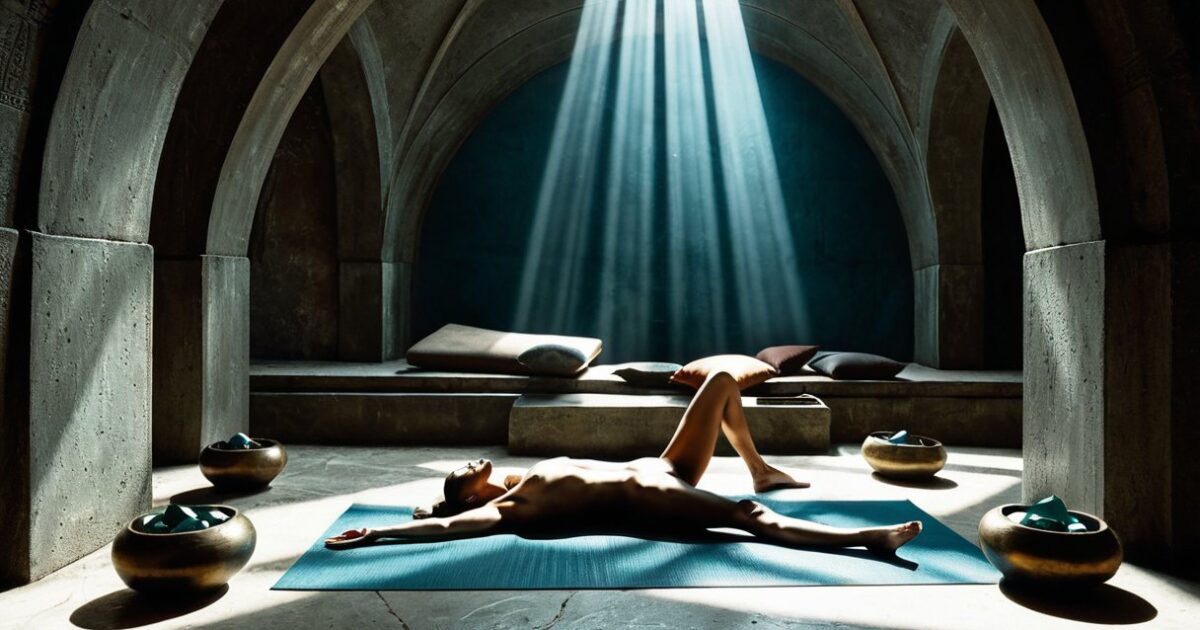
First, create a sanctuary. Find a quiet room where you will not be disturbed. Use a yoga mat or a comfortable bed. Use a bolster or a pillow under your knees to release the lower back, and cover yourself with a blanket, as the body temperature naturally drops during deep relaxation.
Second, enter the posture of Savasana. Lie flat on your back, arms slightly away from the body, palms facing upward. Close your eyes and take three deep, slow breaths, imagining the exhale carrying away the tension of the day.
Third, perform a mental scan. Starting from the toes and moving up to the crown of the head, simply acknowledge each part of your body. Do not try to change anything; just notice. If your mind wanders to your to-do list, gently bring it back to the physical sensation of the body touching the floor.
Finally, state your Sankalpa. Repeat your short, positive statement three times with feeling and conviction. Let it sink into your being like a stone dropping into a still pond, creating ripples that touch every cell of your body.
The Healing Power of Stillness
The paradox of Yoga Nidra is that by doing absolutely nothing, we achieve everything. In a culture that prizes productivity and constant movement, the act of lying still is a radical gesture of self-love.
For those struggling with insomnia, Yoga Nidra can be a bridge to natural sleep. For those dealing with grief or anxiety, it provides a safe container to process emotions that are too heavy to carry while awake. It is a practice of surrender. When we stop fighting the current of our lives and allow ourselves to drift into the depths of our own consciousness, we discover that the healing we seek is not something to be acquired, but something to be uncovered.
As you integrate this ancient art into your life, you may find that the boundary between your spiritual practice and your daily existence begins to blur. You start to carry that sense of deep, inner stillness into the traffic jams, the boardroom, and the chaotic moments of family life. You realize that the sanctuary you found in the silence of yogic sleep is not a place you go to, but a state of being that you carry within you at all times.
May you find the courage to be still, the patience to listen to the whispers of your subconscious, and the grace to let go of everything that no longer serves your highest evolution. In the quiet space between the breaths, in the gap between two thoughts, you are already whole.
Frequently Asked Questions
Can I fall asleep during Yoga Nidra, and does that mean the practice failed?
Falling asleep is very common and is not a failure. While the goal is to remain aware, the body still receives the benefits of deep relaxation; however, staying conscious allows you to consciously plant the Sankalpa and experience the psychological release.
How often should I practice Yoga Nidra for noticeable results?
While a single session can provide immediate stress relief, practicing three to four times a week creates a cumulative effect. Over time, this regularity rewires the nervous system and makes the state of deep peace more accessible during your waking hours.
Is Yoga Nidra the same as meditation?
While both involve mindfulness, traditional meditation often requires active concentration or focus. Yoga Nidra is a passive practice of guided surrender, making it more accessible for those who find it difficult to sit still or quiet a racing mind.
Step-by-Step Practice Protocol
The protocols below come from documented spiritual, psychological, or contemplative traditions. They support self-reflection and skill-building — not medical diagnosis, crisis care, or literal prediction of future events.
Physical yoga as breath-synchronized movement — modify for injuries; avoid pain.
Time needed: 20–40 minutes
- Warm-up: 5 minutes gentle joint circles (neck, shoulders, hips, ankles).
- Surya Namaskar A: 3–5 rounds, inhale on extension, exhale on fold — move at breath pace, not speed.
- Standing sequence: Warrior I & II (30 sec each side), Triangle (30 sec each side), Tree (30 sec each side).
- Pranayama: 4-7-8 breath × 4 cycles (inhale 4, hold 7, exhale 8) seated comfortably.
- Savasana: lie flat 5–8 minutes; body scan head to toe.
- Note any pain > mild stretch; use blocks and skip poses as needed. Consult physician before starting if you have cardiovascular issues.
Tradition & references: Traditional Hatha sequences (Surya Namaskar as documented in Light on Yoga by B.K.S. Iyengar); pranayama ratios from classical texts (Yoga Sutras of Patanjali commentary).

Meditation & Yoga Teacher
Anil Prakash has practiced and taught meditation and pranayama for fifteen years across several traditions, from MBSR to the active methods of Osho. He writes step-by-step, evidence-aware guides and always notes contraindications and safe practice.
Read Anil Prakash's full profile →✦
Editorial Standards
Practices on AfterDarkIntuition are researched from depth psychology (Jung), established spiritual traditions, and contemporary therapeutic frameworks. They are for self-reflection and personal growth — not medical, psychiatric, or crisis care. If you are in crisis, please contact a licensed professional or emergency services. About our editorial approach →
Editorial Note
Written for self-reflection and spiritual exploration. Not medical or psychological advice. Our editorial standards →
Written for self-reflection and spiritual exploration. Not medical or psychological advice. Our editorial standards →