Tarot
Jul 15, 2026
·
6 min read
Beyond Costumes: Tarots Enduring Samhain Whispers

🕯 5 min read · July 15, 2026
The Veil Thins: Why Tarot Speaks Louder Now
As the days shorten and the crisp embrace of autumn deepens, a palpable shift occurs in the collective consciousness. The air itself seems charged with ancient whispers, a sense of something just beyond the everyday. This is the liminal time, the season of Samhain and Halloween, when the veil between worlds is traditionally believed to thin. For many, this isn’t just a time for festive costumes and candy, but a profound opportunity for introspection, connection with ancestors, and an honest reckoning with the deeper currents of life and death.
It’s no wonder, then, that the ancient art of Tarot finds a particular resonance during these weeks. Far from mere fortune-telling, Tarot offers a language of symbols, a mirror reflecting our inner landscape and the archetypal forces at play. During Samhain, when the energies of transformation and ancestral wisdom are heightened, a carefully chosen Tarot deck can become a powerful tool for navigating the shadows, honouring what has passed, and planting seeds for future growth. But how do we engage with this rich tradition without succumbing to sensationalism or superficiality?
Echoes from the Past: Tarot’s Deep Roots in Liminality
While modern Tarot decks often feature vibrant, often “witchy” aesthetics, the cards themselves emerged from a complex tapestry of European history, long before the contemporary understanding of witchcraft took hold. The earliest known Tarot decks, dating back to 15th-century Italy, were luxury playing cards, but their symbolic language quickly evolved to encompass philosophical, alchemical, and esoteric ideas. The Fool’s journey, the Major Arcana’s progression through life’s trials and triumphs, speaks to universal human experience, not just a specific magical tradition.
However, the connection between Tarot and the liminal, the mysterious, and the transformative is undeniable. The very act of shuffling and drawing cards is a ritual, an invitation to the subconscious. Many early esoteric orders, such as the Hermetic Order of the Golden Dawn, deeply integrated Tarot into their ceremonial magic and spiritual practices, viewing it as a symbolic key to understanding the universe and the self. When we approach Tarot during Samhain, we are, in a sense, tapping into this ancient lineage of seeking wisdom in the shadows, of using symbolic tools to explore the unseen. This isn’t about conjuring spirits from a pop-culture horror film; it’s about engaging with the archetypal energies of death, rebirth, and ancestral memory that Samhain historically represents.
Practical Steps: Engaging with Tarot for Samhain Reflection
For those new to Tarot or seeking to deepen their practice during this potent time, here are some grounded ways to engage:
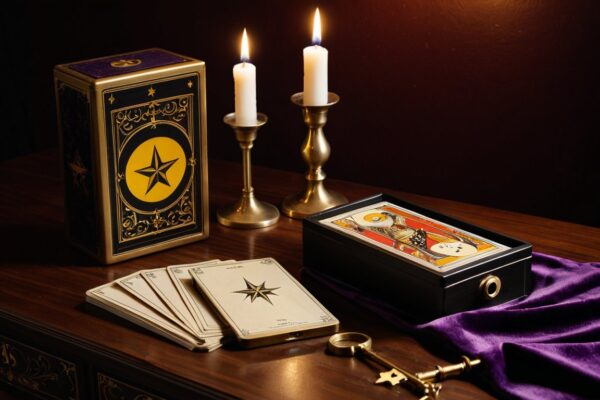
- Choose Your Deck with Intention: While “witchy” decks can be beautiful, focus less on the aesthetic and more on the imagery that speaks to your soul. Does it evoke a sense of introspection, mystery, or ancestral connection? A deck with rich symbolism, even if not overtly “witch-themed,” can be profoundly effective. Consider decks with strong mythological, nature-based, or even classic Rider-Waite-Smith imagery, which is foundational for understanding many modern decks.
- Create Sacred Space: Even a small, quiet corner can become a sanctuary. Light a candle, perhaps an unscented one or one with earthy notes like cedar or frankincense. Place a natural object nearby – a fallen leaf, a smooth stone, a small gourd. This simple act signals to your subconscious that you are entering a space for reflection.
- Formulate Clear Questions: Instead of asking “What will happen?”, try “What wisdom do my ancestors wish to impart regarding my current path?” or “What aspects of myself am I ready to release to make way for new growth?” Samhain is a powerful time for acknowledging endings and embracing transformation.
- The Ancestral Spread: A simple three-card spread can be incredibly insightful. Card 1: “What wisdom do I carry from my lineage?” Card 2: “What patterns am I ready to release from my past or ancestral line?” Card 3: “What new seeds am I planting for my future, guided by ancestral strength?”
- Journal Your Readings: Don’t just pull cards and move on. Record the date, your question, the cards drawn, and your initial impressions. Revisit these entries in the days and weeks that follow. The meaning often deepens with time.
Beyond the Broomstick: Debunking Common Tarot Misconceptions
The popular image of Tarot, especially around Halloween, often falls prey to sensationalism. Let’s clarify some common misunderstandings:
- Tarot is Not Evil or Demonic: This fear often stems from historical religious condemnation of anything perceived as “occult.” Tarot is a tool, a system of symbols, like language or mathematics. Its power lies in how we engage with it – for self-reflection, understanding, and personal growth, not for malicious intent.
- It’s Not About Predicting a Fixed Future: While Tarot can offer insights into potential outcomes based on current trajectories, it does not dictate an unchangeable future. We always have agency. Tarot illuminates possibilities and challenges, empowering us to make informed choices.
- You Don’t Need “Psychic Powers” to Read Tarot: While intuition is certainly a valuable asset, Tarot reading is a skill that can be learned and developed. It involves understanding symbolism, pattern recognition, and the ability to connect the cards to your life experience. Practice and study are far more important than any innate “gift.”
- “Witchy” Decks Aren’t Inherently More Powerful: The power of a Tarot deck lies in its ability to resonate with you and facilitate your inner work. A deck with overt “witch” imagery might appeal, but a simple, well-understood deck can be just as, if not more, effective if its symbols speak to your soul.
As the veil thins this Samhain, remember that the true magic of Tarot lies not in external theatrics, but in its capacity to illuminate our inner landscape, connect us to deeper traditions, and guide us through the cycles of life, death, and rebirth with wisdom and grace. Embrace the introspection, honour the ancestors, and let the cards be a gentle mirror to your evolving spirit.
Topic inspired by a discussion first seen at Ethony.

Tarot & Symbolism Specialist
Mara Vey has read tarot and Elder Futhark runes for over a decade and writes on the psychology of symbols. She approaches divination as a tool for reflection rather than fortune-telling, grounding every reading in documented tradition.
Read Mara Vey's full profile →✦
Editorial Standards
Practices on AfterDarkIntuition are researched from depth psychology (Jung), established spiritual traditions, and contemporary therapeutic frameworks. They are for self-reflection and personal growth — not medical, psychiatric, or crisis care. If you are in crisis, please contact a licensed professional or emergency services. About our editorial approach →
Editorial Note
Written for self-reflection and spiritual exploration. Not medical or psychological advice. Our editorial standards →
Written for self-reflection and spiritual exploration. Not medical or psychological advice. Our editorial standards →