Yoga
Aug 3, 2026
·
17 min read
Beyond Hamstrings: The Quad-Release Revelation
🕯 14 min read · August 3, 2026
Do you ever feel that persistent, unyielding tightness in the front of your thighs? Perhaps it’s after a long run, a day spent sitting, or even just a general sense of restriction that impacts your stride, your back, or your ability to move freely. This isn’t just a minor discomfort; tight quadriceps can be a source of imbalance throughout the body, affecting everything from your posture to the health of your knees and lower back. If you’ve been searching for a way to unlock this tension and reclaim ease in your movement, you’re in the right place.
We’re not talking about a fleeting stretch you do once and forget. We’re delving into a foundational practice, rooted in ancient wisdom and supported by modern understanding, that offers a profound release. This isn’t just about flexibility; it’s about cultivating a deeper connection with your body’s mechanics and fostering a sustainable sense of well-being. Get ready to discover a simple yet incredibly effective approach to transforming those tight quads, bringing a new level of comfort and freedom to your daily life.
The Roots of the Low Lunge (Anjaneyasana)
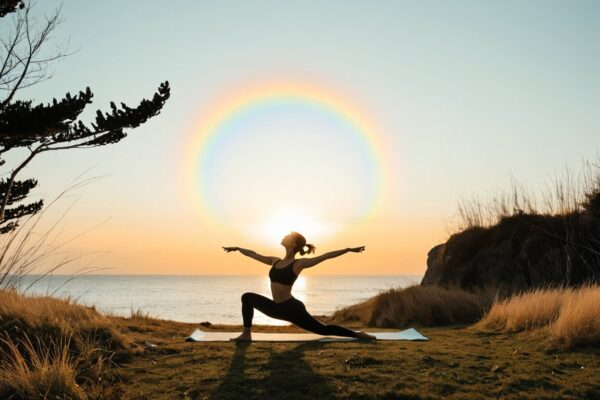
The stretch we’re focusing on is a variation of Anjaneyasana, often known as the Low Lunge in English, a cornerstone pose in many traditions of Hatha Yoga. While its precise historical origins are difficult to pinpoint to a single text, variations of kneeling and lunging postures appear in ancient Indian sculptures and philosophical texts, suggesting a long lineage. In the Yoga Sutras of Patanjali, written around 400 CE, the emphasis is on sthira sukham asanam – a posture should be steady and comfortable. The Low Lunge, when practiced mindfully, embodies this principle, offering both stability and a profound opening.
B.K.S. Iyengar, the revered founder of Iyengar Yoga, meticulously detailed the alignment and therapeutic benefits of Anjaneyasana in his seminal work, Light on Yoga. He emphasized the importance of grounding through the back knee and front foot, and the lift through the torso, transforming a simple stretch into a full-body experience that extends beyond the quadriceps. From a depth psychological perspective, Carl Jung’s concept of the “body ego” reminds us that our physical sensations are deeply intertwined with our psychological state. Chronic tension in areas like the quadriceps can be seen as a manifestation of holding patterns, often linked to a need for control or a resistance to surrender. Releasing this physical tension through conscious movement, therefore, isn’t just a physical act; it’s a step towards psychological integration and a greater sense of freedom in one’s being.
Modern approaches, such as Mindfulness-Based Stress Reduction (MBSR) developed by Jon Kabat-Zinn, further underscore the importance of present-moment awareness during physical practices. When we approach the Low Lunge not just as a physical exercise but as an opportunity to observe sensations without judgment, we engage in a process of mindful embodiment. This mindful engagement can help us identify not only the physical restrictions but also the underlying patterns of thought and emotion that contribute to them. This holistic view is what elevates a simple stretch into a truly transformative practice, aligning with Osho’s stages of spiritual growth where physical awareness is a foundational layer for deeper self-discovery.
Grounding Principles for Quad Release
Before you even begin to move into the Low Lunge, understanding these foundational concepts will dramatically enhance its effectiveness and safety. This isn’t about rushing into a deep stretch, but rather preparing your body and mind for a release that is both profound and sustainable.
- The Pelvic Tilt: Your pelvis is the anchor. For an effective quad stretch, you want to gently tuck your tailbone under, engaging your glutes slightly. This posterior pelvic tilt helps to lengthen the front of the hip and deepen the stretch into the quadriceps, rather than just compressing the lower back. Think of it as bringing your pubic bone towards your navel.
- Breath as Guide: Your breath is your most powerful tool. Inhale to lengthen and create space, and exhale to soften and release into the stretch. Never hold your breath in a stretch; this signals tension to your nervous system. Deep, steady breaths, particularly through the nose, will signal safety and encourage relaxation, allowing your muscles to let go more readily.
- Knee Protection: If your back knee is sensitive, always place a folded blanket or a cushion underneath it. The goal is release, not discomfort or pain. Protecting your joints is paramount for a sustainable practice.
- Core Engagement: While the primary focus is the quads, a subtle engagement of your abdominal muscles (transverse abdominis) will support your lower back and prevent hyperextension. This isn’t a crunch; it’s a gentle drawing in of your navel towards your spine, providing stability.
- Listen to Your Body (Pratyahara in Action): This isn’t a competition. The principle of Pratyahara from Patanjali’s eight limbs of yoga, often translated as withdrawal of the senses, applies here as an internal focus. Pay attention to the nuanced signals your body is sending. A mild, opening sensation is good; sharp pain is a warning to back off. Your body provides constant feedback; learn to interpret it.
Reclined Hero Pose (Supta Virasana)
For those seeking a profound release in the quadriceps and hip flexors, the Reclined Hero Pose, or Supta Virasana, from the Iyengar yoga tradition, offers an unparalleled depth of stretch. While it might sound intimidating, with careful alignment and appropriate modifications, it’s accessible to many. This pose not only lengthens the front of the thighs but also gently opens the chest and abdomen, inviting a sense of surrender and calm.
- Preparing Your Space and Body: Begin by gathering props. You’ll likely need a bolster or several firm pillows, and possibly a blanket or two. Sit on your heels with your knees together, or slightly wider if that’s more comfortable for your knees. Ensure your feet are pointing straight back, with your big toes touching and heels fanning out. If your ankles feel strained, place a rolled blanket under them.
- Finding Your Foundation: Place the bolster or stack of pillows directly behind you, perpendicular to your body. It should be positioned so that when you recline, your spine will be supported from your tailbone up to your head. If you have particularly tight quads, you might start with a higher stack of support.
- Gentle Reclination: Slowly recline back onto your bolster, using your hands for support. As you lower, ensure your knees stay grounded and don’t splay out excessively. The stretch should be deep but never painful. If you feel any sharp sensation in your knees or lower back, ease up on the recline or add more support under your hips.
- Adjusting for Comfort and Depth: Once reclined, allow your arms to rest beside you, palms up, or extend them overhead if comfortable. Pay attention to your breath. With each exhale, imagine the tension in your quadriceps softening. If the stretch feels too intense, you can place a folded blanket under your hips to reduce the angle of the recline. Stay here for 3-5 minutes, or as long as comfortably possible.
- Coming Out Safely: To exit the pose, use your elbows and forearms to slowly press yourself back up to a seated position. Take your time, avoiding any sudden movements. You might want to gently stretch your legs out in front of you and shake them out before moving on.
Knees Lifting from the Floor
The Error: Knees Floating
One of the most common misalignments in Supta Virasana is allowing the knees to lift significantly off the floor. This often indicates that the quadriceps are extremely tight, and the body is compensating by shifting the load to the knee joints, which can be detrimental. When the knees lift, the deep, sustained stretch in the front of the thighs is diminished, and unnecessary strain is placed on the ligaments and tendons around the knee.
The Fix: Elevate the Hips
To remedy floating knees, the solution is to elevate your hips. Before you recline, place one or more folded blankets or a yoga block directly under your sitting bones, between your heels. This raises your pelvis, reducing the angle at the knee joint and making the stretch less intense. As your quadriceps begin to lengthen over time, you can gradually reduce the height of the support under your hips, allowing your knees to settle closer to the floor. Remember, patience and consistency are key in Iyengar yoga; forcing the pose will only lead to injury.
Lower Back Arching Excessively
The Error: Lumbar Overextension
Another frequent issue is an excessive arch in the lower back, where the lumbar spine lifts away from the supporting bolster or floor. This can happen when the hip flexors are also very tight, pulling the pelvis forward and creating an exaggerated curve in the lower back. This not only puts strain on the lumbar vertebrae but also prevents a full release in the quadriceps and can lead to discomfort or pain in the back.
The Fix: Lengthen Your Support and Engage Core
To address lower back arching, ensure your bolster or pillow stack extends far enough to support your entire spine, including your head. Sometimes, adding a small, rolled blanket directly under the small of your back can provide gentle support and encourage the lumbar spine to lengthen rather than arch. Furthermore, a subtle engagement of your lower abdominal muscles can help to draw the navel gently towards the spine, which helps to flatten the lower back and deepen the stretch safely. Think of it as a gentle hug for your spine.
Ankle Discomfort or Pain
The Error: Ankle Compression
For many, the position of the feet in Virasana (and thus Supta Virasana) can cause significant discomfort or even sharp pain in the ankles. This occurs when the shins and feet are not properly aligned, or when the ankle joint lacks the necessary flexibility, leading to compression or strain on the delicate structures of the ankle.
The Fix: Blanket Under Ankles or Wider Knees
To alleviate ankle discomfort, try placing a rolled blanket or a thin cushion directly under your ankles, between your ankles and the floor. This provides a gentle lift and cushioning, reducing direct pressure on the joint. Another effective modification is to slightly widen the distance between your knees. Instead of keeping them together, move them a few inches apart. This can change the angle of the ankle joint and provide more space, making the pose more accessible and comfortable. Always listen to your body; if there’s sharp pain, come out of the pose and consult a qualified instructor.
Neck or Head Not Supported
The Error: Head Dropping Back
If your bolster or support is too short, your head might drop back uncomfortably, hyperextending the neck. This can lead to tension in the neck and shoulders, distracting from the quad stretch and potentially causing discomfort or injury. A dropped head also prevents the full energetic opening of the chest and throat that can occur in a well-supported Supta Virasana.
The Fix: Extend Your Bolster or Add a Blanket
The simplest fix here is to ensure your bolster or stack of pillows is long enough to fully support your head. If your primary support is too short, place an additional folded blanket or a small, firm pillow at the end of the bolster to create a continuous, comfortable surface for your head. The goal is for your head to be in a neutral position, neither tipping backward nor jutting forward. This allows your neck to relax and encourages a deeper sense of ease in the pose.
Integrating Supta Virasana into Daily Life
While Supta Virasana is a dedicated yoga posture, its principles of release and deep stretching can be integrated into your daily routine, impacting various aspects of your life. The sustained stretch in the quads and hip flexors has ripple effects that extend beyond mere physical flexibility.
Work: Desk-Bound Release
For those who spend significant hours at a desk, the hip flexors and quadriceps become chronically shortened, contributing to lower back pain and poor posture. Incorporating a modified Supta Virasana, even for just a few minutes after work, can be transformative. Imagine coming home after a long day of sitting, setting up your bolster, and allowing gravity to gently unravel the tension accumulated in your front body. This practice can act as a physical release, helping to counteract the effects of prolonged sitting, and mentally reset you for your evening. It’s a conscious act of self-care that reclaims your body from the demands of a sedentary workday.
Relationships: Embodying Openness
The chest and hip-opening aspects of Supta Virasana can subtly influence our emotional state. In many spiritual traditions, the hips are considered a storage place for emotions, particularly those related to control and vulnerability. A deep hip opener like this pose can facilitate a release of stored emotional tension, which in turn can foster a greater sense of openness and receptivity. Practicing this pose with a focus on deep, expansive breaths can help us cultivate a more open-hearted approach to our relationships, allowing us to connect with others from a place of less guardedness and more genuine presence. This isn’t about solving relational conflicts, but about fostering an internal state conducive to healthier interactions, much like understanding the nuances of a complex tarot spread can open new perspectives in our lives. If you’re interested in how symbolic language can inform our understanding of ourselves and others, you might find our article Decoding the Obscure: When Tarot Speaks in Riddles insightful for deepening your intuitive grasp of inner states.
Emotional Regulation: Grounding and Surrender
The very nature of Supta Virasana requires a degree of surrender. It’s a pose where you allow gravity to do the work, rather than actively pushing or pulling. This act of letting go can be incredibly beneficial for emotional regulation. When we feel overwhelmed or stressed, our bodies often tense up, particularly in the core and hips. By consciously entering a pose that encourages release and a deep, diaphragmatic breath, we can signal to our nervous system that it’s safe to relax. This can be a powerful tool for shifting out of fight-or-flight mode and into a more grounded, calm state, helping to process emotions rather than suppress them. It’s a physical meditation that teaches us the wisdom of yielding.
When to Seek Guidance: Beyond the Mat
While self-practice is foundational, there are moments when the wisdom of a seasoned guide becomes invaluable. For persistent physical discomfort, especially pain that intensifies or radiates, a qualified physical therapist or doctor is paramount. They can rule out underlying medical conditions and provide a diagnosis that informs your stretching regimen.
From a spiritual and psychological perspective, sometimes our ‘tightness’ isn’t just physical. If you find yourself consistently encountering emotional blocks during your stretches, or if the discomfort seems to trigger deeper anxieties or unresolved issues, a therapist or counselor specializing in somatic practices might offer profound insights. Think of it as a form of depth work, where the body’s sensations become a doorway to the psyche, much like how Carl Jung explored the symbolic language of dreams to understand the unconscious.
Similarly, a qualified yoga instructor or movement specialist can provide personalized adjustments and deeper understanding of alignment that an article, however well-written, cannot. They can observe your unique body mechanics and offer hands-on assists or verbal cues that unlock new levels of release and understanding. This isn’t about dependency, but about intelligent discernment – knowing when to leverage external expertise to deepen your internal journey. Just as we might consult a seasoned reader for a complex Tarot spread that speaks in riddles, sometimes we need an expert to help us decipher our body’s more subtle messages.
The Wisdom of the Warrior II
Let’s bring this all together. The principles we’ve discussed – mindful engagement, breath awareness, and understanding boundaries – can transform a simple quad stretch into a powerful practice for both body and mind. This isn’t just about flexibility; it’s about cultivating a deeper relationship with your internal landscape.
- Embrace the Edge: Find the point of sensation in your stretch without pushing into pain. This is your personal edge, a dynamic boundary that shifts daily.
- Breathe Deeply: Use your breath as a guide. Inhale to prepare, exhale to soften and release deeper into the stretch. Consider the Ujjayi breath from Iyengar yoga, which helps to focus the mind and warm the body from within.
- Mindful Presence: Resist the urge to multitask. Dedicate these moments to fully inhabiting your body and observing its responses without judgment.
- Consistency over Intensity: A few minutes of mindful stretching daily is far more beneficial than sporadic, aggressive sessions.
- Listen to Your Body’s Wisdom: Pay attention to the subtle cues. Is it a dull ache, a sharp pain, or a gentle release? Learn to differentiate.
- Integrate into Your Routine: Whether before or after exercise, or as a mid-day pause, make stretching a non-negotiable part of your self-care.
- Hydration and Nutrition: Support your body’s tissues from within. Adequate water intake and a nutrient-rich diet contribute to tissue elasticity and recovery.
- Post-Stretch Reflection: Take a moment to notice how you feel physically and mentally after your stretch. This reinforces the positive feedback loop.
By approaching your body with curiosity and respect, you transform a mundane task into a profound act of self-care, fostering not just physical flexibility but also a more pliable and resilient spirit.
Frequently Asked Questions
What causes tight quadriceps?
Tight quadriceps often result from prolonged sitting, intense exercise without adequate stretching, or repetitive movements like cycling or running. They can also be a protective response to lower back or knee issues, as the body attempts to stabilize the area.
Can tight quads affect my lower back?
Absolutely. When the quadriceps are tight, they can pull on the pelvis, tilting it forward (anterior pelvic tilt), which increases the arch in the lower back and can contribute to discomfort or pain in that region. This muscular imbalance is a common contributor to back issues.
How often should I stretch my quads for best results?
For noticeable improvement, aim to stretch your quadriceps daily, or at least 3-5 times a week, holding each stretch for 20-30 seconds. Consistency is more important than intensity, as regular gentle stretching encourages the muscle fibers to lengthen over time.
Are there different types of quad stretches, and which is most effective?
Yes, there are several, including standing, kneeling, and lying quad stretches. The most effective stretch is often the one you can perform correctly and consistently, feeling a gentle pull without pain, such as the classic kneeling quad stretch or a supported standing quad stretch.
Can tight quads impact my yoga practice or athletic performance?
Definitely. Tight quads can restrict your range of motion in poses like King Pigeon (Eka Pada Rajakapotasana) or Warrior I (Virabhadrasana I), and limit your ability to fully extend your hips. In athletics, they can hinder sprinting, jumping, and overall flexibility, potentially increasing injury risk.
This page describes what the Yoga tradition teaches and how people practise it. It is not a prediction and not medical, psychiatric or crisis advice. How we research and write · report an error