Tarot
Aug 2, 2026
·
19 min read
Decoding the Obscure: When Tarot Speaks in Riddles
🕯 16 min read · August 2, 2026
You’ve laid out the cards, perhaps a classic Celtic Cross, or maybe a simpler three-card spread. The meanings of each individual card seem clear enough, you’ve consulted your trusted guidebooks, maybe even watched a few knowledgeable readers online. Yet, when you try to weave it all together, the story simply isn’t landing. Instead of clarity, you’re left with a jumble of disconnected symbols, a feeling of frustration, and the lingering question: “Why isn’t this making sense?”
This isn’t an uncommon experience; in fact, it’s a vital part of the journey toward truly understanding the language of the Tarot. This article will delve into the nuanced reasons why your readings might feel opaque, moving beyond superficial interpretations to explore the deeper currents that shape how we perceive and integrate these powerful archetypal images. We’ll offer practical insights, rooted in both ancient tradition and modern psychology, to help you transform confusion into profound personal revelation.
The Hermeneutics of the Hanged Man
The Tarot, in its essence, is a symbolic language, a pictorial representation of the human journey. Its origins are often debated, with early forms appearing in 15th-century Italy, primarily as playing cards. It wasn’t until the 18th century that figures like Antoine Court de Gébelin popularized the idea of the Tarot as an esoteric tool, connecting it to ancient Egyptian wisdom and Kabbalistic traditions. This shift transformed the cards from a game into a system for divination and self-exploration. The most widely recognized deck today, the Rider-Waite-Smith (RWS) Tarot, published in 1909 and illustrated by Pamela Colman Smith under the direction of A.E. Waite, solidified many of the archetypal images we now associate with the cards.
From a depth psychological perspective, Carl Jung viewed the Tarot as a collection of archetypal images, representing universal patterns and motifs of the human psyche. He saw them as expressions of the collective unconscious, capable of mirroring our inner states and potential paths. The “reading” of Tarot, then, isn’t about predicting a fixed future, but rather about engaging in a form of active imagination, allowing these archetypes to speak to our conscious mind. When a reading “isn’t making sense,” it’s often because our conscious mind is resisting or misinterpreting the message that the unconscious is trying to convey. It’s akin to the Hanged Man card itself: a call to see things from a radically different perspective, to suspend conventional understanding and embrace a period of introspection and re-evaluation. The confusion can be a sign that a deeper truth is trying to emerge, one that requires us to surrender our preconceived notions.
The Empress’s Fertile Ground: Essential Preparations for Insight
Before you even lay out a single card, cultivating the right internal environment is paramount. A Tarot reading isn’t a passive reception of information; it’s an active dialogue between your conscious self, your subconscious, and the symbolic language of the cards. Without these foundational elements, even the most insightful deck can feel like a jumble of disconnected images. Consider these crucial preparations:
- A Clear Question (or a Willingness to Receive): The most common pitfall is approaching the cards with a vague or unformed query. “What do I need to know?” is often too broad. Instead, try to formulate a specific, open-ended question that invites exploration rather than a yes/no answer. For example, instead of “Will I get the job?”, try “What aspects of myself can I cultivate to enhance my career prospects?” Sometimes, however, the “question” is simply a willingness to be present and receive whatever message the universe (or your higher self) wants to convey.
- Presence and Mindfulness: In a world of constant distraction, true presence is a superpower. Before a reading, take a few moments to center yourself. Practices like those taught in Mindfulness-Based Stress Reduction (MBSR) can be invaluable here. A brief meditation, a few deep breaths, or even just consciously feeling your feet on the ground can help quiet the incessant chatter of the mind and open you to intuition.
- Emotional Detachment (or at least Awareness): It’s natural to bring emotions to a reading, especially when seeking guidance on challenging situations. However, intense emotional attachment to a particular outcome can cloud your judgment and bias your interpretation. Acknowledge your feelings, but strive for a degree of emotional distance, allowing the cards to speak without your hopes or fears coloring every symbol.
- Trust in Intuition: This is perhaps the most challenging, yet most rewarding, aspect. Our modern world often prioritizes logic and empirical evidence, sometimes at the expense of our innate intuitive capacities. Tarot demands a re-engagement with this deeper knowing. When a card appears, allow your initial, gut feeling about it to surface before you consult a book. Often, your intuition holds a key piece of the puzzle.
- Familiarity with the Archetypes: While memorizing every card meaning isn’t necessary, a basic understanding of the major archetypes (e.g., the Fool’s journey, the Emperor’s authority, the High Priestess’s intuition) provides a solid framework. This isn’t about rote learning, but about developing a relationship with these universal symbols, allowing them to resonate with your own experiences and observations of the human condition.
- A Respectful Container: Treat your cards and your reading space with respect. This doesn’t require elaborate rituals, but simply approaching the practice with reverence. Clear your space, shuffle with intention, and handle your cards with care. This creates a sacred container for the insights to unfold.
When The Tower Card Feels Like a Personal Attack
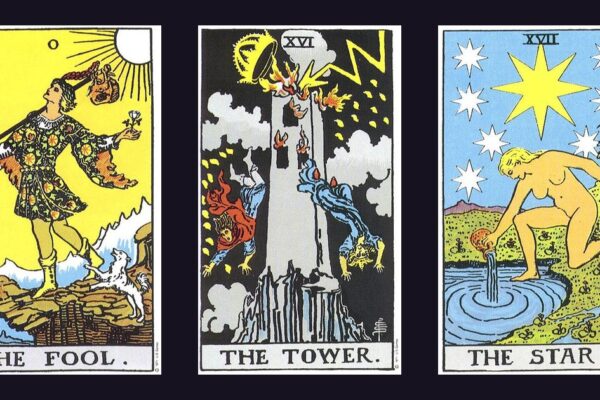
Sometimes, a reading throws a curveball. The Tower, for instance, is rarely a welcome sight, often portending upheaval and sudden change. If you’re encountering cards that feel disproportionately negative or intensely personal in a way that just doesn’t resonate with your current reality, it might be a sign to re-evaluate your approach. It’s not about denying difficult truths, but about ensuring the mirror the cards hold up is clear, not distorted by unconscious biases or external noise. The RWS (Rider-Waite-Smith) Tower, with its striking imagery of lightning striking a crown-topped edifice, is a powerful symbol, but its message is about breaking down old structures to build anew, not simply destruction for destruction’s sake.
Re-centering Your Intent
Before you even touch your cards, take a moment. Are you feeling rushed, anxious, or distracted? These states can unconsciously influence how you interpret symbols. Try a brief grounding exercise, perhaps a few minutes of focused breathing as taught in MBSR (Mindfulness-Based Stress Reduction). This isn’t about emptying your mind, but about bringing your awareness into the present moment, creating a clearer channel for intuition. Consider your question: is it open-ended enough to allow for nuanced answers, or is it a “yes/no” that might oversimplify a complex situation?
Checking Your Energy Field
Just as an Iyengar yoga practitioner adjusts their alignment for optimal flow, consider the energetic alignment of your reading space. Is it cluttered? Is there a lot of background noise? While you don’t need a temple, a designated, relatively calm area can make a significant difference. Some find a simple ritual, like lighting a candle or burning a bit of palo santo, helps to delineate the space energetically. This isn’t superstition; it’s about creating an environment conducive to introspection and focus, signaling to your subconscious that you are engaging in something meaningful.
Considering the Deck’s Voice
Each tarot deck has a distinct personality, a “voice.” Some are gentle, some are direct, some are deeply psychological, others more mystical. If your current deck feels abrasive or consistently delivers messages that feel off, it might be a mismatch. Just as you wouldn’t use a highly academic text to explain a simple concept to a child, a very esoteric deck might not be the best fit for a straightforward question if you’re a beginner. Spend time with your deck, shuffle it, look at the art, and see if its aesthetic and thematic undertones resonate with your inner landscape. For those interested in exploring different deck voices, our article Beyond the Spread: Pairing Decks for Deeper Divination offers some interesting perspectives.
Journaling Your Impressions
After a reading, especially one that feels confusing, don’t just put the cards away. Take a few minutes to jot down your immediate impressions, feelings, and any symbols that stood out. What did the colors evoke? Did a particular figure’s gaze seem to follow you? Carl Jung emphasized the importance of engaging with symbolic language, and journaling is a powerful way to do this. Don’t censor yourself. Even if it feels silly, write it down. You might be surprised by what connections emerge later, bringing clarity to a previously muddled message.
When The Hanged Man’s Message Is Lost In Translation
The Hanged Man, a card of suspension, sacrifice, and new perspectives, can be particularly challenging to interpret if you’re approaching it with a rigid mindset. Its imagery of a figure hanging upside down by one foot, serene, often suggests a necessary pause or a shift in viewpoint. If this card, or any other, leaves you feeling more confused than enlightened, it’s time to refine your interpretive toolkit. Remember, the cards are not fortune-telling devices in the simplistic sense; they are mirrors reflecting your inner world and potential paths, as Jungian psychology suggests.
Over-Reliance on Book Meanings
This is perhaps the most common pitfall for beginners. While guidebooks provide an excellent foundation, relying solely on rote memorization can stifle your intuition. If you pull the Three of Swords and immediately jump to “heartbreak” without considering context or personal resonance, you might miss a deeper message about necessary emotional release or confronting a difficult truth. Fix this by using the guidebook as a jumping-off point, not the final word. After reading the traditional meaning, close the book and ask yourself: “What does this card evoke in *me*? What story does this image tell *me* today?” Look at the details in the RWS imagery—the stormy sky, the three pierced hearts—and let your subconscious respond.
Ignoring Positional Influences
A card’s meaning shifts dramatically depending on its position in a spread. The Ace of Wands in a “challenge” position means something very different than in an “outcome” position. If you’re interpreting each card in isolation, you’re missing a crucial layer of nuance. To fix this, familiarize yourself with a few core spreads, like the Celtic Cross or a simple three-card past-present-future, and understand the energetic “flavor” of each position. Before you even look at the individual card, ask: “What kind of energy or influence does *this position* represent in this reading?” Then, integrate the card’s meaning into that framework.
Asking Leading Questions
If your question is “Will I get the promotion I want?”, you’ve already biased the reading towards a specific outcome, potentially limiting the wisdom the cards can offer. This can lead to frustration when the cards don’t give a clear “yes.” Fix this by reframing your questions to be more open-ended and exploratory. Instead of “Will I get the promotion?”, try: “What do I need to understand about my career path right now?” or “What actions can I take to align with my professional goals?” This invites a more insightful, less prescriptive response.
Fear of “Bad” Cards
Many readers dread cards like Death, The Devil, or the Ten of Swords. If you pull one of these and immediately shut down or assume the worst, you’re preventing yourself from understanding their transformative messages. Death, in the RWS, is about endings that clear the way for new beginnings, not literal demise. The Devil speaks to attachments and illusions, not inherent evil. Fix this by consciously reframing your perspective. When a challenging card appears, ask: “What old patterns or beliefs is this card asking me to release?” or “Where am I feeling stuck, and how can I liberate myself?” Approach these cards as opportunities for profound growth, not omens of doom.
Navigating The Chariot’s Path In Everyday Life
The Chariot, a card of willpower, determination, and focused direction, offers potent guidance for navigating the complexities of daily existence. Its imagery of a charioteer controlling two sphinxes (often black and white, symbolizing opposing forces) speaks to mastering internal conflicts and external challenges through sheer drive. Applying tarot insights isn’t about predicting the future, but about gaining clarity and agency in the present, whether at work, in relationships, or in managing your emotional landscape.
At Work: When Projects Stall
Imagine you’re leading a project at work, and it’s hit a seemingly insurmountable roadblock. You might pull the Eight of Swords, indicating a feeling of being trapped or limited, often by self-imposed restrictions rather than external ones. Instead of spiraling into self-doubt, the card prompts you to examine the mental narratives holding you back. Are you assuming a solution is impossible, or have you genuinely explored all avenues? The fix here isn’t to magically solve the problem, but to shift your perspective. Acknowledge the feeling of being bound, then consciously look for the metaphorical blindfold. What assumptions are you making? Who haven’t you consulted? This card encourages a mental liberation that often precedes a practical breakthrough.
In Relationships: Understanding Conflict
When communication breaks down with a loved one, and you feel stuck in a recurring argument, a card like the Five of Wands might appear. This card depicts figures clashing with wands, often suggesting petty disagreements, competition, or a lack of unified purpose. It’s not about one person being right or wrong, but about the energy of conflict itself. To apply this, instead of focusing on who is “winning” the argument, ask yourself: “What is the underlying tension here? Are we both fighting for the same thing but approaching it from different angles?” The Five of Wands isn’t a judgment; it’s an invitation to recognize the energetic clash and find a way to redirect that energy into collaborative problem-solving, much like an Osho stage of dynamic meditation aims to release pent-up energy to achieve stillness.
Emotional Regulation: Managing Anxiety
For moments of overwhelming anxiety, a card like the Nine of Swords can be incredibly resonant, depicting a figure awake in bed, tormented by thoughts. This card speaks directly to mental anguish, worry, and sleepless nights. It’s not a prediction of doom, but a reflection of an internal state. When this card appears, it’s a call to acknowledge the anxiety without judgment. Instead of trying to push the feelings away, which often intensifies them, the card suggests a need for gentle self-compassion and a search for grounding. What small, concrete action can you take to alleviate one source of worry? Can you practice a simple breathwork exercise, like those explored in Ubud’s Breathwork: A Journey Inward, to bring yourself back to the present moment? The Nine of Swords invites you to step out of the cycle of rumination and into proactive, gentle self-care.
The Hermit’s Lamp: Knowing When to Seek Guidance
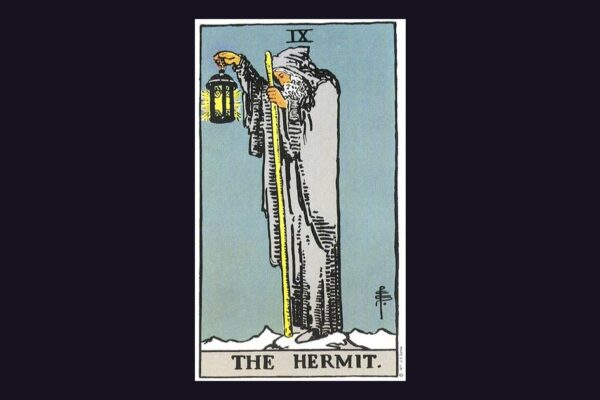
There’s a profound satisfaction in navigating our inner landscapes independently, much like the solitary journey depicted by the Hermit card in the Rider-Waite-Smith (RWS) Tarot. Self-practice in Tarot, journaling, or meditation is a powerful tool for self-discovery. It builds intuition, strengthens your connection to your subconscious, and fosters a sense of agency. However, there are times when even the most dedicated solo explorer benefits from a mapmaker or a fellow traveler.
Consider the difference between exploring a familiar garden and venturing into an uncharted wilderness. When your readings consistently feel muddled, or you find yourself interpreting every card as a confirmation of your worst fears, it might be time for an external perspective. A skilled Tarot reader, particularly one with a background in depth psychology, can offer objective insights, identify blind spots, and help you articulate questions more effectively. They can act as a mirror, reflecting back patterns you might be too close to see.
Similarly, if your self-exploration consistently unearths deep-seated trauma or triggers intense emotional distress that you struggle to process, the boundary between spiritual self-help and therapeutic need has likely been crossed. While practices like mindfulness-based stress reduction (MBSR) can be incredibly beneficial for managing everyday stress, they are not a substitute for professional mental health care. Carl Jung, the father of analytical psychology, understood the power of archetypes and symbols in the psyche, but he also recognized the importance of a trained analyst to guide individuals through the complexities of the unconscious. A therapist can provide a safe container and evidence-based strategies for healing that go beyond the scope of spiritual practices. Knowing when to consult a teacher, a seasoned reader, or a licensed professional is not a sign of weakness, but of wisdom and self-respect.
The Ace of Pentacles: Grounding Your Practice
Bringing clarity to your Tarot readings, and indeed to any spiritual practice, often boils down to cultivating a grounded, intentional approach. Just as Iyengar yoga emphasizes precise alignment for maximum benefit, a structured and mindful approach to your readings can unlock deeper meaning. Here are some practical steps to anchor your practice and illuminate those previously obscure messages:
- Refine Your Question: Vague questions lead to vague answers. Instead of “What’s going to happen?”, try “What aspect of my current career path requires my attention for growth?” or “What unconscious belief is hindering my relationship with X?”
- Set the Sacred Space: Even a small ritual can shift your mindset. Light a candle, play calming music, or simply take a few deep breaths. This signals to your subconscious that you are entering a focused, receptive state. For ideas on enhancing your space, you might enjoy Crafting a Sacred Space: Your Feline-Inspired Tarot Pouch.
- Journal Immediately: Don’t just pull cards and put them away. Write down your initial impressions, symbols, feelings, and any immediate associations before consulting guidebooks. This captures your raw intuitive hit.
- Explore Card Combinations: Individual cards have meaning, but their interplay creates a narrative. How does the card to its left influence it? What story emerges when you consider three cards together as past, present, and future?
- Connect to Your Body: Pay attention to physical sensations as you interpret cards. Does a particular card make you feel expansive or constricted? Grounded or anxious? Our bodies often hold intuitive wisdom.
- Cross-Reference with Life: How do the themes, archetypes, and challenges presented in your reading reflect what’s actually happening in your life? Look for resonance, not exact predictions.
- Review Past Readings: Keep a dedicated Tarot journal and periodically review old readings. You’ll often find that clarity emerges over time as events unfold, revealing the prescience of earlier messages.
- Embrace the “Not Knowing”: Sometimes, a reading simply doesn’t make sense in the moment. That’s okay. The subconscious often works on a different timeline. Trust that the message will reveal itself when you are ready to receive it.
Ultimately, a Tarot reading is a dialogue with your inner self, a reflection of your current energetic landscape. By approaching it with intention, curiosity, and a willingness to engage, you transform confusion into clarity, and silence into profound insight.
Frequently Asked Questions
What if I don’t resonate with my Tarot card meanings?
It’s common to feel a disconnect if you’re relying solely on a generic interpretation. Remember that Tarot is a symbolic language, and its power often lies in how its archetypes intersect with your unique life circumstances and inner landscape.
Should I get another reading if the first one felt wrong?
While it’s tempting to seek immediate clarification, sometimes the ‘wrongness’ is an invitation to deeper reflection rather than a sign to seek a different answer. Give yourself time to sit with the initial reading, exploring what aspects truly feel discordant and why.
My Tarot reader said something that didn’t make sense to me. What now?
A good reader acts as a guide, not a dictator of your fate. If a particular insight doesn’t resonate, it’s perfectly acceptable to ask for clarification or to simply acknowledge that it doesn’t align with your current understanding. Your intuition is a key part of the process.
Can my mood affect the accuracy of a Tarot reading?
While the cards themselves don’t change, your emotional state can certainly influence how you perceive and interpret the symbols. Approaching a reading with an open, reflective mindset, similar to the principles of mindfulness-based stress reduction (MBSR), can enhance your ability to glean insights.
I’m using a new deck and it feels ‘off.’ Is that normal?
Absolutely. Each Tarot deck, from the classic Rider-Waite-Smith (RWS) to more contemporary designs, possesses a unique energetic signature and artistic language. It takes time to build a relationship with a new deck, much like getting to know a new friend or learning a new dialect.
This page describes what the Tarot tradition teaches and how people practise it. It is not a prediction and not medical, psychiatric or crisis advice. How we research and write · report an error