Rituals
Jun 18, 2026
·
13 min read
·
Updated Jul 26, 2026
Candle Magic: A Complete Beginner’s Guide to Color, Intention, and Fire
🕯 10 min read · June 18, 2026
Candle magic, an ancient art that intertwines the primal element of fire with the subtle vibrations of color, offers a direct line to intention‑crafting that feels both tangible and mystical. When a wick is lit, the flame becomes a conduit, drawing our focused thoughts outward like smoke spiraling toward the unseen. By pairing the hue of the candle with a clearly stated purpose, the practitioner creates a layered sigil of light, heat, and hue that the subconscious mind—and, according to many traditions, the fabric of reality—can read. This guide delves deep into the symbolism of color, the mechanics of intent, and the ritual choreography that makes fire a reliable partner in spellwork.
Choosing the Right Color: Symbolism and Correspondences
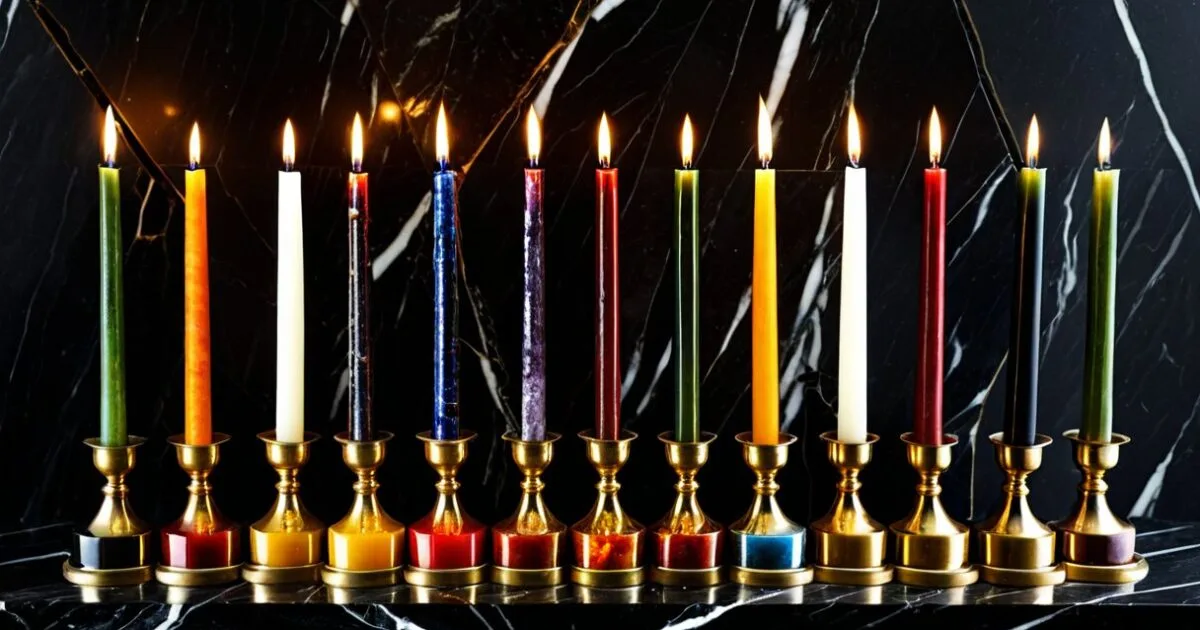
Color is not merely decorative; each shade vibrates at a frequency that aligns with specific emotional states, planetary influences, and elemental energies. Selecting the correct candle color sharpens the spell’s “signal” and reduces interference from competing energies.
- White – Purity, protection, new beginnings; ruled by the Moon and associated with the element of Air.
- Black – Absorption, banishing, grounding; linked to Saturn and the element of Earth.
- Red – Passion, courage, strength; Mars‑dominated and fire‑aligned.
- Pink – Romance, self‑love, emotional healing; Venus‑kissed and water‑tuned.
- Orange – Creativity, prosperity, confidence; Sun‑lit and fire‑enhanced.
- Yellow – Intellectual clarity, communication, optimism; Mercury’s domain, element of Air.
- Green – Growth, abundance, health; ruled by Venus, Earth‑rooted.
- Blue – Peace, intuition, spiritual insight; Jupiter’s blessing, Water‑flow.
- Purple – Spiritual power, psychic development, royalty; Neptune‑aligned, Air‑woven.
- Brown – Stability, home, grounding; tied to the element of Earth and the dwarf planet Ceres.
When a color resonates with the desired outcome, it amplifies the intention’s “frequency” and makes the flame’s dance more purposeful.
Crafting a Crystal‑Clear Intention
The success of any candle rite hinges on a statement of intent that is both specific and emotionally charged. Vague wishes produce vague results; precise language creates a magnetic pull.
- Define the goal. Write it as a present‑tense affirmation (e.g., “I am financially stable” rather than “I want money”).
- Quantify when possible. Numbers give the subconscious a concrete anchor (“I receive $500 in the next 30 days”).
- Inject feeling. Attach an emotion that you would feel upon fulfillment (“I feel joyful and secure”).
- Keep it brief. One sentence, 12‑20 words, is optimum for memorization and focus.
- Seal it with a verb of action. Words like “manifest,” “heal,” “protect,” or “attract” give the spell kinetic direction.
Write your intention on a small slip of paper, ideally using a pen colored to match the candle (red ink for a red candle, etc.). This double‑layered color coding reinforces the vibrational theme.
Preparing the Space: Cleansing, consecrating, and the altar layout
A ritual environment must be cleared of residual energies that could muddy the spell. Follow these steps before lighting the candle:
- Physical declutter. Remove extraneous items; a clean surface mirrors a clear mind.
- Energetic sweep. Use a smudge stick (sage, cedar, or rosemary) or a bell to sound away stagnant vibrations. Move clockwise around the space, visualizing a sphere of white light expanding outward.
- Consecrate the tools. Hold each object (candle, knife, wand) in your dominant hand, say, “I consecrate this ___ in the name of ___, may it serve only the highest good.”
- Arrange the altar.
- Center: The candle, representing the heart of the spell.
- North: A crystal that mirrors the intention (e.g., citrine for abundance).
- East: A feather or incense for Air, to aid mental clarity.
- South: A small brazier or dried herbs for extra fire support.
- West: A bowl of water or a seashell for emotional balance.
Once the layout is set, pause for a few breaths, visualizing the space as a sealed sphere of protection. This “magic circle” will keep the energy focused and prevent unwanted leaks.
The Ritual Act: Lighting, chanting, and timing
With intention written, candle chosen, and space prepared, the ritual moves to the moment of ignition. The act of lighting is both symbolic (bringing darkness into light) and practical (providing heat for the spell).
- Ground and center. Stand barefoot if possible; feel the Earth through your soles, inhale deeply three times.
- Recite the intention. Speak your written affirmation aloud three times, each time visualizing the desired outcome as already manifested.
- Apply the oil or herb. If using essential oil, dab a drop onto the wick in a clockwise motion, whispering, “As this oil spreads, so does my will.” For herbs, sprinkle a pinch around the base, saying, “By earth’s scent, my purpose grounds.”
- Light the wick. Use a match or a firesteel—never a lighter that has been used for mundane purposes, as it carries residual intent.
- Chant or mantra. Choose a short phrase (e.g., “Flamma veritatis”) and repeat it in rhythm with the flickering flame for the length of time the candle will burn (commonly 7, 9, or 13 minutes). The number corresponds to the spell’s scope: 7 for personal change, 9 for a broader influence, 13 for transformation.
- Allow the candle to burn. Never extinguish the flame prematurely. If you must leave the space, cap the candle with a glass jar to preserve the energy until you can return.
While the candle burns, keep your focus on the flame’s tip. Imagine the wick as a channel, drawing the intention upward and outward like smoke. If thoughts wander, gently bring them back with a whisper of the mantra.
Closing the Work: Thanking, sealing, and aftercare
All magical operations must be respectfully concluded to avoid lingering energies that could attract unwanted attention.
- Express gratitude. Say aloud, “I thank the elements, the spirits, and the Universe for assisting my work.”
- Seal the spell. Dab a drop of water on the candle’s base and whisper, “With water, my intent is sealed.” Then, snuff the flame with a candle snuffer (never blow it out, as blowing disperses the energy).
- Dispose of remnants. Burn the paper with the intention (if safe), bury the remnants of herbs in the earth, and return any leftover wax to the hearth or a dark, ceremonial dish for future use.
- Ground yourself. Touch the Earth, eat something nourishing, and drink water to bring your aura back to baseline.
- Record the outcome. Keep a spell journal. Note the date, moon phase, color, intention, and any synchronicities that appear. This data refines future work.
Patience is a virtue in candle magic. The flame’s work continues long after the wick is gone; the universe processes the vibrational imprint on its own schedule. Trust the timing, stay attuned to signs, and adjust future spells based on observed results.
Anointing and Dressing Your Candle: Infusing with Purpose
Beyond simply choosing a color, the physical preparation of your candle is a powerful act of imbuing it with your specific intent. This process, often called “anointing” or “dressing,” transforms a simple wax cylinder into a potent magical tool.
Choosing Your Anointing Medium
The most common mediums are essential oils, but carrier oils infused with herbs or even personal essences (like a drop of your favorite perfume, if appropriate for the intention) can also be used. When selecting an essential oil, consider its traditional associations:
- Lavender: Peace, healing, spiritual growth.
- Frankincense: Protection, purification, consecration.
- Patchouli: Abundance, grounding, sensuality.
- Rosemary: Clarity, memory, protection.
- Sandalwood: Spirituality, meditation, calming.
- Cinnamon: Prosperity, passion, swift action.
Always dilute essential oils in a carrier oil (like jojoba, almond, or grapeseed) before applying, especially if you have sensitive skin. A ratio of 3-5 drops of essential oil per tablespoon of carrier oil is a good starting point.
The Art of Dressing: Directional Flow of Energy
The direction in which you apply the oil matters. This isn’t arbitrary; it reflects a deep understanding of energy flow:
- For attracting or bringing something in (e.g., love, money, health): Apply the oil from the top (wick end) of the candle down towards the base. As you do this, visualize drawing the desired outcome into your life, pulling it down into the physical realm.
- For banishing, releasing, or sending something away (e.g., negative habits, illness, obstacles): Apply the oil from the base of the candle upwards towards the wick. Here, you’re visualizing pushing the unwanted energy away, up and out through the flame.
As you dress the candle, hold your intention clearly in your mind. You can also whisper your affirmation into the wax, infusing it with your breath and voice. Some practitioners also roll the anointed candle in powdered herbs corresponding to their intent (e.g., cinnamon for money, rose petals for love) to further amplify its energetic signature. This physical act of preparation is a form of active meditation, focusing your will into a tangible object.
The Psychology of Candle Magic: Jungian Archetypes and Focused Attention
From a depth-psychology perspective, candle magic isn’t just a quaint superstition; it’s a potent application of symbolic thinking and focused attention that can profoundly influence the psyche. Carl Jung’s work on archetypes and the collective unconscious offers a framework for understanding its power.
Archetypal Resonance and Symbolic Language
The elements, colors, and actions within candle magic tap into universal archetypes. Fire, for instance, is a primal archetype of transformation, purification, and divine spark across countless cultures. Lighting a candle isn’t just igniting wax; it’s engaging with this deep, ancestral symbol. Similarly, specific colors resonate with archetypal energies: red with passion (the Lover/Warrior archetype), blue with wisdom (the Sage), green with growth (the Creator/Healer).
When you perform a candle ritual, you are speaking to your subconscious in a language it understands — the language of symbols. This bypasses the critical, logical mind and directly impresses your intention upon the deeper layers of your being. Jung believed that when we engage with archetypal imagery, we activate powerful, innate patterns of behavior and understanding. Candle magic provides a structured way to do just that, creating a bridge between your conscious desire and your unconscious potential.
The Power of Focused Attention (MBSR Connection)
The sustained focus required during a candle ritual bears a striking resemblance to practices found in Mindfulness-Based Stress Reduction (MBSR) and other contemplative traditions. When you gaze at the flickering flame, chant a mantra, and visualize your desired outcome, you are engaging in a form of concentrated, one-pointed attention. This state of focused awareness:
- Reduces mental chatter: The “monkey mind” quiets as your attention is anchored.
- Enhances visualization: With fewer distractions, your ability to vividly imagine your goal strengthens.
- Creates neural pathways: Repeated, focused intention can literally begin to rewire your brain, creating new pathways that support your desired reality. This is not “magic” in a supernatural sense, but a well-documented aspect of neuroplasticity.
The candle acts as an external anchor for this internal process, making the abstract act of intention-setting tangible and more accessible. The ritualistic elements provide a container, a sacred space, that encourages deep concentration and commitment, amplifying the psychological impact of your intention.
Avoiding Vague or Negative Magic Intentions
While candle magic is accessible, certain common mistakes can dilute its effectiveness or even lead to unintended results. Being aware of these can help you refine your practice.
Vague or Negative Intentions
As discussed, specificity is key. An intention like “I want to be happy” is too broad. What does “happy” mean to you? How will you know when you’ve achieved it? Instead, focus on tangible outcomes that contribute to happiness, such as “I attract joyful and supportive relationships into my life.”
Equally important is framing your intention positively. The subconscious struggles with negatives. Instead of “I don’t want to be poor,” reframe it as “I am financially abundant and secure.” Focus on what you want to create, not what you want to avoid.
Lack of Personal Investment
Candle magic isn’t a passive “set it and forget it” mechanism. It requires your active energy and belief. If you perform a ritual out of curiosity or cynicism, without truly investing your emotional and mental energy, its impact will be minimal. Your belief isn’t about magical thinking; it’s about activating your own inner resources and commitment to the goal.
This personal investment extends beyond the ritual itself. If you perform a candle spell for a new job, are you also actively sending out resumes, networking, and honing your skills? Magic works best when it complements and amplifies concrete action, not replaces it.
Ignoring Aftercare and Grounding
Neglecting the closing steps of a ritual can leave your energy scattered or the “door” open to unwanted influences. Always express gratitude, seal the spell, and properly dispose of remnants. Just as important is grounding yourself after a powerful ritual. Energetic work can leave you feeling “airy” or unmoored.
Simple grounding techniques include eating a nourishing meal, drinking water, taking a walk in nature, or even just placing your hands on the earth. This helps integrate the energetic shifts and brings you back into your body and the present moment, ensuring the magic settles effectively.
This page describes what the Rituals tradition teaches and how people practise it. It is not a prediction and not medical, psychiatric or crisis advice. How we research and write · report an error