Seasonal Magic
Jun 25, 2026
·
11 min read
·
Updated Jul 20, 2026
Mabon: The Autumn Equinox and Harvest Ritual Guide
🕯 9 min read · June 25, 2026
Mabon marks the autumn equinox — the single day each year when daylight and darkness fall into perfect balance before the nights begin to win. Falling around September 22-23 in the Northern Hemisphere (March 20-21 in the Southern Hemisphere), it is the second of the year’s three harvest festivals in the Wheel of the Year, sitting between Lughnasadh’s first grain harvest and Samhain’s final closing of the growing season. Where Lughnasadh celebrates abundance and Samhain honors endings, Mabon occupies the reflective middle ground: the moment to take stock of what you’ve grown — literally and spiritually — before the dark half of the year sets in.
The Meaning Behind the Name
Unlike Yule or Beltane, “Mabon” is not an ancient Pagan name for this equinox — historical Anglo-Saxon and Celtic peoples marked the day but didn’t call it Mabon. The name was popularized in the 1970s by American Wiccan author Aidan Kelly, who borrowed it from Mabon ap Modron, a figure from Welsh mythology whose name translates roughly to “great son of the great mother.” Kelly chose it to give the autumn equinox a proportionate name alongside Ostara (spring equinox), which had a similarly modern pedigree. Some traditions still prefer older or alternate names — Harvest Home, the Feast of the Ingathering, or simply the Autumn Equinox — but Mabon is now the most widely used term across modern Pagan and Wiccan practice.
What Mabon Represents Spiritually
At its core, Mabon is a festival of balance and gratitude. The equal split of day and night makes it a natural checkpoint for examining your own internal equilibrium — between giving and receiving, work and rest, light and shadow. Where the summer months push outward energy (growth, expansion, doing), Mabon asks you to turn inward and start consolidating. Three themes recur across most Mabon traditions:
- Gratitude and the second harvest. Mabon is the “wine harvest” or “fruit harvest” — apples, grapes, squash, and root vegetables come in now. Spiritually, this translates into taking inventory of the year’s efforts: what projects, relationships, or personal growth have actually borne fruit since spring?
- Balance before descent. Because light and dark are equal on this one day, Mabon is considered an ideal time for rituals of equilibrium — releasing what’s out of balance in your life before the introspective, slower energy of autumn and winter arrives.
- Preparation and release. Just as farmers store the harvest and let fields go fallow, Mabon invites you to consciously decide what you’re carrying into the dark half of the year and what you’re setting down.
Mabon Correspondences
If you’re building an altar or ritual, these are the most commonly used correspondences for Mabon:
- Colors: deep orange, burgundy, brown, gold, dark red — the palette of turning leaves
- Herbs and plants: sage, rosemary, marigold, thistle, oak leaves, dried corn husks
- Crystals: citrine, carnelian, tiger’s eye, smoky quartz, amber
- Foods: apples, pears, squash, root vegetables, bread, wine or cider, nuts
- Symbols: cornucopia, pinecones, acorns, grapevines, the scales (for balance)
- Deities often honored: harvest and grain deities such as Demeter, Persephone, the Green Man, Mabon ap Modron, and Dionysus
Simple Ways to Celebrate Mabon
You don’t need an elaborate ceremony to observe the equinox meaningfully. Here are practical, accessible ways to mark the day:
1. Build a Gratitude Harvest Altar
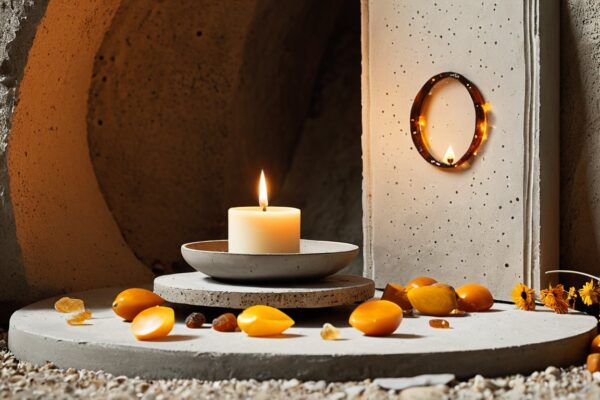
Gather seasonal items — apples, pinecones, dried leaves, a small pumpkin or squash — and arrange them alongside a candle in an autumn color. Before lighting the candle, write down three things you “harvested” this year: skills gained, relationships strengthened, habits you finally broke.
2. Cook a Seasonal Meal With Intention
Prepare something using foods that are actually in harvest right now — a roasted root vegetable dish, apple crisp, or fresh bread. Cooking mindfully, and pausing to give thanks before eating, is one of the oldest and most universal Mabon practices, echoing harvest-home meals across many cultures.
3. Do a Balance Ritual
Because day and night are equal, this is a good day to identify one area of your life that’s out of balance — overworking, isolating, overspending — and set one concrete, small intention to correct it. Light two candles (one light-colored, one dark) and let them burn evenly as a physical symbol of the intention.
4. Give Something Away
Harvest festivals have historically involved sharing surplus with the community. Donate food, clothing, or time to those who need it — a modern, grounded way to honor the same reciprocity ancient harvest celebrations were built around.
5. Journal on Release
Write down what you’re ready to let go of before the introspective winter months. Some practitioners burn or bury this list as a symbolic release, tying Mabon into the broader arc that leads to Samhain.
Mabon vs. Ostara vs. Samhain
It’s easy to conflate the three “threshold” Sabbats, so here’s the quick distinction: Ostara (spring equinox) is about new beginnings and planting seeds — light is returning. Mabon (autumn equinox) is about the harvest and finding balance as light and dark are momentarily equal — light is receding. Samhain (October 31/November 1) is the final descent into the dark half of the year, associated with honoring the dead and the “thinning veil.” Mabon sits between fullness and letting go — neither the optimism of spring nor the solemnity of Samhain, but the quieter work of taking stock.
Frequently Asked Questions
Is Mabon the same as the fall equinox?
Yes. Mabon is the modern Pagan/Wiccan name specifically given to the astronomical autumn equinox, when day and night are of roughly equal length.
Do I need to be Wiccan to celebrate Mabon?
No. Many people who aren’t part of a specific tradition mark Mabon simply as a seasonal gratitude practice or a nature-based checkpoint — the themes of balance and harvest resonate broadly, independent of any particular belief system.
What’s the best crystal to use for Mabon?
Citrine and carnelian are the most commonly recommended, since both carry warm, abundance-oriented energy that mirrors the harvest theme. Smoky quartz is a good alternative if your focus is more on grounding and release.
What date is Mabon in 2026?
The autumn equinox in 2026 falls on September 23 in the Northern Hemisphere.
A Depth Psychology Perspective on Mabon
From a depth psychology standpoint, Mabon offers a potent mirror for the human psyche’s natural cycles. Carl Jung’s concept of individuation, the process by which we become a more integrated and whole self, finds resonance in Mabon’s themes of balance and integration. Just as the external world achieves a fleeting equilibrium between light and shadow, Mabon invites us to examine the balance of our own internal opposites: the conscious and unconscious, the persona and the shadow, our masculine and feminine energies.
The “second harvest” isn’t just about physical crops; it’s a call to harvest the insights gained from the preceding seasons of our inner life. What unconscious patterns have surfaced? What new aspects of self have you brought to consciousness? Mabon provides a natural pause point, much like the reflective stages in Osho’s Seven Stages of Meditation, where observation and integration become paramount before moving into deeper introspection. It’s a time for psychological “stocktaking,” akin to reviewing one’s psychological inventory before embarking on a new phase of growth or retreat.
The emphasis on releasing what no longer serves us, a common Mabon practice, directly aligns with therapeutic processes of letting go of old patterns, limiting beliefs, or unresolved emotions. This isn’t about discarding parts of ourselves, but rather about consciously choosing what we carry forward into the “dark half of the year” – a metaphor for periods of introspection, shadow work, or even psychological challenge. By consciously releasing, we create space for renewal, preventing psychological stagnation and preparing the ground for future growth.
Mabon and Mindful Living
The themes of Mabon are inherently aligned with principles of mindfulness. The practice of being present and observing the changing seasons, without judgment, is foundational to many mindfulness traditions, including Mindfulness-Based Stress Reduction (MBSR) developed by Jon Kabat-Zinn. Mabon encourages a mindful pause, a deliberate slowing down to appreciate the present moment and the fruits of our efforts.
Consider the act of preparing a seasonal meal: instead of a rushed task, Mabon invites us to engage all our senses in the cooking process. The vibrant colors of squash, the earthy scent of roasting root vegetables, the warmth of fresh bread – these become anchors for mindful awareness. Similarly, the gratitude practices associated with Mabon are direct applications of mindfulness. Taking time to consciously acknowledge blessings, whether through journaling or simply a moment of reflection, shifts our focus from what’s lacking to what’s abundant, fostering a more positive psychological state.
The concept of balance, central to Mabon, can also be approached mindfully. Rather than striving for an unattainable perfection, mindful balance is about acknowledging the dynamic interplay of forces in our lives. It’s an acceptance that periods of activity will be followed by periods of rest, and that both are necessary for well-being. This equanimity, a core tenet of Buddhist mindfulness, allows us to navigate the natural ebbs and flows of life with greater resilience and less internal friction.
Advanced Mabon Practices: Deepening Your Equinox Ritual
For those looking to move beyond simple observances, Mabon offers rich opportunities for deeper spiritual work. These practices are not about complexity, but about intentionality and sustained engagement:
- Tarot Reflection with the RWS Deck: Use your Rider-Waite-Smith (RWS) Tarot deck for a Mabon spread focusing on harvest, balance, and release. A simple three-card spread could be:
- Card 1 (Left): What have I harvested this year? (Represents achievements, growth, blessings).
- Card 2 (Middle): Where do I need to find balance? (Highlights areas of imbalance or opposing forces).
- Card 3 (Right): What am I ready to release for the coming season? (Indicates what to let go of to create space).
Spend time journaling on the imagery and symbolism of each card, connecting it to your personal journey.
- Elder Futhark Rune Casting for Guidance: The Elder Futhark runes offer another potent system for introspection. For Mabon, consider casting a single rune or a three-rune spread for insight into your internal balance and preparation for the darker months.
- A single rune pulled with the question, “What guidance does Mabon offer me for balance?” can be profoundly insightful.
- A three-rune spread could explore: “What has come to fruition?” “What needs balancing?” “What should I conserve?”
Research the traditional meanings of the chosen runes, focusing on their connection to harvest, equilibrium, and preparation.
- Yoga and Embodied Balance: Incorporate Hatha or Iyengar yoga practices that emphasize balance and grounding. Poses like Tree Pose (Vrksasana), Warrior III (Virabhadrasana III), or Half Moon Pose (Ardha Chandrasana) physically embody the search for equilibrium. Focus on the breath and the sensation of stability in these poses, allowing the physical practice to mirror your internal quest for balance. A restorative yoga sequence can also be profoundly beneficial for the release aspect of Mabon, allowing the body to passively let go of tension.
- Dream Work and Shadow Integration: As Mabon marks the shift towards the “dark half” of the year, it’s an excellent time to begin or deepen dream work. Keep a dream journal by your bed and record any dreams you remember upon waking. Look for recurring symbols, themes, or figures that might represent aspects of your shadow self – those unacknowledged or repressed parts of your psyche. Engaging with these through journaling, active imagination, or even creative expression (drawing, writing) can be a powerful way to integrate and balance these internal energies, bringing unconscious material into conscious awareness.
- Creating a “Release Bundle”: Gather small, biodegradable items that symbolize what you wish to release – a dry leaf for a habit, a small stone for a burden, a pinch of dried herb for an emotion. Tie them together with natural twine. On Mabon, take this bundle to a natural outdoor space. As you untie each item, verbally state what it represents and your intention to release it. Then, either bury the items or scatter them in the wind, visualizing their return to the earth and the dissolution of their hold on you. This ritual provides a tangible, symbolic act of letting go.
This page describes what the Seasonal Magic tradition teaches and how people practise it. It is not a prediction and not medical, psychiatric or crisis advice. How we research and write · report an error