Rituals
Jun 25, 2026
·
9 min read
·
Updated Jul 26, 2026
Morning Ritual Design: Building a Practice That Actually Works

🕯 7 min read · June 25, 2026
Morning Ritual Design: Building a Practice That Actually Works
Have you ever woken up with the best of intentions, only to find yourself scrolling through emails before your feet even hit the floor? You might have tried the viral five a.m. routines or the rigid productivity hacks, yet you still feel a sense of spiritual fragmentation by noon. The disconnect often lies in the difference between a routine and a ritual. A routine is a sequence of tasks designed for efficiency; a ritual is a sequence of actions designed for meaning. When we approach the morning as a series of chores, we are merely managing our time. When we approach it as a ritual, we are managing our energy and our alignment with the self.
Designing a practice that actually works requires moving away from the one size fits all approach and toward a personalized architecture of intention. The goal is not to achieve a perfect aesthetic, but to create a psychological and spiritual bridge between the subconscious depths of sleep and the conscious demands of the waking world.
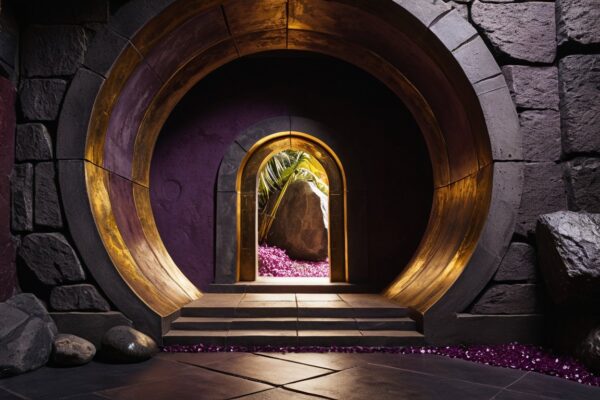
The Psychology of the Threshold
In the study of depth psychology, Carl Jung spoke extensively about the importance of symbols and the integration of the conscious and unconscious mind. The transition from sleep to wakefulness is a literal threshold. In this liminal space, the mind is highly suggestible and open. If the first thing we encounter is the chaos of the external world via a smartphone, we immediately surrender our autonomy to external stressors.
A successful morning ritual acts as a container. By consciously choosing how we enter the day, we signal to the nervous system that we are safe, present, and in command of our internal state. This is not about adding more tasks to a to do list, but about creating a sacred pause that allows the psyche to orient itself before the noise of the world rushes in.
Pillars of a Grounded Practice
To build a practice that sustains itself, you must balance three essential dimensions: the somatic, the mental, and the spiritual. If you focus only on the spiritual, you may feel ungrounded; if you focus only on the somatic, you may feel mindless.
The Somatic Foundation
The body is the anchor of any spiritual practice. Without physical grounding, spiritual work can become airy and disconnected. One of the most effective ways to ground the body is through the precision of Iyengar yoga. Unlike more fluid styles, Iyengar yoga emphasizes structural alignment and the use of props to ensure the body is correctly positioned. Incorporating a few minutes of Tadasana (Mountain Pose) or a supported forward fold helps bring awareness to the physical vessel, clearing the static of the night and preparing the nervous system for movement.
Alternatively, for those who prefer a more meditative approach to movement, the principles of Mindfulness Based Stress Reduction (MBSR) provide a scientific framework for somatic awareness. A simple body scan—moving attention from the toes to the crown of the head—allows you to acknowledge tension without judgment, preventing the day from beginning with accumulated physical stress.
The Mental Clearing
Once the body is present, the mind requires a clearing. This is where we transition from physical presence to mental clarity. Writing is one of the most potent tools for this. Morning pages, a practice popularized by various creative recovery traditions, involve a stream of consciousness dump. This is not journaling for memories, but a psychic purge. By externalizing the internal chatter, you create a vacuum that can then be filled with intention.
For those who prefer symbolic reflection, the use of the Rider Waite Smith (RWS) tarot system can serve as a tool for psychological mirroring. Rather than seeking a fixed prediction of the future, a single card pull can act as a focal point for contemplation. For example, pulling the Two of Swords might prompt a reflection on a decision that requires a balance of intellect and intuition. The card does not tell you what will happen; it asks you how you are currently perceiving your reality.
The Spiritual Orientation
The final pillar is the orientation of the spirit. This is the moment where you define your relationship with the universe and your purpose for the day. Some find this through the study of the Elder Futhark runes, using a single rune like Ansuz to focus on communication and inspiration. Others may find it through a period of stillness or a specific breathwork practice.
The goal here is not to achieve a state of bliss, but to establish a direction. Whether it is through a brief prayer, a moment of gratitude, or a focused visualization, this step transforms the morning from a biological necessity into a spiritual act.
Step by Step Design: Your Evening Preparation
A morning ritual does not begin when you wake up; it begins the night before. The quality of your morning is dictated by the closure of your previous day. To ensure your practice works, you must prepare the environment and the mind.
First, clear your physical space. A cluttered environment often reflects a cluttered mind. Set out your yoga mat, your journal, or your tarot deck the night before. This removes the friction of decision making in the morning.
Second, perform a mental shutdown. Write down the three most pressing tasks for the following day. By offloading these from your working memory onto paper, you allow your subconscious to rest, preventing the midnight anxiety that often disrupts sleep.
Third, set a conscious intention for the waking moment. Instead of thinking I have to wake up at six, try thinking I look forward to my time of stillness. This shift in framing changes the neurological response to the alarm clock from a stress trigger to an invitation.
Customizing Your Ritual Architecture
Because every individual has a different energetic makeup, your ritual should be modular. You can scale your practice based on the time available.
The Condensed Version (15 Minutes)
When time is limited, focus on the core essence of each pillar:
One minute of mindful breathing (MBSR) to ground the body.
Two minutes of intuitive writing to clear the mind.
Two minutes of silent reflection or a single card pull for orientation.
The Expanded Version (60 Minutes)
For those with more space, the practice can be deepened:
Twenty minutes of Iyengar yoga for alignment and strength.
Fifteen minutes of stream of consciousness writing.
Ten minutes of meditative study or rune contemplation.
Fifteen minutes of silent meditation or breathwork.
Safety and Sustainability
When implementing these practices, it is vital to remain grounded in reality. Spiritual practices are tools for enhancement, not cures for clinical conditions. If you are practicing yoga and feel sharp pain, stop immediately; alignment is about support, not force. If your journaling brings up intense emotional distress, recognize that this is a natural part of the shadow work process, but do not hesitate to seek professional psychological support to navigate these depths.
Avoid the trap of perfectionism. The most common reason rituals fail is the belief that they must be performed perfectly to be effective. If you miss a day, do not view it as a failure. Instead, observe the feeling of resistance with curiosity. Why was the ritual avoided today? What was the mind protecting? This observation is, in itself, a spiritual practice.
Integration into the Day
The true test of a morning ritual is not how you feel during the practice, but how you carry that feeling into your interactions with others. The goal is to create a reservoir of calm that you can draw from when the inevitable stressors of the day arise. When a conflict occurs at work or a frustration arises at home, you can return to the somatic grounding of your morning practice, recalling the feeling of your feet on the floor or the clarity of your morning reflection.
By building a practice based on established traditions and psychological principles, you move away from the whim of trends and toward a sustainable rhythm. You are not trying to hack your productivity; you are cultivating your presence.
The transition from the dream state to the waking state is the most potent moment of the day. By treating this transition with reverence and intentionality, you reclaim your time and your spirit. You move from being a passenger in your life to being the architect of your experience.
Frequently Asked Questions
Can tarot or runes predict exactly what will happen in my day?
No. These tools are used for reflection and psychological insight, not for predicting fixed fate. They serve as mirrors for the subconscious to help you navigate your own internal landscape.
Do I need to buy expensive equipment to start a morning ritual?
No. The most effective rituals rely on intention and consistency rather than material goods. A simple notebook and a quiet corner are sufficient to begin a practice of mindfulness and reflection.
What should I do if I feel bored with my ritual after a few weeks?
Boredom is often a sign that you have integrated the practice and are ready for a new challenge. You can evolve your ritual by changing the focus of your reflections or introducing a new somatic practice to keep the engagement active.
This page describes what the Rituals tradition teaches and how people practise it. It is not a prediction and not medical, psychiatric or crisis advice. How we research and write · report an error