Tarot
Aug 18, 2026
·
13 min read
When Worlds Collide: Tarot & Imaginal Play
🕯 10 min read · August 18, 2026
The Deep Roots of Imaginal Play
In an age increasingly defined by digital interfaces and pre-packaged experiences, a quiet revolution is stirring in the realms of personal growth and creative expression. We’re seeing a resurgence of interest in tools that bridge the gap between our inner worlds and outer realities, inviting us to engage in a more active, participatory form of self-discovery. This isn’t about escaping reality, but enriching it – by consciously inviting the archetypal forces and narratives that shape our lives into tangible, interactive forms.
One fascinating manifestation of this trend is the burgeoning practice of creating personalized tarot decks, often featuring characters and mythologies from beloved fictional universes, personal narratives, or even tabletop role-playing games. This isn’t merely a fan art endeavor; it’s a profound act of imaginal play, a spiritual practice in itself. By re-casting the archetypal figures of the Major and Minor Arcana through the lens of our own created worlds, we forge a deeper, more intimate connection with these symbolic keys to the psyche. It allows us to speak the language of the soul in a dialect uniquely our own, making the ancient wisdom of tarot more accessible and resonant than ever before.
From Ancient Wisdom to Personal Pantheon: Crafting Your Own Arcana
The idea of personalizing spiritual tools is far from new. Throughout history, various cultures have adapted sacred imagery and practices to suit local beliefs and individual understanding. Consider the regional variations of playing cards that eventually evolved into the Tarot de Marseille, or the diverse pantheons of gods and goddesses worshipped across different civilizations. Each adaptation served to make abstract spiritual concepts more relatable and immediate to the practitioners. Creating a personalized tarot deck, therefore, is not a modern innovation but a continuation of this ancient tradition of making the sacred personal.
The practice itself taps into profound psychological and spiritual principles. Carl Jung’s concept of the collective unconscious posits that humanity shares a reservoir of archetypal images and motifs. The tarot, in its traditional form, is a powerful visual dictionary of these archetypes. When we re-imagine these archetypes through our own characters or narratives, we aren’t diluting their power; we are translating them into a language our individual psyche can understand and engage with more readily. A character from a Dungeons & Dragons campaign, for instance, who embodies courage and leadership, might perfectly represent The Emperor. A beloved fictional mentor who guides others through difficult trials could become The Hierophant. This process strengthens the bridge between the universal archetypes and our personal experience, making the insights gleaned from a reading feel profoundly personal and actionable.
This engagement isn’t just intellectual; it’s deeply emotional and intuitive. The act of drawing or conceptualizing these cards yourself, choosing specific characters or scenarios to embody each archetype, imbues the deck with your unique energetic signature. It becomes a mirror, reflecting your inner landscape and the symbolic language you use to navigate it. This bespoke connection can lead to more potent readings, as the imagery speaks directly to your subconscious, bypassing typical interpretive filters and delivering insights with greater clarity and impact.
The Practical Alchemy: A Step-by-Step Approach to Personalizing Your Deck
Embarking on the creation of a personalized tarot deck is a journey of self-discovery as much as it is an artistic endeavor. Here’s a grounded approach for those ready to weave their personal myths into the tapestry of the tarot:
- Study the Archetypes, Not Just the Cards: Before you even think about characters, delve into the core meaning of each Major and Minor Arcana card. What does The Fool *truly* represent beyond a specific image? What are the fundamental energies of the Suit of Swords? Understanding the archetypal essence will guide your choices, ensuring your personalized cards retain their interpretive power. Resources like Rachel Pollack’s *Seventy-Eight Degrees of Wisdom* or Mary K. Greer’s *Tarot for Yourself* are invaluable for this foundational work.
- Identify Your Personal Pantheon/Narrative: This is where your chosen fictional worlds, personal stories, or even dream figures come into play. Think about characters, places, or significant events that resonate deeply with you. Who embodies courage? Who represents transformation? Who struggles with difficult choices? Don’t limit yourself to just one source; a blend of influences can create a richer, more nuanced deck.
- Match Archetype to Character/Scenario: This is the heart of the process. For each of the 78 cards, consider which of your chosen elements best embodies its core meaning.
- Major Arcana: These are the big life lessons and universal forces. For The Magician, you might choose a character who is a master of creation and manifestation. For The Tower, a moment of sudden, unavoidable upheaval.
- Minor Arcana: These represent daily life experiences and challenges. A character diligently learning a new skill could be the 8 of Pentacles. A moment of emotional outpouring might be the 3 of Cups.
- Court Cards: These represent personalities, roles, or approaches. A youthful, enthusiastic mentor could be the Knight of Wands. A nurturing, intuitive friend, the Queen of Cups.
- Sketch, Write, or Visualize: You don’t need to be a professional artist. Simple sketches, detailed written descriptions, or even collages can bring your vision to life. The act of creation itself is the magic. Focus on conveying the essence of the card through your chosen imagery. What symbols are present? What colors? What emotional tone?
- Live with Your Creations: Once you have a working set, even if it’s just rough drafts, begin to interact with them. Pull a “card of the day.” Perform simple three-card spreads. Observe how your personalized imagery speaks to you. Does it deepen your understanding? Does it feel authentic? This iterative process allows for refinement and strengthens your connection to the deck.
Beyond the Novelty: Common Misconceptions and Deeper Truths
A common misconception about personalized decks is that they are merely a superficial novelty, lacking the gravitas of traditional decks. This couldn’t be further from the truth. While some might create such decks purely for aesthetic enjoyment, the true power lies in the intentionality behind their creation. A personalized deck, when approached with respect for the archetypal framework, can be one of the most potent tools for self-reflection and spiritual insight precisely because it speaks in your unique symbolic language.
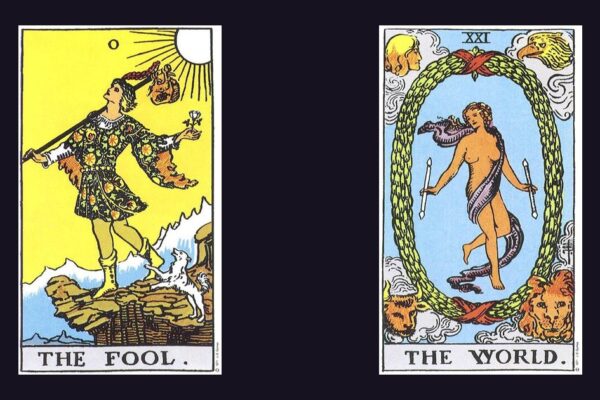
Another pitfall to avoid is the temptation to simply assign characters based on surface-level traits. The true work lies in understanding the *archetypal function* a character fulfills within their narrative. Is a character always the hero? Perhaps they embody the Fool’s journey of naive optimism, or the Strength card’s inner fortitude. Is another character always the antagonist? They might represent the disruptive force of The Tower, or the shadow aspects of The Devil, prompting growth through challenge. The depth of your deck will be directly proportional to the depth of your engagement with the archetypes.
Ultimately, the creation of a personalized tarot deck is a profound act of reclaiming agency over your spiritual journey. It’s an invitation to engage with the collective unconscious on your own terms, to imbue ancient wisdom with personal meaning, and to forge a tool that resonates with the very core of your being. It transforms passive reception into active participation, turning the act of divination into a truly co-creative endeavor.
Topic inspired by a discussion first seen at r/tarot.
The Psychology of Personal Symbolism: Why It Works
The act of personalizing a tarot deck isn’t just a creative exercise; it’s a potent form of engagement with our own psychology. Carl Jung, whose work on archetypes and the collective unconscious forms a bedrock of modern depth psychology, understood the power of individual symbols. He observed that while universal archetypes exist, their expression and interpretation are always filtered through the personal psyche. When we imbue a universal archetype like “The Emperor” with the specific traits of a character from our own internal mythology, we create a bridge between the collective and the personal.
This process is akin to what Jung termed “active imagination,” a technique where one consciously engages with contents of the unconscious, often through visualization or dialogue with inner figures. By assigning a character, a scene, or even an abstract concept from our personal world to a tarot archetype, we are actively engaging with these symbolic forces. This makes the archetypal energy more accessible and understandable to our individual conscious mind. It’s no longer a distant, abstract concept but a recognizable entity or situation that holds personal meaning and emotional resonance.
Furthermore, this personal connection can enhance the effectiveness of the deck as a tool for self-reflection and insight. Research in mindfulness-based stress reduction (MBSR), for instance, highlights the importance of present-moment awareness and non-judgmental observation. When we work with a personalized deck, the imagery often bypasses intellectual resistance, speaking directly to our intuition. The familiar faces or scenarios act as a kind of psychological shorthand, allowing us to quickly grasp the underlying message without getting caught up in the intellectual decoding of unfamiliar traditional iconography. This can lead to more immediate and profound insights, as the “aha!” moment arrives with less mental friction.
In essence, creating a personalized deck leverages our brain’s natural inclination to find meaning in narrative and personal association. It transforms a universal symbolic system into a bespoke dialogue with the self, making the journey of self-discovery more intuitive, engaging, and deeply personal.
Avoiding Common Pitfalls: Keeping Your Deck Potent
While the creation of a personalized tarot deck is a deeply rewarding endeavor, it’s easy to fall into traps that can diminish its effectiveness. Being aware of these common missteps can help ensure your deck remains a powerful tool for insight and growth.
- Superficial Character Matching: One frequent pitfall is choosing characters based solely on surface-level traits or popularity, rather than their archetypal resonance. For example, simply assigning a “strong” character to The Strength card without considering their inner fortitude, compassion, or ability to tame inner beasts might miss the card’s deeper meaning. The goal is to find a character or scenario that embodies the *essence* of the archetype, not just its most obvious external manifestation. Ask yourself: Does this character truly represent the psychological and spiritual dimensions of this card?
- Overly Niche or Obscure References: While the deck is personal, if your chosen references are so obscure that even you struggle to recall their significance later, the deck’s communicative power will wane. The imagery should evoke an immediate, visceral connection for *you*. If you need to constantly look up the lore behind your chosen character to remember why they represent a certain card, the intuitive flow of a reading will be interrupted. Strive for references that are personally significant and readily understood by your own subconscious.
- Neglecting the Minor Arcana and Court Cards: It’s tempting to focus all energy on the Major Arcana, as they represent the grand narratives. However, the Minor Arcana and Court Cards are crucial for understanding daily life, interpersonal dynamics, and practical challenges. Neglecting to give them thoughtful consideration can result in a deck that feels incomplete or less useful for everyday guidance. Remember that the Suits (Wands, Cups, Swords, Pentacles) represent fundamental aspects of human experience (spirit, emotion, intellect, material world), and the Court Cards represent distinct personalities or roles.
- Fear of Imperfection: Many people get stuck striving for artistic perfection. Remember, the power of a personalized deck comes from its personal symbolism and the intention behind its creation, not from being a gallery-worthy masterpiece. Simple sketches, collages, or even detailed written descriptions can be profoundly effective. The act of thoughtful creation and connection is far more important than artistic skill.
Integrating Your Personalized Deck into Practice
Once your personalized deck begins to take shape, the next step is to integrate it meaningfully into your spiritual and psychological practice. This isn’t just about reading cards; it’s about fostering a deeper, ongoing dialogue with your inner world.
- Daily Reflection: Begin by drawing a single “card of the day.” Instead of immediately looking up a traditional interpretation, sit with your personalized imagery. What feelings does it evoke? What story does it tell you? How does it relate to your current circumstances or inner state? This practice, similar to a short meditation or journaling prompt, helps to attune you to the deck’s unique language.
- Themed Spreads for Specific Inquiries: Design simple spreads tailored to your personalized deck. For instance, if your deck incorporates elements from a fantasy world, you might create a “Quest Spread” with positions like “The Challenge,” “The Ally,” “The Obstacle,” and “The Reward.” The familiar narrative structure can make the insights feel more coherent and actionable.
- Active Imagination and Dialogue: Pick a card that resonates strongly, or one that feels particularly challenging. Place it before you and engage in a dialogue with the character or scene depicted. What does this figure want to tell you? What questions do you have for them? This practice, directly drawing from Jungian active imagination, can unlock deeper layers of meaning and facilitate direct communication with aspects of your unconscious.
- Journaling with Your Deck: Keep a dedicated journal for your personalized deck. Record your daily draws, the spreads you perform, and especially the insights and emotions they evoke. Over time, you’ll begin to notice patterns, recurring themes, and a deepening understanding of your own symbolic language. This journal becomes a chronicle of your evolving relationship with your inner world.
- Sharing (Optional and Discerning): While the deck is deeply personal, sharing select insights or even the concept with trusted friends or a spiritual community can sometimes offer new perspectives. However, remember that the primary relationship is between you and your deck. Choose carefully who you share with, ensuring they appreciate the depth and personal nature of your creation.
This page describes what the Tarot tradition teaches and how people practise it. It is not a prediction and not medical, psychiatric or crisis advice. How we research and write · report an error