Tarot
Jul 10, 2026
·
15 min read
·
Updated Jul 25, 2026
Online Tarot Readings: How They Work and How to Choose a Trustworthy Reader

🕯 12 min read · July 10, 2026
You sit at your kitchen table, phone glowing, and wonder whether a stranger on a screen can really see the pattern behind your restless nights. The cards have been shuffled in parlors, monasteries, and now in encrypted video calls, yet the question remains the same: can a digital reading honor the same depth that a hand‑drawn spread once promised?
This article answers that question by tracing the lineage of tarot from 15th‑century Italian courts to the Jungian consulting room, then showing how modern platforms translate symbol, intuition, and ethics into a format you can trust. You will learn what a reputable reader looks like, which core concepts guide every spread, and how to spot the red flags that separate insight from entertainment.
What Online Tarot Readings Actually Are
Tarot began as a game called trionfi in the courts of Milan and Ferrara during the 1440s, using a 78‑card deck that combined the four Latin suits with a series of allegorical trump cards. By the late 1700s French occultists such as Antoine Court de Gébelin and later the Hermetic Order of the Golden Dawn re‑interpreted those images as a symbolic map of the soul, laying the groundwork for every divinatory tradition that follows.
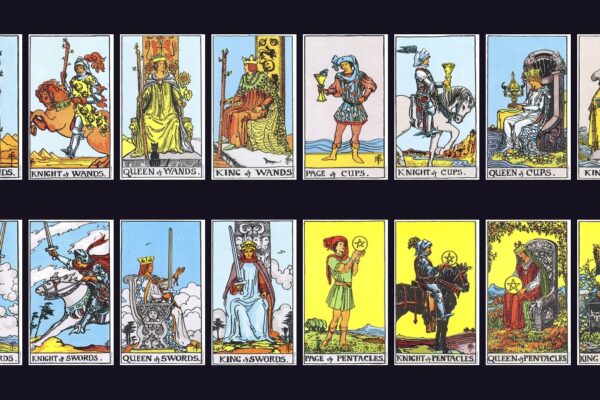
The two decks that dominate contemporary practice are the Marseille pattern, preserved by French card‑makers since the 1600s, and the Rider‑Waite‑Smith deck, illustrated by Pamela Colman Smith under the direction of Arthur Edward Waite in 1909. Both encode the same archetypal structure — twenty‑two Major Arcana representing universal turning points and fifty‑six Minor Arcana divided into Cups, Pentacles, Swords, and Wands — but each visual language invites a slightly different intuitive entry point.
From a depth‑psychology perspective, Carl Jung saw the cards as externalized archetypes that activate the collective unconscious when a querent projects meaning onto them. Modern clinicians use the spread as a narrative‑therapy tool: the layout creates a story board where the client can observe recurring motifs, shadow material, and potential outcomes without the therapist imposing interpretation. In this view, the reading is less prediction and more a mirror for self‑reflection.
An online reading reproduces that mirror through video, chat, or recorded audio. The reader shuffles a physical deck on camera, draws cards in real time, and positions them in a chosen spread — Celtic Cross, Three‑Card, or a custom layout — while the client watches or receives a screenshot. Reputable platforms encrypt the session, store no personal data beyond the reading transcript, and require the reader to sign a code of ethics that mirrors the standards of the International Tarot Association.
Core Concepts and Signs You Need to Know
Before you book a session, familiarize yourself with the vocabulary that every reader — whether in a candle‑lit room or a Zoom window — will use. The following list distills the essential symbols, structural elements, and ethical markers that separate a grounded reading from a spectacle. Knowing these terms lets you ask sharper questions, evaluate the reader’s method, and integrate the insight into your own reflection practice.
- Major Arcana – the twenty‑two trump cards (The Fool to The World) that depict archetypal life phases; they set the thematic backbone of any spread.
- Minor Arcana Suits – Cups (emotion), Pentacles (material), Swords (thought), Wands (action); each suit contains Ace through Ten and four Court cards.
- Court Cards – Page, Knight, Queen, King; they can represent people, attitudes, or developmental stages depending on position.
- Reversals – cards drawn upside‑down; many readers treat them as blocked or internalized energy, while others read them upright only.
- Spread Architecture – the layout (Celtic Cross, Three‑Card, Horseshoe, etc.) determines how positions relate; a clear spread map is a sign of professional discipline.
- Question Framing – open‑ended, present‑focused queries (“What do I need to understand about…?”) yield richer narrative than yes/no forecasts.
- Reader Ethics – confidentiality, no medical/legal advice, transparent pricing, and a willingness to refer you to a therapist when material exceeds the reading’s scope.
- Intuition vs. Memorization – a trustworthy reader blends memorized meanings with spontaneous insight; pure rote recitation often signals a script rather than a dialogue.
- Digital Hygiene – encrypted video, no recording without consent, and a clear data‑deletion policy protect both the sacred space and your privacy.
Step‑by‑Step Guide to Your First Online Tarot Reading
- Step 1: Choose a platform that lists reader credentials, client reviews, and a clear privacy policy; reputable sites such as Keen, Kasamba, or independent practitioners with a professional website tend to vet their readers. Spend a few minutes reading the “About” page to see whether the reader references a specific tradition — Rider‑Waite‑Smith, Thoth, Marseille — or a recognized certification program. A transparent profile is your first safeguard against impostors.
- Step 2: Define the question or life area you want insight into before you book; a focused query such as “What do I need to understand about my career transition?” yields richer symbolism than a vague “Tell me my future.” Write the question down and keep it nearby during the session so you can refer back if the conversation drifts. This practice mirrors the classic “question‑first” method taught in the Golden Dawn curriculum.
- Step 3: Select a reading length that matches your budget and depth needs; a 15‑minute single‑card pull is useful for daily guidance, while a 45‑minute Celtic Cross spread allows the reader to explore past influences, present challenges, and potential outcomes. Many readers list the spreads they specialize in — choose one you have read about so you can follow the narrative. Knowing the spread in advance reduces anxiety and helps you evaluate the reader’s competence.
- Step 4: Schedule the session for a time when you can be uninterrupted, ideally in a quiet room with a comfortable chair and a notebook. Turn off notifications, light a candle or incense if that supports your focus, and take three slow breaths to settle your nervous system. A calm environment mirrors the ritual space traditionally prepared before a face‑to‑face reading.
- Step 5: During the reading, listen actively and note any card names, positions, and the reader’s interpretations verbatim; you can later compare these notes with a trusted reference such as “The Tarot Handbook” by Angeles Arrien. Ask clarifying questions only after the reader has completed a card’s explanation — interrupting can break the intuitive flow. Recording the session (with permission) provides a reliable archive for future reflection.
- Step 6: After the call, spend ten minutes journaling your immediate impressions, emotions, and any spontaneous images that arose; this mirrors the “post‑reading reflection” step used in Jungian active imagination work. Identify which cards resonated and which felt foreign — both reactions are data for your personal integration. Re‑reading your notes after a week often reveals layers missed in the moment.
- Step 7: Evaluate the reader’s professionalism by checking whether they offered a clear summary, respected your boundaries, and avoided deterministic language such as “You will definitely…”. Ethical readers frame insights as possibilities, not certainties, consistent with the code of conduct published by the Tarot Association of the British Isles. If the session felt pushy or vague, note it for future reference and consider another practitioner.
- Step 8: Integrate actionable guidance by selecting one concrete step you can take within the next 48 hours — whether it’s sending an email, scheduling a meeting, or simply meditating on a card’s archetype. Tarot works best when insight translates into movement, a principle emphasized by modern practitioners like Mary K. Greer. Small, consistent actions anchor the reading’s symbolism in everyday life.
- Step 9: Keep a running log of all online readings, including date, reader, spread, question, and outcome; over months this archive becomes a personal “tarot journal” that reveals patterns and tracks your intuitive growth. Reviewing the log quarterly helps you discern which readers consistently align with your path and which spreads yield the clearest guidance. The habit also honors the tradition of record‑keeping found in historic esoteric orders.
Common Mistakes and How to Fix Them
Mistake 1: Choosing a Reader Solely on Price
Fix: Low fees often signal limited experience or a lack of formal training; instead, prioritize readers who display certifications, lineage, or a portfolio of client testimonials. Investing a modest amount in a well‑reviewed practitioner usually yields deeper, more ethical insight.
Mistake 2: Asking Yes‑or‑No Questions Only
Fix: Binary questions restrict the symbolic richness of the cards; reframe them as open‑ended inquiries such as “What energies surround my decision to relocate?” This approach invites the spread to reveal nuance, timing, and underlying patterns.
Mistake 3: Ignoring the Reader’s Stated Tradition
Fix: Each deck and tradition — Rider‑Waite‑Smith, Thoth, Marseille, Lenormand — carries its own symbolism and interpretive framework. Confirm the reader’s preferred system before booking so you can follow the logic and later study the same source material.
Mistake 4: Treating the Reading as a Fixed Prediction
Fix: Tarot maps probabilities, not certainties; adopt the mindset of “possibility mapping” used in contemporary psychological tarot practice. After the session, ask yourself what choices you can make to steer toward the favorable outcomes highlighted.
Mistake 5: Skipping Post‑Reading Reflection
Fix: Immediate journaling or a brief meditation locks the intuitive impressions into memory; without it, insights fade within hours. Set a timer for ten minutes, write freely, and revisit the notes after a week to catch delayed realizations.
Mistake 6: Sharing Sensitive Personal Data Without Verification
Fix: Reputable readers request only the information needed for the spread — name, birth date, or a brief context — and never ask for passwords, financial details, or medical records. Verify the platform’s encryption and privacy policy before transmitting any data.
How to Vet a Professional Online Tarot Reader
The internet is full of people offering readings, but the gap between a skilled practitioner and a weekend hobbyist can be wide — and expensive. Vetting takes a little time, but it saves you from generic scripts, cold-reading tactics, and the particular disappointment of paying for insight that never arrives.
Start with Their Public Presence
A serious reader usually has a consistent body of work you can examine before you book. Look for a website or professional profile that includes:
- A clear philosophy or methodology. Do they name their deck(s)? Their tradition — Rider-Waite-Smith, Thoth, Marseille, Lenormand, or a specific lineage like the Builders of the Adytum or the Golden Dawn? Vague language (“intuitive guidance,” “universal messages”) often masks a lack of training.
- Published writing or teaching. Blog posts, newsletter archives, YouTube walkthroughs, or workshop recordings show how they think. You want to see nuance: reversals, elemental dignities, timing techniques, or the distinction between predictive and psychological reading.
- Professional affiliations. Membership in organizations like the Tarot Association of the British Isles (TABI), the American Tarot Association (ATA), or local guilds signals accountability. These groups often have ethics statements and continuing-education requirements.
Read Reviews Like a Critic
Five-star ratings alone mean little. Look for specificity:
- Clients who mention actionable detail — “She saw the contract delay before I did” — not just “so accurate!” or “amazing energy.”
- Reviews that note boundaries: “He told me he couldn’t answer health questions and referred me to a doctor.”
- Patterns in negative feedback. One complaint about a missed appointment happens. Multiple complaints about vague answers, pressure to buy spells or “energy clearing,” or refusal to record sessions? Walk away.
Check third-party platforms (Etsy, Keen, Kasamba, Fiverr) and independent sources — Google reviews, Trustpilot, Reddit threads (r/tarot, r/psychicreadings). A reader who only exists on one platform with no external footprint is a risk.
Red Flags That Should End the Conversation
- Guaranteed outcomes. “I can bring your ex back in three days.” No ethical reader promises control over another person’s will.
- Fear-based upsells. “There’s a curse/blockage/negative entity — pay $300 for removal.” This is the oldest scam in the book.
- No intake process. A professional asks what you want to explore, explains their method, and confirms the format (live video, recorded audio, written report). Dropping straight into “shuffle now” without context suggests a script.
- Refusal to name their deck or spread. Transparency about tools is baseline professionalism.
- Pressure to rebook immediately. “You need a follow-up tomorrow.” Integration takes time.
Pricing: What’s Fair?
Rates vary by experience, format, and region, but some benchmarks help:
- 15–20 minute focused question (email or audio): $30–$60
- 30–45 minute live session: $75–$150
- 60+ minute deep dive or ongoing mentorship: $150–$300+
Prices significantly below this range often indicate a beginner practicing — fine if disclosed, frustrating if sold as expertise. Prices far above without commensurate reputation (published work, teaching, years of client history) warrant skepticism. Many readers offer sliding-scale slots or shorter “check-in” options; ask. A professional will have a clear policy.
Test the Waters Before Committing
Before a paid session, consider:
- Joining a free or low-cost group reading (many readers host these on Instagram Live, Patreon, or Discord) to hear their style.
- Purchasing a single-question email reading ($15–$30) as a low-stakes sample.
- Asking a direct question via their contact form: “What deck do you use for relationship spreads?” A thoughtful reply builds trust; a canned sales pitch does the opposite.
Trust your own discernment. If something feels performative, rushed, or overly flattering, it probably is. The best readers — online or off — leave you more grounded than they found you.
Choosing a Trusted Online Tarot Reader
- Vet a reader’s public work — philosophy, deck choices, published content, and professional affiliations — before booking.
- Read reviews for specificity and boundaries, not just star ratings; check multiple platforms.
- Red flags include guaranteed outcomes, fear-based upsells, no intake process, secrecy about tools, and pressure to rebook quickly.
- Fair pricing reflects experience and format: $30–$60 for short written/audio readings, $75–$150 for 30–45 minute live sessions.
- Test a reader’s style with free group readings, a low-cost single question, or a direct inquiry before committing to a full session.
- Ethical readers name their limits (health, legal, third-party questions) and refer out when appropriate.
- Your discernment matters: a good reading leaves you clearer and more sovereign, not dependent.
Frequently Asked Questions
How do online tarot readings work?
A reader connects with you via video, chat, or email, shuffles a physical or digital deck on your behalf, and interprets the cards in real time. The process mirrors an in‑person session, but the medium simply shifts to a screen or messaging platform.
Are online tarot readings as accurate as in‑person sessions?
Accuracy depends far more on the reader’s skill and your openness than on the delivery method. Many seasoned practitioners find the energetic connection remains strong over distance when both parties are present and focused.
How can I tell if a tarot reader is trustworthy?
Look for transparent credentials, client testimonials, and a clear code of ethics — such as confidentiality and no guaranteed outcomes. A reputable reader will also offer a brief introductory conversation before any paid session.
What should I expect to pay for a reputable online reading?
Prices typically range from $30 to $120 for a 30‑ to 60‑minute session, reflecting the reader’s experience, specialization, and platform fees. Beware of extremely low rates that may signal inexperience or hidden upsells.
Can I ask follow‑up questions after a reading?
Most ethical readers welcome a short follow‑up window — usually 24 to 48 hours — for clarification without extra charge. Extended or new questions generally require a separate appointment.
This page describes what the Tarot tradition teaches and how people practise it. It is not a prediction and not medical, psychiatric or crisis advice. How we research and write · report an error