Tarot
Aug 1, 2026
·
7 min read
Beyond the Spread: Pairing Decks for Deeper Divination
🕯 5 min read · August 1, 2026
The Resonance of Combined Wisdom
In a world saturated with information, it’s no surprise that seekers are looking for ways to deepen their understanding and enrich their spiritual practices. For those of us who work with divination, this often translates to a desire for more nuanced, multi-faceted insights than a single deck might offer. We’re moving beyond the simple question-and-answer dynamic, yearning for a conversation with the unseen that reflects the intricate tapestry of our inner and outer lives.
This pursuit of depth has led to a fascinating trend: the art of pairing tarot and oracle decks. It’s not merely about using two decks at once; it’s about consciously combining their unique voices, symbol systems, and energetic frequencies to create a more profound, layered reading experience. This practice, while seemingly modern, taps into ancient wisdom traditions that understood the power of synthesis – bringing together disparate elements to forge a new, more potent whole.
Echoes of Ancient Synthesis: A Brief History
While the specific practice of “matching” tarot and oracle decks as we understand it today might be a contemporary development, the underlying principles are deeply rooted in historical and spiritual practices. Ancient cultures often employed multiple forms of divination concurrently, understanding that different methods offered varied perspectives and depths of insight. Think of the Roman augurs observing bird flight alongside the haruspices interpreting entrails, or the complex interplay of astrology and geomancy in medieval Europe.
Even within the evolution of cartomancy itself, we see this drive towards complementary systems. Early playing cards, the ancestors of modern tarot, were often used for games *and* fortune-telling, sometimes alongside other popular divinatory tools like coffee grounds or dice. The development of specific oracle decks, distinct from tarot, truly blossomed in the 19th and 20th centuries, often drawing inspiration from spiritualism, nature, or specific esoteric traditions. These decks, while not always intended to be used *with* tarot, inherently offered a different lens. Tarot, with its structured Major and Minor Arcana, often provides a narrative framework and archetypal journey. Oracle decks, on the other hand, frequently offer more fluid, intuitive messages, often focusing on themes, affirmations, or specific energetic states. The modern “matching” trend, then, is a natural evolution, a conscious effort to blend these distinct yet complementary approaches for a richer divinatory tapestry.
The Art of the Double Draw: Practical Pairing Techniques
For those new to this practice, the idea of combining decks might seem daunting. However, it’s more about intuition and intention than rigid rules. Here’s a beginner-friendly guide to get you started:
1. Define Your Intention First
- Before even touching your decks, clarify what you’re seeking. Are you looking for a grand narrative *and* specific guidance? A challenge *and* an affirmation? Clarity on the “what” *and* the “how”? Your intention will guide your deck selection.
2. Understand Your Decks’ Personalities
- Spend time with each deck individually. What is its overall tone? Is it blunt or gentle? Earthy or ethereal? Does it focus on action, emotion, or spiritual growth?
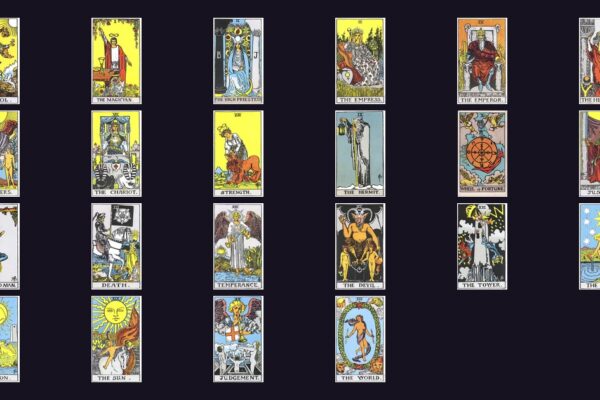
- Tarot: Often provides structure, archetypal themes, and a journey narrative. Consider the RWS system (classic, narrative), Thoth (esoteric, alchemical), or Marseille (direct, elemental).
- Oracle: Tends to be more thematic, offering affirmations, specific guidance, or energetic insights. Examples include nature-based, angel, goddess, or chakra decks.
3. Choose Complementary, Not Redundant, Voices
- The goal is synergy, not repetition. If your tarot deck is very direct and action-oriented, you might pair it with an oracle deck that offers emotional support or spiritual perspective.
- Example Pairings:
- Narrative & Nurturing: A traditional Rider-Waite-Smith tarot (for the story) with a nature-based oracle (for grounding and gentle guidance).
- Shadow & Light: A darker, more introspective tarot (for confronting challenges) with an affirmation-focused oracle (for upliftment and self-compassion).
- Strategic & Intuitive: A deck like the Thoth Tarot (for complex esoteric insights) with a simple, image-driven oracle (for immediate intuitive hits).
4. Experiment with Spreads and Positions
- The “Clarifier” Method: Draw a tarot card for a position in your spread, then draw an oracle card to “clarify” or add another layer of meaning to that specific tarot card.
- The “Theme & Advice” Method: Use your tarot deck for the main spread, then draw one or two oracle cards at the end for overall theme, advice, or an energetic takeaway.
- The “Dialogue” Method: Draw a tarot card to represent a situation or question, then draw an oracle card as the “response” or the “next step.”
- Design Your Own: Don’t be afraid to create a spread where specific positions are designated for either a tarot or an oracle card. For instance, “Challenge (Tarot),” “Inner Resource (Oracle),” “Path Forward (Tarot),” “Support (Oracle).”
5. Interpret the Conversation
- The magic happens in the synthesis. How do the cards speak to each other? Do they reinforce a message, offer a different perspective, or highlight a hidden aspect?
- Look for repeating symbols, colors, or themes across both decks.
- Trust your intuition. The combined message often emerges as a feeling or a sudden insight.
Common Misconceptions & Ethical Considerations
As with any evolving practice, there are a few misconceptions to address:
1. More Cards Don’t Always Mean More Clarity
- The temptation to pile on decks can lead to confusion rather than insight. The goal is depth, not volume. Start with two decks and master their interplay before adding more.
2. It’s Not About “Overriding” One Deck with Another
- The intention is not for the oracle to negate the tarot, or vice-versa. It’s about creating a richer dialogue, where each deck contributes its unique perspective to form a more complete picture. Think of it as listening to multiple instruments in an orchestra, each adding to the overall harmony.
3. Deck Pairing Isn’t a Substitute for Inner Work
- These tools are aids for self-reflection and insight, not magical solutions. The deepest wisdom still comes from within, through honest introspection and conscious action. Deck pairing simply offers a more nuanced mirror for that process.
4. Respecting Deck Energies
- Each deck has its own energy and often, its own creator’s intent. When pairing, consider if the energies feel harmonious. A very gentle, ethereal oracle might feel overwhelmed by a brutally honest, shadow-work tarot, unless that contrast is precisely what you intend to explore.
The practice of pairing tarot and oracle decks is an invitation to deeper engagement, a way to expand the conversation we have with the intuitive realms. It’s an art form that, when approached with intention and respect, can unlock layers of insight, nuance, and personal wisdom that a single deck might not reveal. Embrace the exploration, listen to the subtle dialogues between the cards, and allow this synthesized wisdom to illuminate your path forward.
Topic inspired by a discussion first seen at r/tarot.
This page describes what the Tarot tradition teaches and how people practise it. It is not a prediction and not medical, psychiatric or crisis advice. How we research and write · report an error