Tarot
Jul 15, 2026
·
18 min read
Psychic Readings vs Tarot Readings: Which One Do You Actually Need?
🕯 15 min read · July 15, 2026
In the quiet corners of our minds, when life’s path feels obscured or our hearts ache for direction, a common question arises: should I seek a psychic reading, or would a tarot reading better serve my quest for clarity? It’s a distinction often blurred in popular culture, leading many to feel a sense of trepidation or confusion when contemplating these ancient practices. You’re not alone in wondering which avenue offers the most authentic insights for your unique situation, nor are you incorrect in sensing that there is a fundamental difference.
This article aims to demystify these powerful tools for self-discovery and foresight. We’ll delve into the historical roots, traditional interpretations, and modern psychological perspectives of both psychic and tarot readings, equipping you with the knowledge to discern which path truly resonates with your needs. By the end, you’ll understand not just the mechanics, but the very spirit of each practice, empowering you to make an informed choice that genuinely supports your journey.
Understanding the Landscape: Psychic Readings, Tarot Readings, and Their Intersections
To truly appreciate the nuances between a psychic reading and a tarot reading, we must first understand their distinct origins and methodologies, as well as how they are often perceived and utilized in our contemporary world. While both aim to provide insight and guidance, their foundational approaches differ significantly.
The Psychic Reading: A Direct Channel to Intuition
A “psychic reading” generally refers to a session with an individual who purports to possess extrasensory perception (ESP) or other non-physical intuitive abilities. These abilities, often collectively termed “psychic senses,” can include clairvoyance (clear seeing), clairaudience (clear hearing), clairsentience (clear feeling), claircognizance (clear knowing), and more. The tradition of individuals with heightened intuition guiding communities is ancient and spans nearly every culture. From the Oracles of Delphi in ancient Greece, whose pronouncements were sought by kings and commoners alike, to the shamans of indigenous traditions who commune with spirits and the unseen, the role of the psychic has been to act as a direct channel for information perceived beyond the five physical senses.
In a psychic reading, the practitioner typically relies on their innate intuitive faculties to receive information about a person, situation, or future events. There may be no external tools involved; the psychic simply “tunes in” to the client’s energy, aura, or the collective unconscious. The information received can be direct messages, symbolic visions, strong feelings, or sudden knowings. From a depth-psychological perspective, this can be understood as tapping into the collective unconscious, a concept introduced by Carl Jung, where universal archetypes and shared human experiences reside, or accessing the client’s own unconscious processes and latent potentials through empathetic resonance. The psychic acts as a mirror, reflecting back insights that may be hidden from the client’s conscious awareness.
The Tarot Reading: A Symbolic Language of the Soul
Tarot, in contrast, is a specific system of divination that utilizes a deck of 78 cards, each rich with symbolic imagery and archetypal meaning. The origins of Tarot are somewhat debated, but it emerged in 15th-century Italy as playing cards, evolving into a tool for divination by the 18th century, particularly in esoteric circles in France. Early occultists like Antoine Court de Gébelin and Jean-Baptiste Alliette (Etteilla) were instrumental in popularizing Tarot as a mystical system, linking it to ancient Egyptian wisdom and Kabbalah, though modern scholarship largely refutes these direct historical connections.
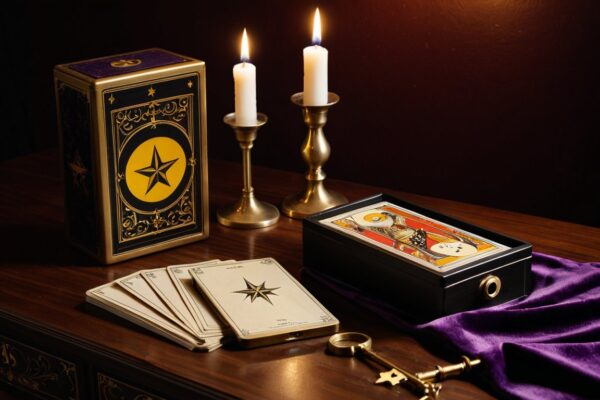
A tarot reader uses the cards as a divinatory tool. The cards are shuffled and laid out in specific patterns, known as spreads, each position in the spread representing a different aspect of the question or situation. The reader then interprets the cards based on their traditional meanings, their position in the spread, and often, their intuitive connection to the client and the cards themselves. The beauty of Tarot lies in its symbolic language. Each card, from the Fool’s journey through the Major Arcana to the mundane yet profound lessons of the Minor Arcana, offers a rich tapestry of meaning that can illuminate psychological states, potential outcomes, and hidden influences. From a depth-psychological viewpoint, Tarot can be seen as a projective technique, similar to Rorschach tests, where the client’s unconscious mind interacts with the archetypal images on the cards, revealing personal insights and narratives that might otherwise remain unarticulated.
Core Concepts: Distinguishing the Essence
To navigate the world of intuitive guidance, it’s crucial to grasp the fundamental distinctions and shared elements between these two practices. While a psychic may or may not use tools, and a tarot reader often brings their psychic intuition to the interpretation of the cards, understanding the primary modality is key.
- Source of Information:
- Psychic Reading: Primarily relies on the practitioner’s innate extrasensory perception (ESP) – clairvoyance, clairaudience, clairsentience, etc. – to directly perceive information.
- Tarot Reading: Primarily relies on the symbolic system of the 78 Tarot cards, with the reader interpreting their meanings in response to a question or situation. The reader’s intuition enhances this interpretation.
- Tools Utilized:
- Psychic Reading: Often no tools are used; the psychic is the “tool.” Some psychics may use scrying (crystal balls, water gazing), psychometry (holding objects), or aura reading as aids, but these are secondary to their direct perception.
- Tarot Reading: The 78-card Tarot deck is the primary and essential tool. Other tools like crystals or candles might be used to set the mood, but the cards are central.
- Focus and Scope:
- Psychic Reading: Can be very broad or very specific, depending on the psychic’s ability and the client’s questions. It can offer direct answers, predictions, or insights into past, present, and future energies.
- Tarot Reading: Tends to be more structured, guiding the client through specific questions or areas of life represented by the card positions in a spread. It excels at exploring underlying dynamics, psychological states, and potential paths.
- Nature of Guidance:
- Psychic Reading: Often provides direct messages, insights, or even predictions. It can feel like receiving information directly from an unseen source.
- Tarot Reading: Offers a narrative, a story told through symbols. It encourages self-reflection and provides a framework for understanding complex situations, often highlighting choices and their potential consequences rather than definitive predictions.
- Psychological Impact:
- Psychic Reading: Can be deeply validating, confirming inner feelings or providing a sense of certainty about future events. It can also be disempowering if the client becomes overly reliant on external predictions.
- Tarot Reading: Fosters introspection and self-awareness. It acts as a catalyst for understanding one’s own unconscious processes and empowers the client to make informed decisions based on symbolic insights.
Taking Your First Step: A Practical Guide for Beginners
Embarking on a journey into psychic or tarot readings can feel daunting, but it doesn’t have to be. With a clear intention and a mindful approach, you can navigate these waters effectively. Here’s a step-by-step guide to help you get started today, ensuring a meaningful and insightful experience.
-
Clarify Your Intention: Before you even think about finding a reader, take some time to reflect on why you’re seeking a reading. Are you looking for guidance on a specific problem, insight into your life path, or simply curiosity about your spiritual journey? A clear intention will help you articulate your needs to a potential reader and guide you toward the right type of reading.
-
Research Reading Styles and Tools: Understand the basic differences between psychic and tarot readings. A psychic might use clairvoyance, clairaudience, or clairsentience to receive information directly, while a tarot reader uses the symbolic language of the cards to interpret energies and patterns. Familiarize yourself with other tools like astrology, numerology, or mediumship if those resonate with your specific questions.
-
Seek Recommendations and Reviews: Personal recommendations from trusted friends or online reviews on reputable platforms are invaluable. Look for readers who are described as ethical, empathetic, and accurate. Pay attention to comments about their communication style and how they handle sensitive topics, as this indicates their professionalism and compassion.
-
Vet Potential Readers: Once you have a few names, visit their websites or social media pages. Look for their background, experience, and any certifications they might hold from established organizations. Many reputable readers offer short introductory calls or free consultations, which can be a great way to gauge their energy and approach before committing to a full session.
-
Prepare Your Questions: While some readers prefer to start with a general overview, having a few specific questions prepared can help focus the reading. Frame your questions in an open-ended way that encourages insight rather than simple yes/no answers. For example, instead of “Will I get the job?”, try “What steps can I take to improve my chances of securing a fulfilling career?”
-
Set Your Environment: If you’re having an online or phone reading, choose a quiet, private space where you won’t be interrupted. Take a few deep breaths before the session begins to center yourself and open your mind to receiving information. This small act of preparation can significantly enhance your receptivity.
-
Engage Actively and Respectfully: During the reading, listen attentively and be open to the messages you receive, even if they aren’t what you expected. It’s perfectly acceptable to ask for clarification if something is unclear, but avoid interrupting or challenging the reader aggressively. Remember, this is a collaborative process aimed at your highest good.
-
Take Notes: It’s easy to forget details after a reading, especially if a lot of information is shared. Jot down key insights, symbols, advice, and any action steps suggested. Reviewing these notes later can help you integrate the messages and track your progress over time, revealing deeper patterns and understanding.
-
Reflect and Integrate: After the reading, take time to process what you’ve learned. How does the information resonate with your intuition? What feelings did it evoke? Consider how you can apply the insights to your life in a practical way. Remember that readings offer guidance, but your free will and choices ultimately shape your path.
-
Trust Your Intuition: While the reader provides insights, your inner wisdom is your ultimate guide. If something doesn’t feel right, or if the advice contradicts your deepest values, trust your gut. A good reader empowers you to make your own decisions, not to blindly follow their pronouncements.
Common Mistakes to Avoid
Even with the best intentions, beginners can sometimes fall into traps that diminish the value of a psychic or tarot reading. Being aware of these common pitfalls can help you have a more productive and empowering experience.
Assuming the Reader is a Mind Reader
A common misconception is that a psychic or tarot reader should know every detail of your life without any input. While some may pick up on specific details, their role is typically to offer guidance and insight, not to perform parlor tricks. They are interpreting energies and symbols, not reading your every thought.
- The Fix: Be prepared to offer context or ask specific questions if you want detailed answers. Think of it as a conversation where you both contribute to the understanding. A little information from you can help the reader focus their energy and provide more relevant insights.
Seeking Predictions for Specific Outcomes
Many people come to readings hoping for a definitive “yes” or “no” on future events, like “Will I marry John?” or “Will I get that promotion?” While readings can offer insights into probabilities and energies, they rarely provide absolute, unchangeable predictions. The future is fluid, shaped by your choices and free will.
- The Fix: Reframe your questions to focus on guidance and potential paths. Instead of “Will I get the job?”, ask “What can I do to align myself with a fulfilling career opportunity?” or “What energies surround my current job search?” This approach empowers you rather than leaving you passively waiting for a predestined outcome.
Ignoring Your Own Intuition
It’s easy to get swept up in the information presented by a reader, especially if they seem very confident or accurate. However, your personal intuition is your most powerful guide. If something a reader says doesn’t resonate, or feels off, dismissing your inner voice is a mistake.
- The Fix: Always filter the information through your own inner knowing. After the reading, take time to reflect on what felt right and what didn’t. Trust that your intuition is a vital component in discerning the validity and applicability of the messages you receive.
Expecting a Quick Fix or Magic Bullet
A reading is a tool for self-discovery and guidance, not a magical solution to all your problems. It can illuminate paths, reveal hidden patterns, and offer clarity, but it won’t do the work for you. Lasting change requires effort, commitment, and personal responsibility.
- The Fix: Approach the reading with an open mind, ready to receive insights that can inform your actions. Be prepared to implement the advice and do the necessary inner work. See the reading as a catalyst for personal growth, not a substitute for it.
Over-Reliance on Readings
Becoming dependent on readings for every decision, big or small, can hinder your personal growth and ability to trust your own judgment. While occasional readings can be incredibly insightful, constantly seeking external validation can undermine your self-empowerment.
- The Fix: Use readings as a periodic check-in or when facing significant crossroads. Cultivate your own intuition and decision-making skills. The goal of a good reading is to empower you, not to create dependency.
Choosing a Reader Based Solely on Price
While budget is a consideration, making your choice based only on who is the cheapest or most expensive can lead to disappointment. A very low price might indicate inexperience or a lack of professionalism, while a high price doesn’t automatically guarantee quality.
- The Fix: Prioritize reputation, experience, and resonance. Look for a reader whose approach and energy align with your needs, and then consider their pricing. A slightly higher investment in a reputable and experienced reader often yields much more valuable and actionable insights.
Choosing Your Path: Psychic or Tarot?
The decision between a psychic reading and a tarot reading often boils down to the nature of your inquiry and your personal comfort level with different approaches to insight. Both offer profound opportunities for self-reflection and guidance, but they engage with information in distinct ways.
If your question is highly specific, deeply personal, and perhaps involves uncovering hidden dynamics or receiving direct messages about future potentials, a psychic reading might be more aligned with your needs. For example, if you’re grappling with a complex family secret, seeking clarity on a past life connection, or trying to understand the underlying motivations of someone close to you, a psychic’s intuitive abilities to perceive beyond the obvious can be incredibly illuminating. A psychic might pick up on energetic imprints, emotional states, or even direct messages from guides, offering a narrative that is tailor-made for your unique situation. This can be particularly powerful when you feel stuck and need a direct, unmediated perspective.
Conversely, if you’re looking for a structured framework to explore options, understand current influences, and gain advice on how to navigate a situation, a tarot reading can be exceptionally effective. Tarot excels at mapping out energetic currents, revealing archetypal patterns, and providing actionable steps based on the cards’ symbolism. If you’re at a crossroads in your career and want to understand the potential outcomes of different paths, or if you’re trying to identify obstacles in a relationship and how to overcome them, the rich symbolism of the tarot offers a reflective mirror. The cards don’t just tell you what will happen; they show you the energetic landscape and empower you to make informed choices. Many find the visual and symbolic nature of tarot to be a grounding and empowering experience, as it encourages co-creation of meaning rather than passive reception.
Consider also your comfort with directness. Some psychics deliver messages with an unvarnished clarity that can be intense, while tarot readings often invite more interpretation and personal engagement with the symbols. Neither is inherently superior; it’s a matter of what resonates with your temperament and your current emotional state. If you prefer to be an active participant in deciphering meaning and enjoy the process of symbolic exploration, tarot might be more satisfying. If you’re seeking a more direct, perhaps even “channeled,” insight into unseen forces, a psychic’s direct perception may be more beneficial.
Ultimately, the best approach is often to trust your intuition. Research practitioners, read testimonials, and perhaps even conduct a brief introductory call if offered. A skilled psychic or tarot reader will often have a clear sense of their own strengths and may even recommend the other if they believe it serves your highest good. Both traditions, when practiced with integrity, aim to empower you, offer clarity, and illuminate your path forward, not to dictate your destiny.
Key Takeaways
- Nature of Inquiry: Psychic readings excel for highly specific, personal questions needing direct, unmediated insight into hidden dynamics or future potentials. Tarot readings are ideal for exploring options, understanding current influences, and gaining structured advice through symbolism.
- Information Delivery: Psychics often provide direct, sometimes intense, narrative insights. Tarot offers a more symbolic, archetypal framework that invites interpretation and personal engagement.
- Empowerment vs. Revelation: While both empower, tarot often focuses on showing energetic landscapes and actionable steps, encouraging co-creation of meaning. Psychic readings may lean more towards revealing unseen truths or direct messages.
- Comfort with Directness: Consider if you prefer direct, unvarnished messages (psychic) or a more reflective, symbolic process (tarot).
- Practitioner Integrity: Regardless of choice, seek practitioners with integrity, strong testimonials, and a clear understanding of their own gifts.
- Trust Your Intuition: Your inner guidance is key. Research and listen to what feels right for your specific needs and emotional state.
- Both Empower: Fundamentally, both psychic and tarot readings, when conducted ethically, aim to provide clarity, facilitate self-reflection, and empower you on your journey.
Frequently Asked Questions
What’s the core difference between a psychic reading and a Tarot reading?
A psychic reading relies on the reader’s innate intuitive abilities to perceive information directly, often without tools. A Tarot reading uses a structured deck of cards as a symbolic language to channel and interpret insights, with the reader acting as an interpreter of these symbols.
Can a Tarot reader also be psychic?
Yes, absolutely. Many skilled Tarot readers integrate their natural psychic abilities (such as clairvoyance, clairsentience, or clairaudience) with their knowledge of the Tarot to provide a more nuanced and deeply insightful reading. The cards often serve as a focus or a ‘launchpad’ for their intuition.
Which type of reading is better for getting specific answers about the future?
Neither reading offers a guaranteed, immutable prediction of the future, as free will and changing circumstances always play a role. However, a psychic reading might offer more direct, unmediated insights into potential outcomes, while a Tarot reading can illuminate the energetic currents and choices leading to those possibilities, often providing guidance on how to navigate them.
Is one method more ‘authentic’ or ‘powerful’ than the other?
Authenticity and power lie in the skill and integrity of the practitioner, not the method itself. Both psychic readings and Tarot readings, when conducted by an experienced and ethical reader, can provide profound insights and guidance. The ‘better’ method is often the one that resonates most deeply with the individual seeking the reading.
If I’m new to this, which reading should I try first?
If you’re seeking broad guidance, self-reflection, and understanding of life’s patterns, a Tarot reading can be an excellent starting point due to its symbolic structure. If you have very specific questions or are drawn to a more direct, unfiltered energetic perception, a psychic reading might be more suitable.

Tarot & Symbolism Specialist
Mara Vey has read tarot and Elder Futhark runes for over a decade and writes on the psychology of symbols. She approaches divination as a tool for reflection rather than fortune-telling, grounding every reading in documented tradition.
Read Mara Vey's full profile →✦
Editorial Standards
Practices on AfterDarkIntuition are researched from depth psychology (Jung), established spiritual traditions, and contemporary therapeutic frameworks. They are for self-reflection and personal growth — not medical, psychiatric, or crisis care. If you are in crisis, please contact a licensed professional or emergency services. About our editorial approach →
Editorial Note
Written for self-reflection and spiritual exploration. Not medical or psychological advice. Our editorial standards →
Written for self-reflection and spiritual exploration. Not medical or psychological advice. Our editorial standards →