Tarot
Aug 2, 2026
·
18 min read
Tarot & Astrology: The Zodiac Spread Demystified

🕯 15 min read · August 2, 2026
The cosmic dance of the zodiac has captivated humanity for millennia, offering a framework for understanding personality, cycles, and potential. But what if you could harness this ancient wisdom not just for broad strokes of insight, but for a deeply personal, moment-by-moment reflection of your current energetic landscape? You’ve likely encountered the allure of the “Zodiac Spread” in tarot circles, perhaps wondering if it’s merely a charming novelty or a profound tool for self-discovery. You’re asking a vital question: can this intricate layout truly illuminate your path and offer actionable guidance?
You’re in the right place. At afterdarkintuition.com, we delve beyond surface-level interpretations to explore the practical applications and psychological resonance of such practices. This article will unpack the Zodiac Spread, from its historical roots and symbolic language to its contemporary relevance as a powerful introspective device. We’ll guide you through its structure, explore the archetypal energies it invokes, and equip you with the understanding necessary to transform this complex spread from a curiosity into a cornerstone of your personal insight practice.
The Wheel of Twelve Houses
The Zodiac Spread, sometimes referred to as the Astrological Spread, is a tarot layout designed to mirror the twelve houses of the astrological chart. While its precise historical origins within tarot are somewhat fluid, its conceptual framework is deeply rooted in Hellenistic astrology, which systematized the twelve houses as distinct areas of life. Each house corresponds to specific themes, from identity and self-expression (the 1st House) to hidden strengths and subconscious patterns (the 12th House). When tarot cards are laid out in these twelve positions, they act as symbolic lenses, focusing the archetypal energies of the Major and Minor Arcana onto these specific life domains.
From a psychological perspective, particularly through the lens of Carl Jung’s analytical psychology, the Zodiac Spread taps into the collective unconscious. The twelve houses and their associated themes represent universal human experiences and developmental stages. As Jung himself noted in Man and His Symbols, “The archetypes are the psychic residua of numberless experiences of the same type.” The Zodiac Spread, therefore, doesn’t predict a fixed future but rather reflects the current interplay of these archetypal energies within the querent’s psyche. It offers a snapshot of their inner landscape, highlighting areas of focus, potential growth, and current challenges, much like a psychological inventory.
Modern depth psychology views practices like the Zodiac Spread as sophisticated forms of projection and reflection. The chosen cards, often drawn intuitively, resonate with the querent’s subconscious, bringing latent material to conscious awareness. This process aligns with the principles of mindfulness-based stress reduction (MBSR), which encourages non-judgmental observation of internal states. By examining the cards in each house, an individual can gain clarity on their current relationship with themes such as career, relationships, finances, and spirituality, fostering a deeper sense of self-awareness and agency, rather than passively accepting a predetermined fate.
The Archetypes of the Houses
Before you even lay out your first card, a foundational understanding of the astrological houses is paramount. This isn’t about memorizing planetary rulers or transits; it’s about internalizing the archetypal themes each house represents. Without this groundwork, the Zodiac Spread can feel like a jumble of disconnected cards rather than a cohesive narrative of your life. Think of each house as a stage upon which different aspects of your life’s drama are currently playing out. Here are the core concepts to grasp:
- 1st House (Aries/Mars): The Self & Identity. This is your persona, your physical body, how you present yourself to the world, and your core sense of self. It’s about beginnings and self-assertion.
- 2nd House (Taurus/Venus): Values & Resources. This house governs your material possessions, finances, income, sense of self-worth, and what you value. It’s about security and what you build.
- 3rd House (Gemini/Mercury): Communication & Local Environment. Siblings, short journeys, learning, communication style, early education, and your immediate surroundings fall here. It’s about how you connect and process information.
- 4th House (Cancer/Moon): Home & Foundations. Your roots, family, home life, emotional security, ancestry, and the private self are represented here. It’s about your innermost sanctuary.
- 5th House (Leo/Sun): Creativity & Self-Expression. Romance, children, hobbies, creative pursuits, pleasure, and risk-taking are the domain of this house. It’s about joy and what you bring forth.
- 6th House (Virgo/Mercury): Work & Well-being. Daily routines, health, service, pets, employment, and practical duties are found here. It’s about how you maintain and contribute.
- 7th House (Libra/Venus): Partnerships & Relationships. Marriage, committed partnerships, open enemies, contracts, and one-on-one interactions are the focus. It’s about how you relate to others.
- 8th House (Scorpio/Pluto): Transformation & Shared Resources. Sex, death, rebirth, joint finances, inheritances, psychological healing, and the occult are themes of this intense house. It’s about deep change and merging.
- 9th House (Sagittarius/Jupiter): Higher Learning & Philosophy. Long journeys, foreign cultures, higher education, spiritual beliefs, ethics, and expansion of consciousness reside here. It’s about seeking meaning and truth.
- 10th House (Capricorn/Saturn): Career & Public Image. Your reputation, career path, public standing, ambitions, and authority figures are governed by this house. It’s about your legacy and societal role.
- 11th House (Aquarius/Uranus): Community & Hopes. Friends, groups, social causes, aspirations, humanitarian efforts, and your role in collective movements are found here. It’s about your vision for the future.
- 12th House (Pisces/Neptune): Subconscious & Spirituality. Hidden enemies, self-undoing, dreams, mysticism, solitude, institutions, and unconscious patterns are explored here. It’s about dissolution and spiritual awakening.
Your First Zodiac Spread: A Night of Self-Reflection
Ready to try your hand at the Zodiac Spread? This isn’t about predicting your day, but rather offering a structured mirror for self-reflection across twelve key areas of your life. It’s a wonderful way to connect with the archetypal energies symbolized by the zodiac, even if you’re not an astrology buff.
- Choose Your Deck and Space: Select a tarot deck you feel a connection with – the Rider-Waite-Smith (RWS) is excellent for beginners due to its rich, symbolic imagery. Find a quiet, undisturbed space where you can focus for about 30-60 minutes. Lay out a cloth if you like, light a candle – whatever helps you feel grounded and centered.
- Shuffle with Intention: Hold your deck and take a few deep breaths. Close your eyes and silently or audibly state your intention for the spread. Something like, “I seek clarity and understanding across the twelve houses of my life,” works well. Shuffle the cards until they feel ready, then cut the deck once or twice.
- Lay Out Your Twelve Cards: Starting from the “1 o’clock” position on your imaginary zodiac wheel, lay out one card face down for each of the twelve astrological houses, moving counter-clockwise. Card 1 represents the 1st House (Self, identity), Card 2 the 2nd House (Values, resources), and so on, all the way to Card 12 (Subconscious, hidden matters).
- Turn and Interpret, House by House: Once all twelve cards are laid out, begin turning them over one by one, starting with Card 1. As you reveal each card, take a moment to look at its imagery. What are your initial impressions? Then, consider its traditional meaning in the context of the house it represents. For instance, the Ten of Pentacles in the 4th House (Home, family roots) might speak to inherited stability or family legacy.
- Journal Your Insights: Keep a journal or notebook handy. For each card, jot down keywords, feelings, and any insights that arise. Don’t worry about getting it “right”; focus on what resonates with you. This isn’t a test, but a dialogue with your inner self. You can always refer to a trusted tarot guide for traditional meanings if you feel stuck.
- Reflect on the Whole: After you’ve gone through all twelve cards, take a step back and look at the entire spread. Are there any recurring themes? Do certain cards seem to be in conversation with others? This holistic view can often reveal overarching patterns or areas of focus for your current life journey.
The Faint Whisper of the Fool or the Overwhelming Tower
Working with a twelve-card spread can feel like a lot, especially when you’re just starting. It’s easy to get lost or misinterpret the messages. Here are some common pitfalls and how to navigate them with grace.
Over-Reliance on Book Meanings
One frequent hurdle is feeling like you have to memorize every card meaning before you can read. This often leads to a mechanical, uninspired reading where you’re just reciting definitions. Instead, remember that tarot is a language of symbols and intuition. While understanding traditional meanings is foundational, the real magic happens when you let the imagery speak to you personally. Look at the colors, the characters’ expressions, the direction they’re facing. What story is trying to emerge for you in this context? Use guidebooks as a reference, not a rigid script.
Ignoring the House Context
It’s tempting to interpret each card in isolation, but the power of the Zodiac Spread comes from understanding each card within the context of its corresponding astrological house. For example, the Three of Swords generally signifies heartbreak or sorrow. However, if it appears in the 10th House (Career, public image), it might suggest a painful professional setback or a public reputation crisis, rather than just a personal relationship issue. Always ask: “How does this card’s energy manifest in this specific area of my life?”
Fear of “Negative” Cards
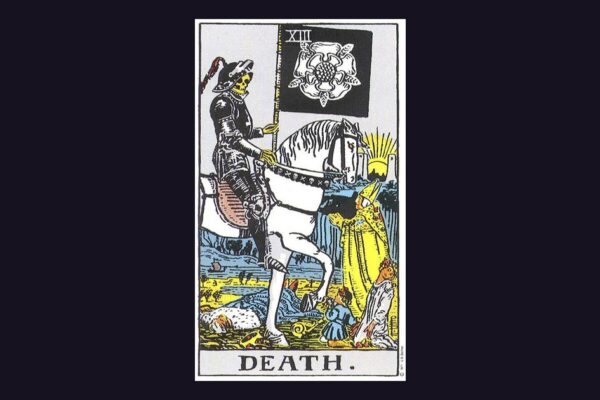
Drawing cards like Death, The Tower, or the Ten of Swords can be unsettling, leading to anxiety or a desire to re-shuffle. Remember, tarot doesn’t predict fixed doom; it offers insights into energies at play. The Tower, for instance, often signifies sudden, necessary breakdown leading to breakthrough – a clearing of old structures to make way for new growth. Death represents transformation and endings that clear space for new beginnings. Embrace these cards as messengers of profound change and growth, not harbingers of disaster. Consider what needs to be released or transformed in that particular house of your life.
A Scattered or Unfocused Mind
Trying to read tarot when you’re distracted, rushed, or mentally exhausted can lead to superficial or confusing interpretations. If your mind is racing, take a few moments to center yourself. Try a short breathing exercise or a brief meditation before you begin. Ensure your environment is conducive to focus. A scattered mind will yield scattered insights. If you find yourself consistently unable to focus, it might be a sign to put the cards away and return when you’re more present.
Jumping to Conclusions
It’s easy to see a card and immediately jump to a conclusion about what it “means” for your life, especially if it touches on a sensitive area. Resist the urge to interpret too quickly or definitively. Instead, approach each card with curiosity. Ask open-ended questions: “What might this card be trying to tell me about my relationships (7th House)?” or “What aspects of my hidden self (12th House) might this card illuminate?” Allow space for nuance and multiple possibilities rather than seeking a single, definitive answer.
Zodiac Insights in the Everyday Flow
The Zodiac Spread isn’t just for a one-time profound experience; its insights can be integrated into the fabric of your daily life, offering guidance and self-awareness in practical ways.
Navigating Professional Paths with the 10th House
Imagine your Zodiac Spread revealed The Chariot in your 10th House (Career, Public Image). This powerful card suggests a period of determined progress, ambition, and taking control of your professional direction. In a work context, this might mean you’re ready to launch that new project, seek a promotion, or even start your own venture. Rather than passively waiting, The Chariot encourages you to harness your will and drive forward. You might use this insight to confidently present your ideas in a meeting, take on a leadership role, or set clear, actionable goals for your career path in the coming months.
Fostering Deeper Connections with the 7th House
If your 7th House (Partnerships, Marriage, Open Enemies) shows the Two of Cups, it speaks to harmonious connections, mutual respect, and new partnerships. This isn’t just about romance; it applies to business collaborations, close friendships, and even positive interactions with clients. In your daily life, this could prompt you to reach out to a colleague for a collaborative project, schedule a meaningful conversation with your partner, or consciously seek common ground in negotiations. It’s a reminder to nurture your alliances and appreciate the give-and-take of balanced relationships.
Managing Emotional Undercurrents with the 12th House
The 12th House (Subconscious, Hidden Matters, Spirituality) often reveals what’s operating beneath the surface. If you draw The Moon here, it points to intuition, dreams, and hidden anxieties or illusions. In terms of emotional regulation, this card suggests paying close attention to your dreams, exploring your subconscious fears, or acknowledging feelings that you might be suppressing. Instead of letting vague anxieties dictate your mood, you might dedicate time to journaling, meditation, or even speaking with a trusted friend or therapist about what’s stirring within. It’s an invitation to explore the unseen aspects of your emotional landscape, allowing for greater self-awareness and healing. For more on navigating such subtle messages, you might find insight in Beyond the Veil: Intuition in Tarot Readings.
Cultivating Personal Values with the 2nd House
A card like the Ace of Pentacles in the 2nd House (Values, Resources, Self-Worth) signifies new beginnings in material security, a fresh approach to your finances, or a renewed sense of self-worth. In everyday life, this might translate to starting a new savings plan, investing in a skill that increases your earning potential, or simply taking concrete steps to affirm your value. Perhaps you decide to negotiate for a better salary, or you begin a practice of daily affirmations to strengthen your self-esteem. This card encourages practical, tangible actions that align with your core values and bolster your sense of security.
The Astrological Houses as Your Inner Landscape
The Zodiac Spread, sometimes called the Astrological Spread, is a powerful tool for self-reflection, laying out twelve cards in the positions of the astrological houses. Each house represents a different area of life, offering a comprehensive snapshot of your current energies and potential challenges or opportunities. When I tried this spread, I found it particularly illuminating for understanding the interplay between my inner world and outer circumstances. It’s not about predicting a fixed future, but rather about gaining insight into the archetypal forces at play, much like C.G. Jung’s emphasis on integrating the unconscious.
The Significator: Your Central Question
Before dealing the cards, a significator card is often chosen to represent the querent or the core question. For my Zodiac Spread, I chose the Queen of Swords, reflecting my desire for clarity and truth in a complex situation. This card, from the Rider-Waite-Smith (RWS) deck, speaks to intellectual independence and the ability to cut through illusion. Placing it at the center of the spread, before laying out the twelve house cards, provided a focal point for the entire reading, anchoring the subsequent insights.
House 7: Relationships and the Mirror
One of the most striking cards in my spread landed in the 7th House, traditionally associated with partnerships, relationships, and open enemies. Here, I drew the Four of Swords. This card, often depicting a figure lying in repose, suggests a need for rest, retreat, and contemplation before action. In the context of the 7th House, it wasn’t about a specific person, but rather a realization of my own patterns in relating to others – a tendency to over-engage and then withdraw, needing a period of quiet reflection to process interactions. It was a gentle reminder that healthy boundaries in relationships often begin with self-awareness and self-care, a theme explored further in articles like Beyond the Veil: Intuition in Tarot Readings.
When Self-Practice is Enough vs. When a Teacher or Therapist Helps
While the Zodiac Spread offers profound personal insights, it’s crucial to recognize when self-practice reaches its limits. My experience with the Four of Swords in the 7th House, for instance, illuminated a pattern. For simply understanding that pattern, my own reflection was sufficient. However, if this pattern led to significant distress, repeated unhealthy relationship dynamics, or a feeling of being stuck, then engaging with a qualified professional would be the next step. A skilled therapist, particularly one trained in depth psychology or modalities like Mindfulness-Based Stress Reduction (MBSR), could help explore the roots of such patterns and develop healthier coping mechanisms. Similarly, while a book on Iyengar yoga can guide your asana practice, a seasoned teacher is invaluable for correcting alignment and deepening understanding. Tarot can be a fantastic diagnostic tool, but it’s not a substitute for clinical intervention when dealing with deep-seated psychological issues. Always prioritize professional help for mental health concerns.
Integrating the Zodiac’s Wisdom
- Journaling the Houses: Dedicate a journal entry to each house, exploring the card’s meaning in that specific life area.
- Mindful Observation: Throughout the coming weeks, pay attention to how the themes of the cards manifest in your daily life.
- Actionable Insights: Translate card meanings into small, concrete steps you can take. For example, the Four of Swords might inspire a commitment to quiet reflection each evening.
- Revisit Periodically: The Zodiac Spread is excellent for annual or quarterly check-ins, tracking your growth and evolving challenges.
- Complement with Astrology: If you know your birth chart, compare the tarot cards in each house with the planetary placements and aspects in those same houses for deeper insights.
- Seek External Feedback: Discuss your interpretations with a trusted friend or mentor, especially for cards that feel particularly challenging or unclear.
- Embrace the Journey: Remember that tarot is a tool for self-discovery, not a rigid prophecy. Allow for fluidity and personal growth.
The Zodiac Spread is a journey through the self, a conversation with the archetypes that shape our human experience. By engaging with it thoughtfully and honestly, we can gain invaluable perspective on our path forward.
Frequently Asked Questions
What is a ‘Zodiac Spread’ in tarot?
The Zodiac Spread is a twelve-card tarot layout, where each card corresponds to one of the twelve astrological houses or zodiac signs. It’s often used for an annual overview or to gain insight into different life areas, with each position representing a specific theme like self, finances, communication, or home life.
How do I interpret the cards in a Zodiac Spread?
Each card’s position in the Zodiac Spread relates to its corresponding astrological house or sign, which defines the area of life it addresses. For instance, the card in the first position (Aries/First House) might speak to your identity or new beginnings, while the seventh position (Libra/Seventh House) could relate to partnerships and relationships. Consider the card’s traditional meaning in the context of that house’s theme.
Can I use any tarot deck for a Zodiac Spread?
Yes, absolutely. While some practitioners prefer decks with strong astrological correspondences, any standard 78-card tarot deck, such as the Rider-Waite-Smith (RWS) system, can be effectively used for a Zodiac Spread. The key is your familiarity with the deck and its imagery, and your ability to connect the card meanings to the astrological house themes.
Is the Zodiac Spread only for yearly readings?
While commonly used for annual forecasts, the Zodiac Spread can also be adapted for other timeframes or specific inquiries. You could use it to explore a particular project over a twelve-month period, or even to gain a deeper understanding of your natal chart by assigning each card to a specific planetary placement or house within your birth chart.
Where can I find reliable information on the astrological houses and their meanings for this spread?
Many reputable astrology and tarot resources provide detailed explanations of the twelve astrological houses and their correspondences. Look for books by astrologers like Liz Greene or Dane Rudhyar, or visit well-established astrology websites. Understanding these foundational astrological principles will significantly enrich your interpretation of the Zodiac Spread.
This page describes what the Tarot tradition teaches and how people practise it. It is not a prediction and not medical, psychiatric or crisis advice. How we research and write · report an error