Tarot
Aug 5, 2026
·
18 min read
Tarot & Pendulum: Intuitive Dialogue Unveiled
🕯 15 min read · August 5, 2026
Have you ever found yourself at a crossroads, staring into the swirling mists of uncertainty, wishing for a compass to guide your steps? Or perhaps you’ve felt a persistent whisper from within, a subtle nudge that hints at deeper truths, yet remains just out of reach. In a world brimming with noise and endless options, discerning our true path can feel like navigating a labyrinth blindfolded. This isn’t about predicting a fixed future, but about illuminating the landscape of your present choices and the unseen currents that shape them.
For centuries, seekers have turned to tools like the Tarot and the pendulum not as crystal balls for fortune-telling, but as sophisticated mirrors for self-reflection and intuition. This article will demystify these ancient practices, grounding them in history, psychology, and practical application. We’ll explore how these instruments can help you tap into your own innate wisdom, offering clarity, insight, and a deeper understanding of your journey, without ever surrendering your agency.
The Fool & The Swinging Weight: A Historical & Psychological Lens
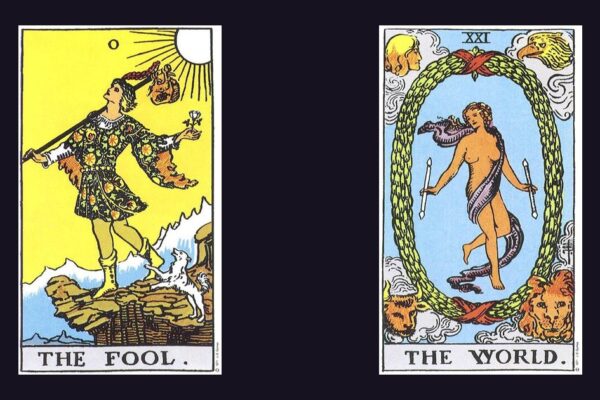
The origins of Tarot are often shrouded in myth, but historical consensus points to 15th-century Italy, where illustrated playing cards known as carte da trionfi (cards of triumph) first emerged. These early decks, unlike the modern RWS Tarot we often recognize today, were primarily used for games. It wasn’t until the 18th and 19th centuries, particularly with figures like Antoine Court de Gébelin and Éliphas Lévi, that Tarot began to be associated with esoteric symbolism, mysticism, and divination. The Rider-Waite-Smith (RWS) deck, published in 1909 and illustrated by Pamela Colman Smith under the direction of Arthur Edward Waite, revolutionized Tarot by depicting symbolic scenes on all 78 cards, including the pip cards, making it accessible for intuitive interpretation and cementing its place in the Western esoteric tradition.
Pendulums, in contrast, boast a much longer and more diverse history. Dowsing, the practice of using a divining rod or pendulum to locate water, minerals, or other hidden objects, dates back millennia, with evidence found in ancient Egyptian tomb paintings and Chinese carvings. Its use is documented across cultures, from ancient Rome to medieval Europe, often employed for practical purposes like finding resources. The underlying principle, often attributed to ideomotor responses – tiny, unconscious muscle movements influenced by our subconscious thoughts – connects it directly to our inner landscape. While historically used for external seeking, its modern application often turns inward, seeking clarity from our own deeper knowing.
From a depth psychology perspective, pioneered by Carl Jung, both Tarot and pendulums can be understood as tools that engage with the collective unconscious and archetypal imagery. Jung believed that the unconscious mind communicates through symbols, and the rich iconography of the Tarot provides a direct conduit to these universal patterns. Each card, from The Magician representing conscious manifestation to The High Priestess embodying intuition and hidden knowledge, reflects archetypal energies present in all human experience. Similarly, the subtle responses of a pendulum can be seen as a physical manifestation of unconscious insights, a way for the deeper self to communicate “yes” or “no” when conscious thought is muddled. This isn’t about magic in a supernatural sense, but about accessing the profound wisdom already residing within us, often obscured by the noise of daily life. The practice, therefore, becomes a form of active imagination, a dialogue with the unconscious that fosters self-awareness and personal growth, aligning with modern mindfulness-based stress reduction (MBSR) techniques that emphasize present-moment awareness and non-judgmental observation.
The Chariot & The Crossroads: Foundational Concepts for Practice
Before you embark on your journey with Tarot and pendulums, it’s essential to cultivate a specific mindset and grasp a few core concepts. These aren’t just theoretical points; they are the bedrock upon which meaningful and insightful practice is built. Without them, these tools risk becoming mere parlor tricks rather than profound instruments of self-discovery.
- Intention is Paramount: Approach these tools with a clear, focused intention. What question are you truly seeking to explore? Vague questions yield vague answers. A well-formed question acts like a magnet, drawing out specific insights.
- The Power of Symbolism: Understand that Tarot cards are not literal predictions but symbolic representations. Their meanings are fluid and depend heavily on context, the surrounding cards, and your personal interpretation. Embrace the ambiguity and allow the symbols to speak to your intuition.
- Intuition as Your Guide: These tools are designed to amplify your intuition, not replace it. Pay attention to your gut feelings, the first thoughts that arise, and the emotional resonance of a card or a pendulum swing. This inner voice is your primary interpreter.
- Personal Responsibility: You are the ultimate authority in your life. Tarot and pendulums offer guidance and perspective, but they do not dictate your actions or remove your free will. They illuminate choices; you make the decisions.
- Grounding & Presence: Before any session, take a few moments to ground yourself. This could be through deep breathing, a short meditation, or simply focusing on your senses. A calm, present mind is more receptive to subtle energies and insights.
- Non-Attachment to Outcome: While you may desire a specific answer or outcome, practicing non-attachment allows for a more objective interpretation. Be open to whatever insights emerge, even if they are unexpected or challenging.
- Journaling for Reflection: Document your readings and pendulum sessions. Note the question asked, the cards drawn, your initial interpretations, and any subsequent insights or actions taken. This creates a valuable record of your journey and helps you track patterns and growth over time.
Starting Your Pendulum Practice Tonight
Beginning with a pendulum is simpler than you might imagine. The key is to approach it with an open mind and a spirit of gentle curiosity. These steps will guide you through your very first interactions.
- Choose Your Pendulum: Select a pendulum that feels right in your hand. This could be a crystal, a metal bob, or even a weighted object on a chain. The material itself is less important than your connection to it; a simple ring on a string works just as well.
- Clear Your Mind and Space: Before you begin, take a few deep breaths to center yourself. Find a quiet spot where you won’t be disturbed. A clear mind allows for clearer communication with your pendulum.
- Establish Your “Yes” and “No”: Hold the pendulum by the chain, allowing it to hang freely. Ask it, “Show me my ‘yes’.” Observe its movement – it might swing back and forth, in a circle, or side to side. Repeat for “Show me my ‘no’,” noting the distinct motion.
- Practice with Known Answers: Test your established “yes” and “no” by asking questions you already know the answers to. For example, “Is my name [your name]?” or “Am I sitting in a chair?” This builds confidence and reinforces the pendulum’s responses.
- Ask Simple, Clear Questions: Formulate questions that can be answered with a direct “yes” or “no.” Avoid vague or complex inquiries. The clearer your question, the clearer the pendulum’s response will be.
- Record Your Observations: Keep a small notebook to jot down your questions and the pendulum’s answers. This helps you track patterns, understand your pendulum’s unique language, and reflect on your practice over time.
When the Pendulum Isn’t Cooperating
Even seasoned practitioners encounter moments when their pendulum seems to falter. Here are common issues and practical remedies to bring clarity back to your sessions.
The Pendulum Doesn’t Move
Sometimes, despite your best efforts, the pendulum remains stubbornly still. This often indicates a lack of energy or focus from the practitioner, or perhaps a question that is too vague for a clear response. Take a moment to re-center yourself, perhaps through a brief meditation or by simply closing your eyes and taking a few deep breaths. Ensure your question is specific and can truly be answered with a “yes” or “no.” Sometimes, the answer “no movement” actually *is* the answer, suggesting neutrality or that the question isn’t appropriate for a pendulum at that moment.
Inconsistent or Conflicting Swings
If your pendulum gives a “yes” one moment and a “no” to the same question the next, or if its movements are erratic, it’s a sign of interference. This could be external noise, internal doubt, or even a lack of clear intention. First, check your environment for distractions. Then, turn inward: are you overly attached to a particular answer? Are you asking the same question multiple times, hoping for a different outcome? Re-establish your “yes” and “no” responses, and ensure your own energetic field is calm and neutral before proceeding. Remember, the pendulum reflects your inner state as much as it answers your questions.
Getting Stuck on “Maybe” or Neutral Responses
A pendulum that consistently offers a “maybe” or a non-committal swing often points to a question that isn’t fully formed or an issue with multiple layers. The pendulum isn’t designed for nuance, but for direct answers. Rephrase your question to be more specific. Instead of “Should I take this job?” try “Will taking this job lead to greater financial stability?” or “Will taking this job align with my personal growth?” Break down complex decisions into smaller, more digestible yes/no questions. Sometimes, a “maybe” is also a gentle nudge to pause and gather more information before seeking a definitive answer.
Feeling Drained or Overwhelmed After Use
If you find yourself feeling tired or emotionally depleted after a pendulum session, it might be a sign that you’re expending too much personal energy or engaging with questions that are emotionally taxing. This isn’t a flaw in the pendulum, but a signal to adjust your practice. Limit the duration of your sessions, especially when starting out. Focus on lighter, less emotionally charged questions. Ensure you are grounded before and after use; simple practices like visualizing roots extending from your feet into the earth can help. Remember to set clear intentions for protection and energetic boundaries before you begin.
The Pendulum Always Says What I Want to Hear
While it can be comforting for the pendulum to validate your desires, a consistent pattern of answers aligning perfectly with your hopes, even when logic suggests otherwise, can indicate unconscious bias. Your subconscious mind can subtly influence the pendulum’s movement. To counteract this, practice neutrality. Before asking a question, consciously acknowledge your desired outcome, then gently set it aside. Ask the question with an open heart, truly willing to accept whatever answer comes. You might also try having a trusted friend hold the pendulum while you ask the question, to see if the response differs, providing an external check. This teaches you to discern genuine guidance from wishful thinking.
Pendulums and Tarot: Guiding Everyday Decisions
Integrating pendulums into your daily life, especially alongside practices like Tarot, can offer a practical framework for navigating choices, understanding dynamics, and fostering emotional balance. The pendulum provides clear, concise answers, while Tarot offers depth and narrative context.
At Work: Navigating Projects and Team Dynamics
Imagine you’re facing a critical decision at work, such as whether to pursue a new project or how to approach a challenging colleague. You could use your pendulum to ask “Will pursuing Project A lead to a positive outcome for the team?” or “Is there a better way to communicate with [colleague’s name]?” For deeper insights, you might then draw a Tarot card, perhaps from the Rider-Waite-Smith (RWS) deck, to understand the underlying energies or potential obstacles. For instance, a “yes” from the pendulum followed by a Three of Swords might indicate a positive outcome but with some necessary difficult conversations. This dual approach helps you move beyond simple yes/no answers to a more nuanced understanding of the situation, allowing for more informed and strategic decisions.
In Relationships: Clarifying Intentions and Boundaries
Relationships, whether romantic, familial, or platonic, often present complex emotional landscapes. A pendulum can be a useful tool for clarifying your own feelings or understanding subtle relational dynamics. You might ask, “Am I honoring my boundaries in this relationship?” or “Is this conversation serving my highest good?” When a particular issue feels murky, you could draw a Tarot card to explore the emotional undercurrents. For example, if the pendulum indicates “no” to a question about a partner’s sincerity, a subsequent draw of The Moon card could suggest hidden fears or illusions, prompting you to explore those themes with greater awareness rather than jumping to conclusions. It’s about gaining clarity on your own emotional landscape and setting personal boundaries with greater confidence.
For Emotional Regulation: Identifying Triggers and Needs
When you’re experiencing strong emotions like anxiety or frustration, a pendulum can help you quickly identify potential triggers or unmet needs. You could ask, “Is my current anxiety related to work?” or “Do I need more rest?” This immediate feedback can be incredibly empowering, helping you pinpoint the root cause of your emotional state. Paired with Tarot, this practice gains further depth. If the pendulum points to “lack of rest,” a subsequent drawing of the Four of Swords might visually reinforce the need for quiet contemplation and recuperation, guiding you toward appropriate self-care actions. This practical application helps you move from simply feeling overwhelmed to actively understanding and addressing your emotional requirements, fostering a greater sense of inner peace and self-awareness.
When the Pendulum Swings Too Far: Knowing When to Seek Guidance
Both tarot and pendulums offer fascinating avenues for self-exploration and decision-making. They can illuminate hidden aspects of our psyche, much like Dr. Carl Jung’s concept of the collective unconscious, by presenting symbolic imagery or clear, concise answers. However, there are crucial distinctions between self-guided exploration and situations that truly warrant the wisdom of a trained professional.
If your pendulum consistently offers conflicting answers on significant life choices, or if your tarot readings repeatedly leave you feeling more confused or anxious than before, these are strong indicators that you might benefit from an external perspective. Similarly, if you find yourself using these tools to avoid making difficult decisions, or if the insights you gain feel overwhelming without a clear path forward, it’s a sign to pause and re-evaluate.
A skilled therapist, particularly one trained in depth psychology or transpersonal approaches, can help you integrate the insights gleaned from your divination practices into a broader understanding of your psychological landscape. They can provide a safe space to process complex emotions that tarot may bring to the surface, or help you understand why certain “yes/no” questions might be rooted in deeper, unresolved conflicts. For instance, if you’re continually asking your pendulum about a relationship that causes you distress, a therapist could help you explore the underlying patterns of attachment or self-worth that are truly at play.
Similarly, a seasoned tarot reader or spiritual mentor can offer invaluable guidance. Unlike a casual reading with friends, a professional reader often brings years of study, intuitive development, and ethical practice to the table. They can interpret complex spreads with nuance, helping you move beyond literal card meanings to understand the archetypal forces at play, as described by Jungian analyst Mary K. Greer in her extensive works on tarot. They can also help you formulate questions that lead to deeper self-inquiry rather than superficial answers.
Remember, these tools are aids to introspection, not substitutes for professional help when dealing with significant mental health challenges, complex relationship dynamics, or profound spiritual crises. Just as Iyengar yoga emphasizes precise alignment to prevent injury, so too should our spiritual practices be approached with a discerning mind, knowing when to lean on our own intuition and when to seek the support of an expert. Sometimes, the most profound spiritual act is acknowledging our limitations and reaching out for a guiding hand.
For those interested in the symbolic language that often underpins both tarot and the unconscious mind, we recommend exploring our article: Tarot’s Mirror: What the Collective Unconscious Reveals.
The Hermit’s Lantern & The Pendulum’s Arc: Integrating Intuitive Practice
Bringing together the insights from both tarot and pendulum work requires a thoughtful, grounded approach. It’s not just about receiving information, but about integrating it into your lived experience. Consider these steps for a more holistic practice:
- Reflect on Your Questions: Before consulting either tool, spend time clarifying your intention. What specific insight are you seeking? Is the question open-ended enough for tarot, or precise enough for a pendulum?
- Journal Your Findings: Document your readings and pendulum sessions. Note the cards that appeared, the pendulum’s swing, your initial reactions, and any subsequent actions or insights. This creates a valuable record for tracking patterns and growth.
- Connect with Your Body: Pay attention to your physical sensations during and after your sessions. Does a certain card or pendulum answer evoke a feeling of peace, tension, or clarity? The body often holds wisdom that bypasses the rational mind.
- Cross-Reference Insights: If you’re exploring a specific issue, try using both tools. A tarot spread might reveal the deeper psychological dynamics, while a pendulum could offer a clear “yes/no” on a practical step forward.
- Practice Detachment: While engaging deeply, cultivate a degree of detachment from the outcome. The tools offer perspectives; your free will and conscious choices remain paramount.
- Integrate into Daily Life: Don’t let insights remain abstract. How can the wisdom gained be applied to your relationships, work, or personal growth today? This is where the true transformation occurs.
- Review and Recalibrate: Periodically look back at your journal entries. Have past insights proven helpful? Are there recurring themes? This helps refine your intuitive language and strengthens your trust in the process.
Ultimately, both tarot and pendulums are invitations to a deeper dialogue with your inner self and the subtle energies around you. Approach them with reverence, curiosity, and a healthy dose of discernment, and they can be powerful allies on your journey of self-discovery.
Frequently Asked Questions
What’s the difference between tarot and oracle cards?
While both are tools for self-reflection and insight, tarot decks typically follow a structured system of 78 cards (Major and Minor Arcana), often rooted in traditions like the Rider-Waite-Smith (RWS) deck. Oracle decks, conversely, are more fluid, with varying numbers of cards and themes, often created around a specific concept or artistic vision without a fixed structure.
Can I read tarot for myself, or do I need a professional?
Absolutely, you can read tarot for yourself! Many people find self-readings to be incredibly insightful for personal growth and understanding. While a professional can offer an objective perspective, learning to interpret the cards for your own journey is a powerful way to connect with your intuition.
How does a pendulum work, and what can I ask it?
A pendulum is believed to work by responding to subtle energetic shifts and unconscious muscular movements (the ideomotor effect), often acting as a physical representation of intuitive answers. You can ask it ‘yes’ or ‘no’ questions, or use it for dowsing, but it’s best for clarifying internal states rather than predicting external events.
Is it true that you shouldn’t buy your own first tarot deck?
This is a common myth, but it’s perfectly fine to buy your own first tarot deck! The most important thing is to choose a deck that resonates with you personally. Many experienced readers find that selecting their own deck fosters a stronger connection and deeper understanding from the outset.
What’s the best way to ‘cleanse’ or ‘charge’ my tarot deck or pendulum?
Cleansing and charging are practices to remove residual energy and imbue your tools with intention. Common methods include placing them under moonlight, smudging with sage, knocking on the deck three times, or simply holding them with focused intention during meditation. The ‘best’ way is the one that feels most effective and meaningful to you.
This page describes what the Tarot tradition teaches and how people practise it. It is not a prediction and not medical, psychiatric or crisis advice. How we research and write · report an error