Tarot
Jul 31, 2026
·
17 min read
Your First Tarot Spread: A Guided Introduction
🕯 14 min read · July 31, 2026
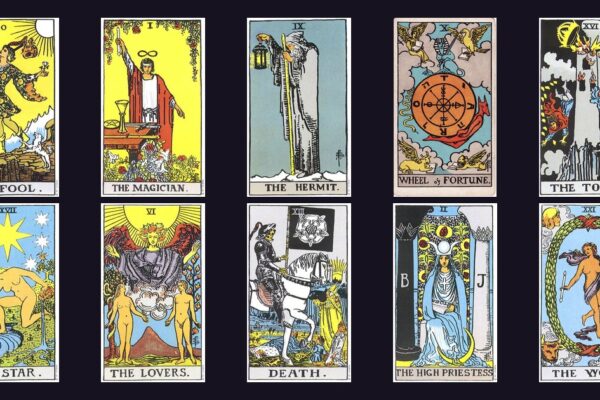
So, you’ve picked up your first tarot deck. Maybe it’s the classic Rider-Waite-Smith, its vibrant, symbolic imagery already whispering stories. Or perhaps a more contemporary deck, its art speaking directly to your soul. You’ve shuffled, you’ve gazed at the cards, and now you’re wondering: what’s next? How do you move beyond admiring the artwork and actually *read* them, especially when every book and website seems to jump straight into complex spreads and esoteric meanings?
This article is your guide to that crucial first step. We’re going to demystify the initial tarot spread, giving you a practical, grounded approach to connecting with your deck from day one. Forget overwhelming interpretations; we’ll focus on building intuition, understanding foundational concepts, and making your first reading a truly insightful experience, not a frustrating puzzle.
The Single Card Pull: A Gentle Introduction
Before diving into multi-card layouts, it’s essential to understand the tradition and psychological underpinnings of even the simplest tarot interaction: the single card pull. While often overlooked in favor of more elaborate spreads, this foundational practice has deep roots. Historically, tarot cards, particularly from the 15th century onward, served various purposes, from a game called tarocchi to a tool for divination. Early divinatory practices were often less about complex narratives and more about direct answers or reflective prompts, much like consulting an oracle. The single card draw echoes this directness, offering a focused lens for introspection.
From a modern psychological perspective, the single card pull aligns remarkably well with Jungian principles of synchronicity and active imagination. Carl Jung, the Swiss psychiatrist who founded analytical psychology, posited that synchronicity is “a meaningful coincidence of two or more events where something other than the probability of chance is involved.” When we draw a card with an intention, even a simple “What do I need to know today?”, the chosen card isn’t seen as random by the unconscious mind. Instead, its imagery and archetypal themes provide a symbolic mirror, reflecting inner states or external situations that the conscious mind might be overlooking. This process isn’t about predicting an unchangeable future, but rather about externalizing unconscious content, allowing for conscious engagement and integration. Much like dream analysis, the single card acts as a symbolic message from the deeper self, prompting self-reflection and insight rather than dictating fate.
Cultivating the Inner Landscape: Essential Preparations
Before you even touch your deck for that first spread, there are several foundational concepts and internal preparations that will significantly enhance your experience. Tarot isn’t merely about memorizing card meanings; it’s about fostering a receptive state of mind and understanding the symbolic language it speaks. Without these groundwork elements, even the most profound spread can feel like a jumble of disconnected images. Think of it as preparing the soil before planting a seed – the richer the soil, the more likely the seed is to flourish into meaningful insight.
- The Archetypal Language: Understand that tarot speaks in archetypes – universal patterns of human experience, emotions, and behaviors. As Jung elaborated, these archetypes reside in the collective unconscious and are expressed through symbols, myths, and dreams. Each tarot card embodies one or more of these archetypes, such as the nurturing Mother (The Empress), the wise Mentor (The Hierophant), or the journeying Hero (The Fool). Recognizing this symbolic language allows you to see beyond the literal image and grasp the deeper, more universal message.
- Intuition as Your Primary Guide: While guidebooks offer valuable starting points, your intuition is your most potent tool. Tarot is not a test of memorization. Rather, it’s a dialogue between your conscious mind and your deeper wisdom. Practice listening to your gut feelings, the first thoughts, and the emotional responses that arise when you look at a card. This isn’t about being “right” or “wrong,” but about developing a trusting relationship with your inner knowing.
- Question Formulation: The clarity of your question directly impacts the clarity of your answer. Avoid vague or outcome-dependent questions like “Will I get rich?” Instead, frame questions that invite self-reflection and empower action, such as “What can I focus on to improve my financial situation?” or “What aspect of myself needs attention regarding my career path?” Questions should be open-ended, allowing for nuanced responses, and focused on your personal growth and understanding.
- The Concept of “Meaning-Making”: Tarot doesn’t predict a fixed future; it offers probabilities, insights, and perspectives based on current energies and tendencies. Your interaction with the cards is an act of “meaning-making.” You are actively engaging with symbols to construct understanding, not passively receiving a dictated fate. This perspective aligns with mindfulness-based stress reduction (MBSR) practices, which emphasize present-moment awareness and non-judgmental observation. The cards become a focal point for this observation, allowing you to interpret their symbols through the lens of your own experience.
- Respect and Intention: Approach your deck with respect and a clear intention. This isn’t about superstition, but about creating a focused, sacred space for introspection. Whether you clear your mind with a few deep breaths, light a candle, or simply state your intention aloud, these small rituals signal to your unconscious mind that you are engaging in a meaningful practice. This intentionality helps to quiet mental chatter and open you to the subtle messages the cards may offer.
The Three-Card Spread: Your First Reading
For your inaugural dive into the RWS (Rider-Waite-Smith) Tarot, we’ll begin with the classic Three-Card Spread. This layout is deceptively simple, yet it offers profound insights, making it perfect for understanding fundamental energies without overwhelming a new practitioner. We’ll focus on a past-present-future orientation, a timeless way to frame a query.
- Setting Your Intention: The Question. Before you even touch the cards, take a moment to formulate a clear, open-ended question. Avoid yes/no questions, as Tarot excels at exploring nuances. Instead, ask something like, “What do I need to understand about my current career path?” or “What energies are at play in my relationship with X, and what is their trajectory?” Write it down if it helps solidify your focus.
- Cleansing the Deck: A Fresh Start. Hold your shuffled deck in your non-dominant hand and gently tap the top of the deck three times with your dominant hand. This simple act, akin to a soft reset, is a traditional way to clear any residual energy from previous readings or handling, preparing the cards for your unique query.
- The Shuffle and Cut: Infusing Your Energy. While holding your question in your mind, begin to shuffle the cards. There’s no “right” way to shuffle; do what feels natural. As you shuffle, visualize your intention flowing into the deck. When it feels complete, cut the deck into three piles with your non-dominant hand, then reassemble them in any order you feel drawn to.
- Laying the Cards: Past, Present, Future. From the top of your reassembled deck, draw the first card and place it on your left. This represents the “Past” influence related to your question. Draw the second card and place it in the center; this is the “Present” energy. Finally, draw the third card and place it on the right, signifying the “Future” potential or direction.
- Initial Impressions: What Catches Your Eye? Before consulting any guidebooks, take a moment to simply look at the three cards. What colors stand out? Are there people facing each other or looking away? Do any symbols immediately resonate? This initial, intuitive scan is crucial for developing your personal relationship with the cards.
- Interpreting the Cards: Storytelling. Now, refer to your RWS guidebook (the little white book that came with your deck is a great starting point, or a more comprehensive one like Rachel Pollack’s “Seventy-Eight Degrees of Wisdom”). Read the traditional meanings for each card in its position. Then, weave them together into a narrative. How does the past influence the present? What does the present suggest about the future? Remember, the cards offer guidance, not rigid predictions.
- Journaling Your Insights: A Record of Growth. Once you’ve spent some time with your interpretation, write down your question, the cards you drew, their positions, and your reflections. This practice not only solidifies your understanding but also creates a valuable record of your journey with the Tarot, allowing you to track patterns and growth over time.
When Your Three-Card Reading Feels… Off
The Cards Don’t Make Sense
Sometimes, the traditional meanings just don’t click with your question or your current situation. This is a common experience, especially when starting out. Instead of forcing an interpretation, consider the overall mood of the cards. Are they generally positive, challenging, or neutral? Look for recurring symbols or colors. Sometimes, the “message” is less about a specific outcome and more about a general energy or a shift in perspective. Revisit your question – was it clear enough? A muddled question often leads to muddled answers.
Too Many Reversals (or None At All)
If your deck seems to be throwing up an unusual number of reversed cards (upside down), or conversely, no reversals at all, don’t panic. Some practitioners choose to read reversals as direct opposites of upright meanings, while others see them as blocked energy, a need for introspection, or an internal focus. If you’re consistently getting many reversals, it might suggest a period of inner work or resistance. If none, perhaps your energy is very direct and unhindered. There’s no single “correct” way to interpret reversals; choose an approach that resonates with your intuition and stick with it for consistency.
Getting the Same Cards Repeatedly
Drawing the same card or combination of cards across multiple readings can feel frustratingly repetitive. However, this is often the Tarot’s way of emphatically highlighting a core theme or lesson that needs your attention. It’s not that the deck is “stuck”; it’s that you might be stuck on a particular issue, or there’s a recurring pattern in your life that you’re not fully acknowledging. Instead of re-shuffling in frustration, lean into it. What is this card trying to tell you that you haven’t fully grasped yet? What action might it be prompting?
Feeling Overwhelmed by Symbolism
The RWS deck is rich with symbolism, from astrological signs to numerology and elemental associations. It’s easy to feel like you need to understand every single detail to get a “good” reading. Resist this urge! As Carl Jung understood, archetypes speak to us on a deeper, often unconscious level. Start with the most obvious imagery and the basic card meaning. Over time, as you engage with the cards, their layers of symbolism will naturally reveal themselves. Think of it as peeling an onion – you don’t need to devour the whole thing at once. Focus on the core message first.
Tarot in the Everyday: Practical Applications
Navigating Workplace Dynamics
Imagine you’re facing a challenging colleague or a new project at work. Instead of asking, “Will I get promoted?”, try: “What energies do I need to embody to navigate this new project successfully?” or “What do I need to understand about my interactions with X to foster a more productive environment?” The cards might reveal a need for more assertive communication (e.g., The Emperor), greater empathy (e.g., The Empress), or a need to embrace change and adaptability (e.g., The Wheel of Fortune). This shifts the focus from external prediction to internal empowerment.
Deepening Relationship Understanding
Relationships, whether romantic, familial, or platonic, are fertile ground for Tarot insights. If you’re experiencing tension with a loved one, a question like “What is the underlying dynamic at play in my relationship with Y right now?” can be incredibly revealing. You might draw cards that point to a need for better communication (e.g., The Lovers, reversed), a shared creative endeavor (e.g., Three of Cups), or a need for individual boundaries (e.g., The Hermit). The Tarot helps illuminate unseen currents, allowing for more conscious engagement.
Cultivating Emotional Regulation and Self-Awareness
The Tarot is a powerful tool for self-reflection and understanding your emotional landscape. If you’re feeling overwhelmed or unclear about your feelings, ask: “What emotion am I truly experiencing right now, and what is its root?” or “What internal resource can I draw upon to feel more grounded?” You might find cards like the Eight of Swords indicating self-imposed limitations, or the Queen of Cups suggesting a need for emotional nurturing. This practice, much like mindfulness, encourages you to observe your inner world without judgment, fostering a deeper sense of presence and self-compassion. For further exploration of grounding practices, you might find insight in articles discussing yoga’s foundational roots, as the principles of self-awareness and intention setting are beautifully intertwined.
The Three-Card Spread: Past, Present, Future
For your initial foray into tarot, the Three-Card Spread is an invaluable teacher. Its simplicity belies its profound potential for insight. Using the Rider-Waite-Smith (RWS) deck, shuffle your cards with intention, focusing on a question or an area of your life you wish to explore. Once shuffled, cut the deck and draw three cards, laying them out from left to right.
- Card 1: Past. This card represents the influences, events, or energies that have led you to your current situation. It’s not necessarily about a specific event, but rather the underlying currents that have shaped your present.
- Card 2: Present. This card speaks to your current circumstances, emotions, and the energies at play right now. It can illuminate what you are experiencing, often from a perspective you might not have fully acknowledged.
- Card 3: Future. This card offers a potential outcome or direction based on the energies of the past and present. It is crucial to remember that the future in tarot is not fixed; it is a probable path, and conscious action can always alter its course. Think of it as a weather forecast, not a prophecy.
Take your time with each card. Observe the imagery, the colors, the symbols. What is your immediate gut reaction? Then, consult the accompanying booklet or a trusted RWS guide for the traditional meanings. How do these resonate with your initial impressions and your question?
When to Seek a Guide: The Limits of Self-Interpretation
While self-exploration with the tarot is deeply enriching, there are times when the objective perspective of a teacher or therapist becomes invaluable. If you find yourself consistently interpreting cards in a way that fuels anxiety, reinforces negative self-talk, or leads to a sense of paralysis rather than empowerment, it’s a strong indicator that external guidance could be beneficial. Similarly, if the insights from your readings consistently feel overwhelming or trigger unresolved trauma, a qualified therapist who understands the symbolic language of the psyche (perhaps even a Jungian analyst) can offer a safe container for processing these profound insights. A skilled tarot reader can also offer a fresh perspective, helping you to see nuances you might miss in your own readings, or guiding you through more complex spreads when you’re ready to deepen your practice. Just as discernment is crucial in times of crisis, it is equally important when navigating the sometimes-challenging depths of self-discovery through tools like the tarot.
The Hermit’s Wisdom: Knowing When to Pause
The Hermit card, often depicted as a cloaked figure holding a lantern, embodies the wisdom of introspection and solitary pursuit of truth. When engaging with the tarot, cultivating this Hermit-like quality means knowing when to pause. If you feel mentally fatigued, emotionally overwhelmed, or find your interpretations becoming muddled, step away from the cards. There’s no pressure to interpret every reading immediately or to force insight. Sometimes, the most profound understanding comes after a period of quiet contemplation, allowing the symbols to integrate subconsciously. This isn’t about avoiding the message, but rather honoring the natural rhythm of insight, which often unfolds in its own time.
The Fool’s Journey: Embracing Beginner’s Mind
The Fool, the very first card of the Major Arcana, represents boundless potential, innocence, and the willingness to step into the unknown. As a beginner with tarot, cultivate this “Fool’s journey” mindset. Don’t strive for perfect interpretations or fear making mistakes. Each card drawn, each connection made (or not made), is a step on your unique path of learning. Embrace the wonder, the curiosity, and the occasional misstep. This beginner’s mind, free from rigid expectations, allows for genuine discovery and a more authentic relationship with the cards.
Integrating Tarot Wisdom: A Daily Practice Checklist
- Daily Card Draw: Pull one card each morning for a theme or reflection for the day.
- Journaling: Record your readings, initial impressions, and later insights.
- Mindful Observation: Pay attention to how the card’s energy manifests in your day.
- Symbol Study: Research the iconography and historical context of individual cards.
- Intuitive Listening: Trust your gut feelings alongside traditional meanings.
- Setting Intentions: Formulate clear, open-ended questions for your spreads.
- Gratitude: Thank the cards for their guidance and the insights gained.
- Regular Breaks: Step away when you feel overwhelmed or ungrounded.
Approaching the tarot with respect, curiosity, and a grounded perspective will unlock its potential as a powerful tool for self-understanding and personal growth. Enjoy the journey!
Frequently Asked Questions
What’s the difference between a ‘reading’ and a ‘spread’?
A ‘spread’ refers to the specific pattern in which you lay out the tarot cards, with each position having a designated meaning. A ‘reading’ is the broader process of interpreting those cards within the context of the spread, drawing insights and narratives from their symbolism.
How do I choose my first tarot deck?
The best first tarot deck is one that visually and intuitively appeals to you. Many beginners start with the Rider-Waite-Smith (RWS) deck due to its widely recognized symbolism and extensive accompanying resources, but ultimately, choose a deck whose imagery resonates with your soul.
Do I need to ‘cleanse’ my tarot deck?
While not strictly necessary, many practitioners find value in ‘cleansing’ their deck, especially when new or after intense readings, to clear any lingering energies. Common methods include shuffling thoroughly, knocking on the deck, or placing it with a clear quartz crystal overnight.
What’s a good first spread for a beginner?
The ‘Three-Card Spread’ is ideal for beginners, often representing Past-Present-Future, Situation-Obstacle-Advice, or Mind-Body-Spirit. Its simplicity allows you to focus on individual card meanings and their basic interplay without feeling overwhelmed.
Can I read tarot for myself, or do I need a professional?
You absolutely can and should read tarot for yourself; it’s a powerful tool for self-reflection and personal insight. While professional readers offer valuable perspectives, developing your own intuitive connection to the cards is a rewarding part of the journey.
This page describes what the Tarot tradition teaches and how people practise it. It is not a prediction and not medical, psychiatric or crisis advice. How we research and write · report an error